On September 15, a bittersweet day, I attended the closing on the sale of the building located at 3403-05 Main Street in Weirton, WV. The building had been the Recht family’s locus of business operations in Weirton since the early 1960’s, alternatively in the form of Al and Florence Recht’s Weirton Market, Arthur J. Recht’s sole proprietorship law office, and most recently, Recht Law Offices. The sale of the building marked the official end of the Recht family’s 80-plus year era in Weirton.
In the early 1940’s, the children of Harry and Bella Recht, born and raised in Aliquippa, PA, began to migrate to Weirton, then a booming steel town that offered them economic opportunity and a vibrant and growing Jewish community. Five of Harry and Bella’s six children, Rose, Sally, Ruth, Al, and Arthur, eventually made their way to Weirton, with four of them residing on Palisades Drive (referred to by some at the time as Palestine Drive for its many Jewish residents), and one located a half-block away, while the sixth sibling, Florence Recht Heyison, settled not far away in Oil City, PA. In addition, a cousin, Mickey Recht, also found his way to Weirton.
Upon settling in Weirton, the Rechts started their businesses and their families, became essential parts of the community at-large and of the Jewish community, and rode the meteoric rise that Weirton experienced through the 40’s, 50’s, and 60’s, witnessed the catastrophic fall of the steel industry that came at the end of the 70’s and 80’s, and stayed through the unstable forty years thereafter. They and their spouses owned grocery stores and a pharmacy, were lawyers, merchants, school teachers, and homemakers. They were children borne of the Depression, all of whom started out from scratch with no advantages given to them. They raised their children in and among the hodgepodge of ethnicities and religions of people who had likewise sought opportunity in Weirton: Poles and Greeks and Italians, Hungarians and Serbs and Indians, Christians and Jews and Hindus, those who were white and those of color.
And along with the Recht siblings and their cousin, their spouses came to live in Weirton, and their spouses’ families became one with the Rechts and came to know Weirton: the Hausmans and the Mangels and the Hearsts and the Rubensteins and the Karps and the Rosenthals. And as well, via their children: the Fishers and the Sierawskis and the Heatons and the Blankenships and the Marlins and the Seltzers and the Krasnicks and the Cohens.
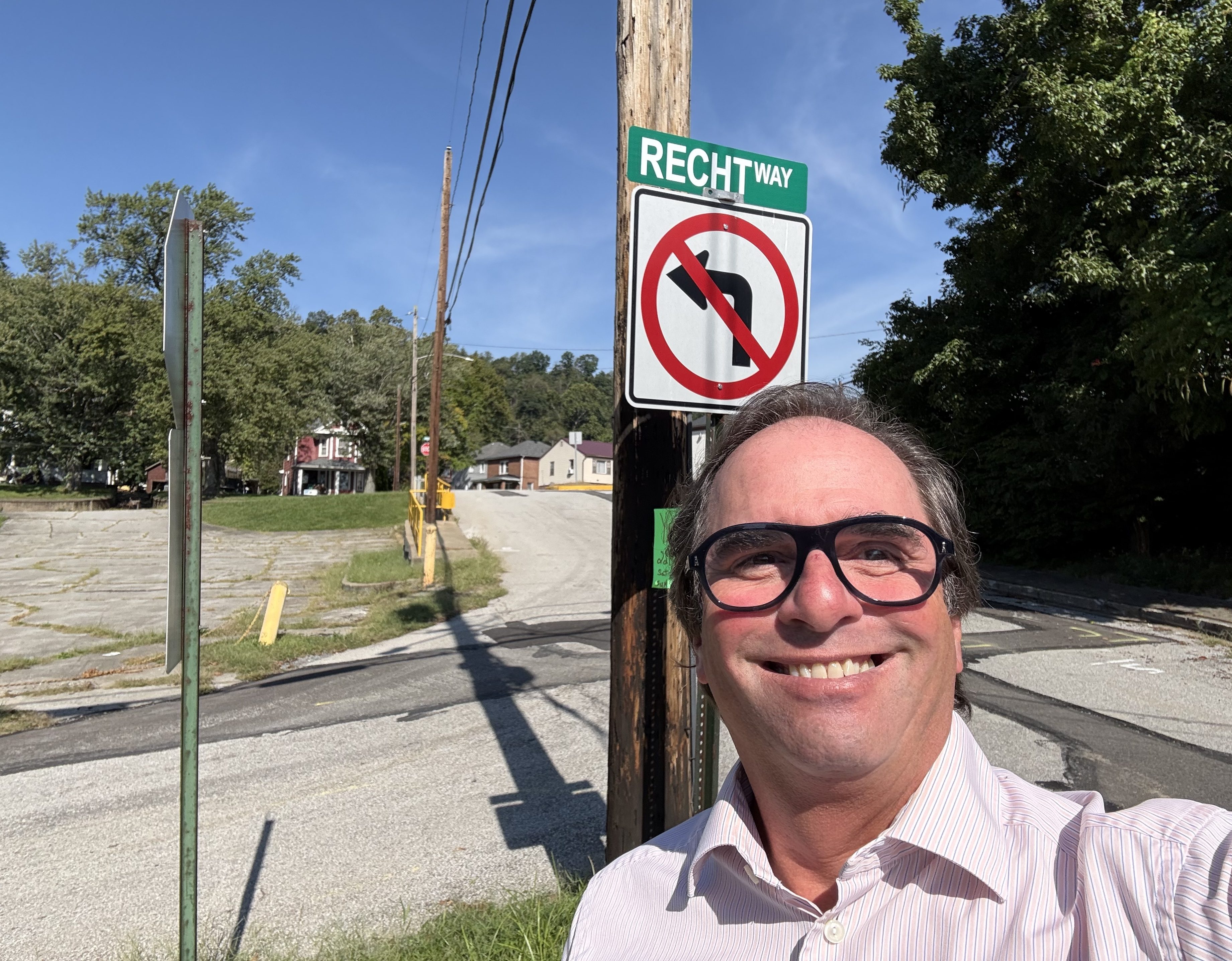
While the Rechts and their spouses and their children are no longer present in Weirton, their imprint remains: Due to the efforts of my wife, Geri, and my children, Jacob, Sydney, and Rayna, the alley from Lee Avenue to Purdy Lane is now known as Recht Way, which by proclamation the Weirton City Council in 2025 unanimously named in honor of and to serve as a lasting legacy of the Recht family’s long and storied commitment to and impact on the City of Weirton. Little did Harry and Bella know that their surname would be so commemorated, or that their children and grandchildren would be so memorialized, or that from the humble home above their mom and pop store on Franklin Avenue in Aliquippa, where they raised six hard-working, good, and decent children, would such a legacy be established. The memories of those Recht children is a blessing to the town they settled in, labored in, raised their families in, and left a lasting impression on.
Life wasn’t always easy or fair to them. Spouses died young, most likely the result of breathing in air filled with pollutants belched from the mill or water spoiled with chemicals dumped in the Ohio River, or of smoking, or of just bad luck. Their children moved on and moved away, and one-by-one, so did they, or they stayed until their end. And now, in Weirton, they number none. Truly, the end of an era.
* * * * * * * * * * * * * * * *
The Rechts of Weirton:
Rose Recht Hausman (Harry Hausman), Jerry, Susan (Bill Fisher), Margaret and John
Sally Recht Hearst (David Hearst), James (Nancy Sierawski) and Linda
Al Recht (Florence Mangel), James (Judi Heaton) and Keith (Mary Ellen Blankenship)
Ruth Recht Rubenstein Levenson (Edward Rubenstein), Barbara and Barry
Arthur Recht (Janet Karp), Scott (Jaime Seltzer), Elisa, Jodie (Steven Krasnick), and Steven (Geri Cohen)
Milton “Mickey” Recht (Lois “Pudgy” Rosenthal), Jerry and Karen
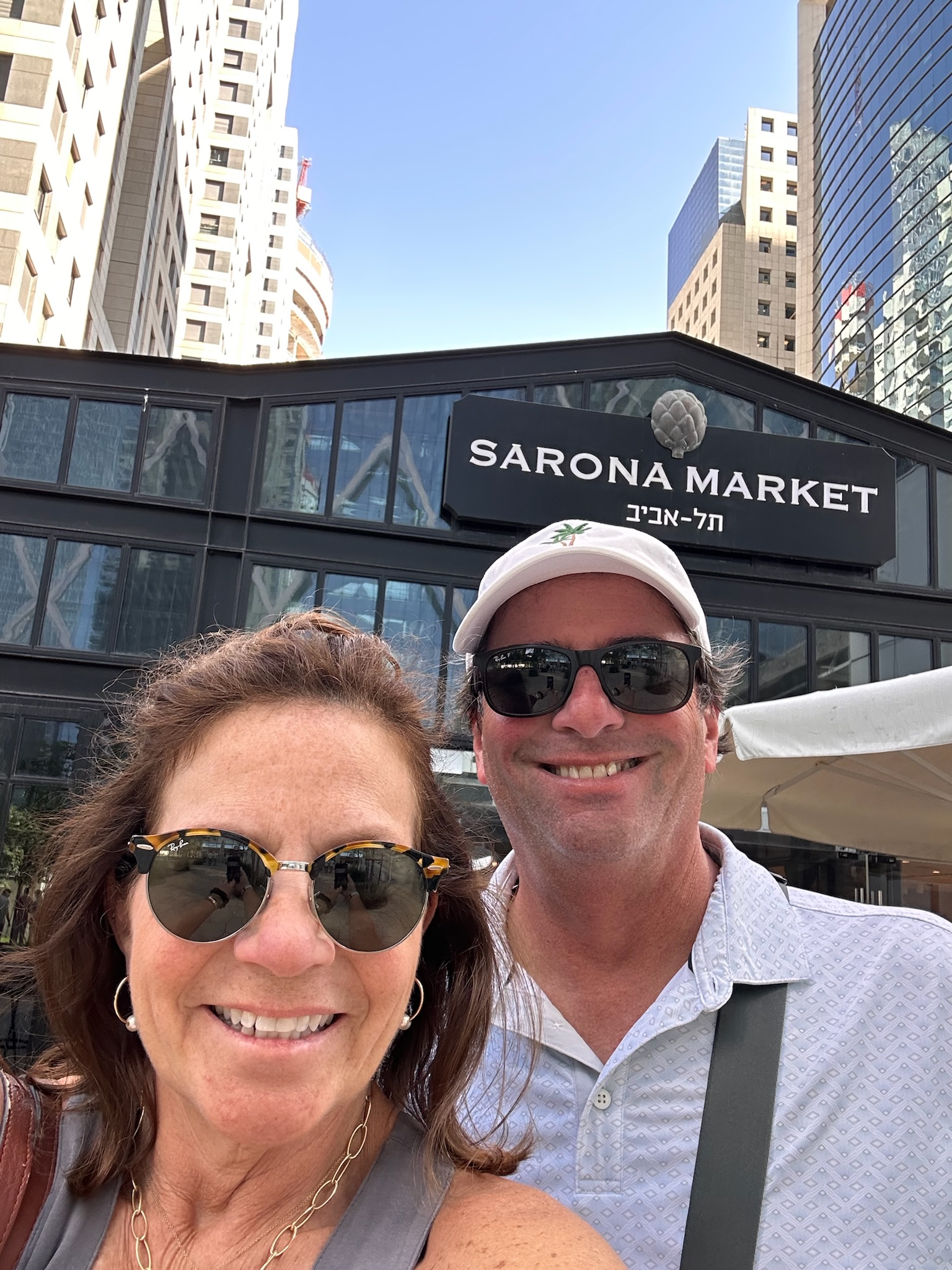
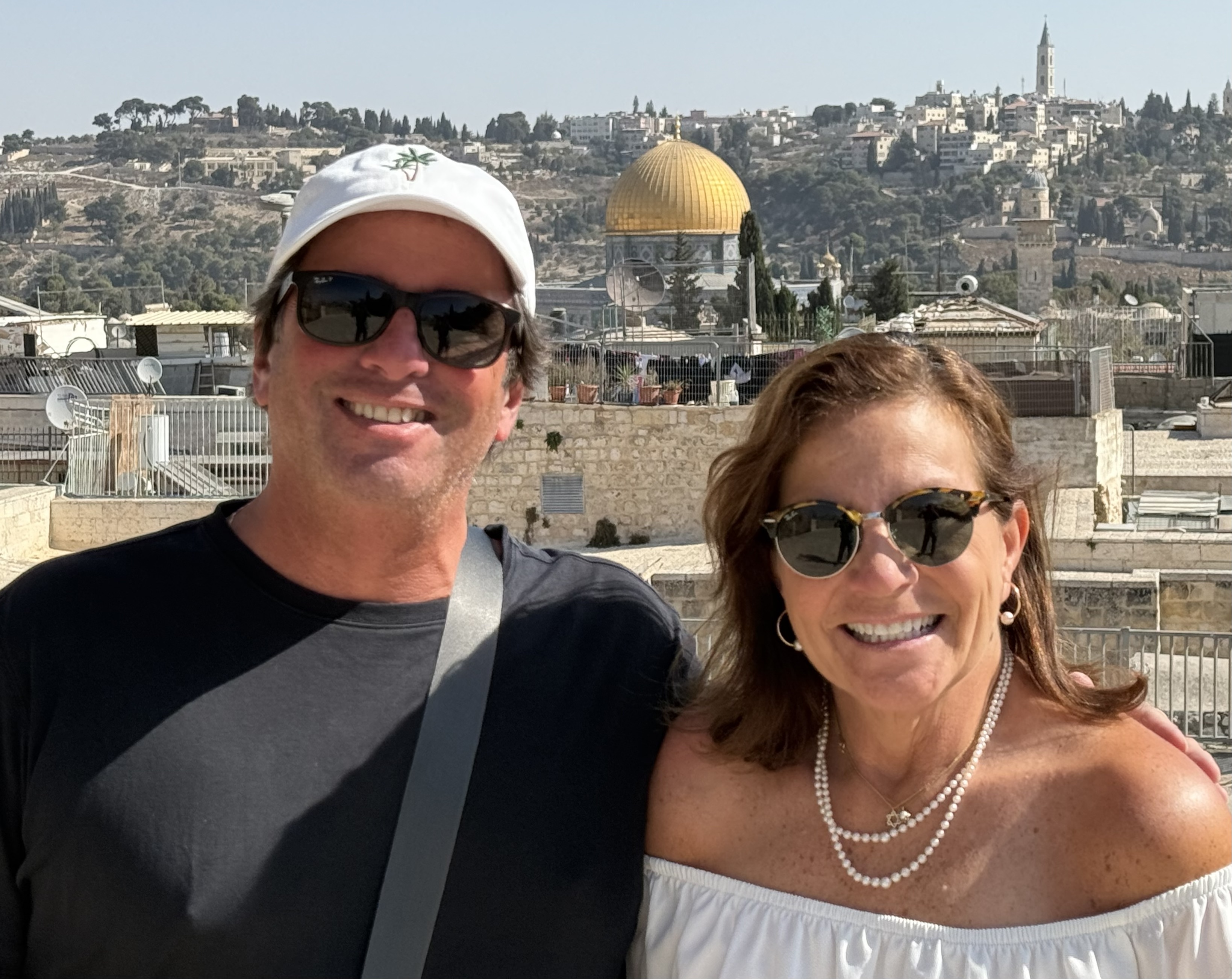
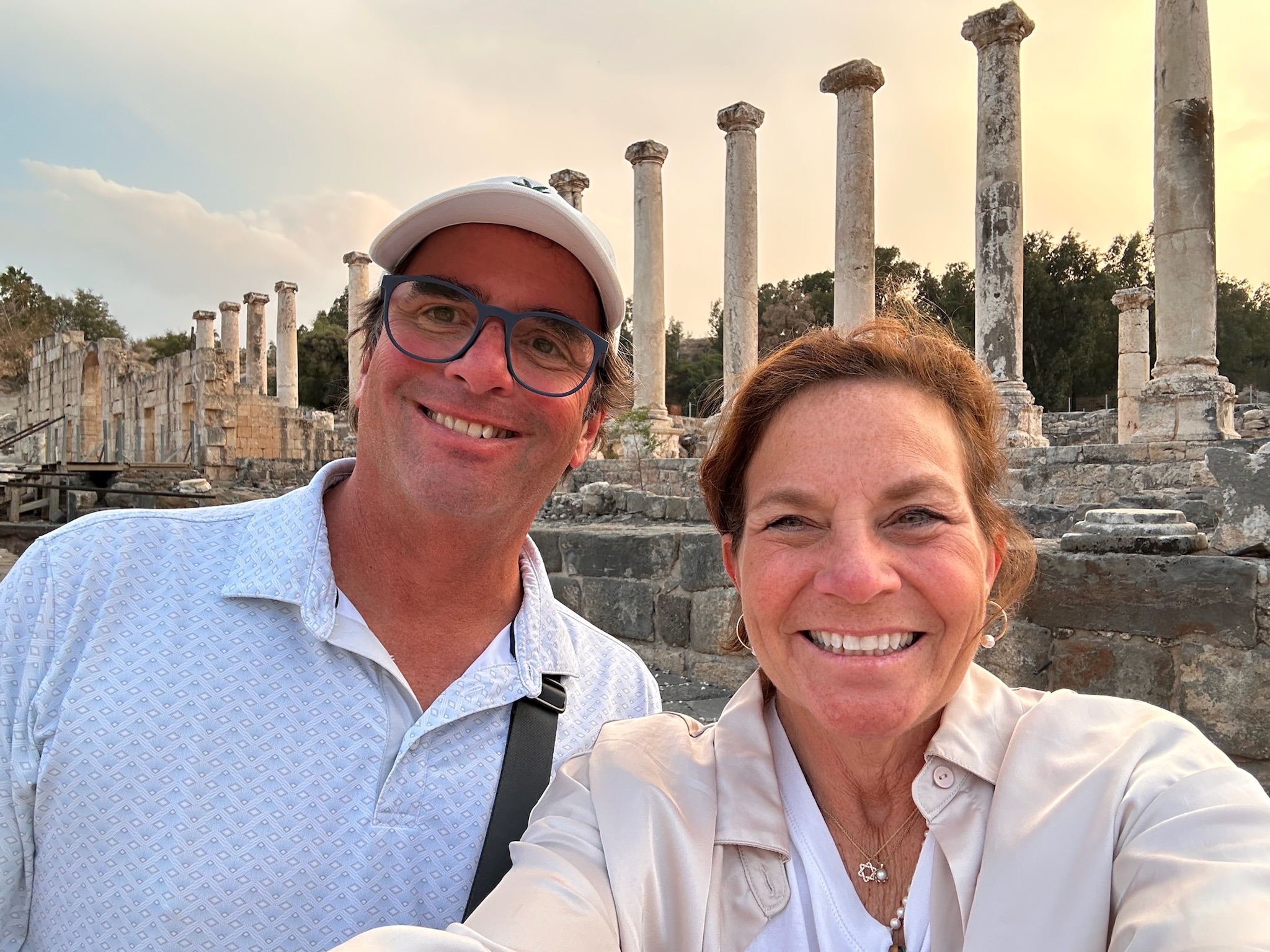
We were itching for another getaway for this newly retired guy and my not-so-newly retired wife, Geri, to kick off the next stage of our adventure together. While we discussed the possibilities of various destinations on our list of places to which we wanted travel (there are many), we kept coming back to the one that pulled at our hearts like none of the others: Israel. Why Israel? I could go into the cultural and religious aspects, or the countervailing political aspect, of our thought process, but ultimately, the decision came down to emotions. Of course it should be Israel, because although both of us had visited there while in high school and thought we would return soon and repeatedly, life, work, family, etc. had intervened, and we had many lost trips to make up. Of course it should be Israel, because of the pogrom of October 7 and the rising antisemitism that has made us ever so much more attuned to our Jewishness and our Israeli brethren. And of course it should be Israel, because just the thought of stepping off the plane onto Eretz Yisrael (literally “the land” of Israel) had us, to quote Mike Myers, kvelling. Thus, for this iteration of our Semester Abroad, we embarked on a six week journey to Tel Aviv.
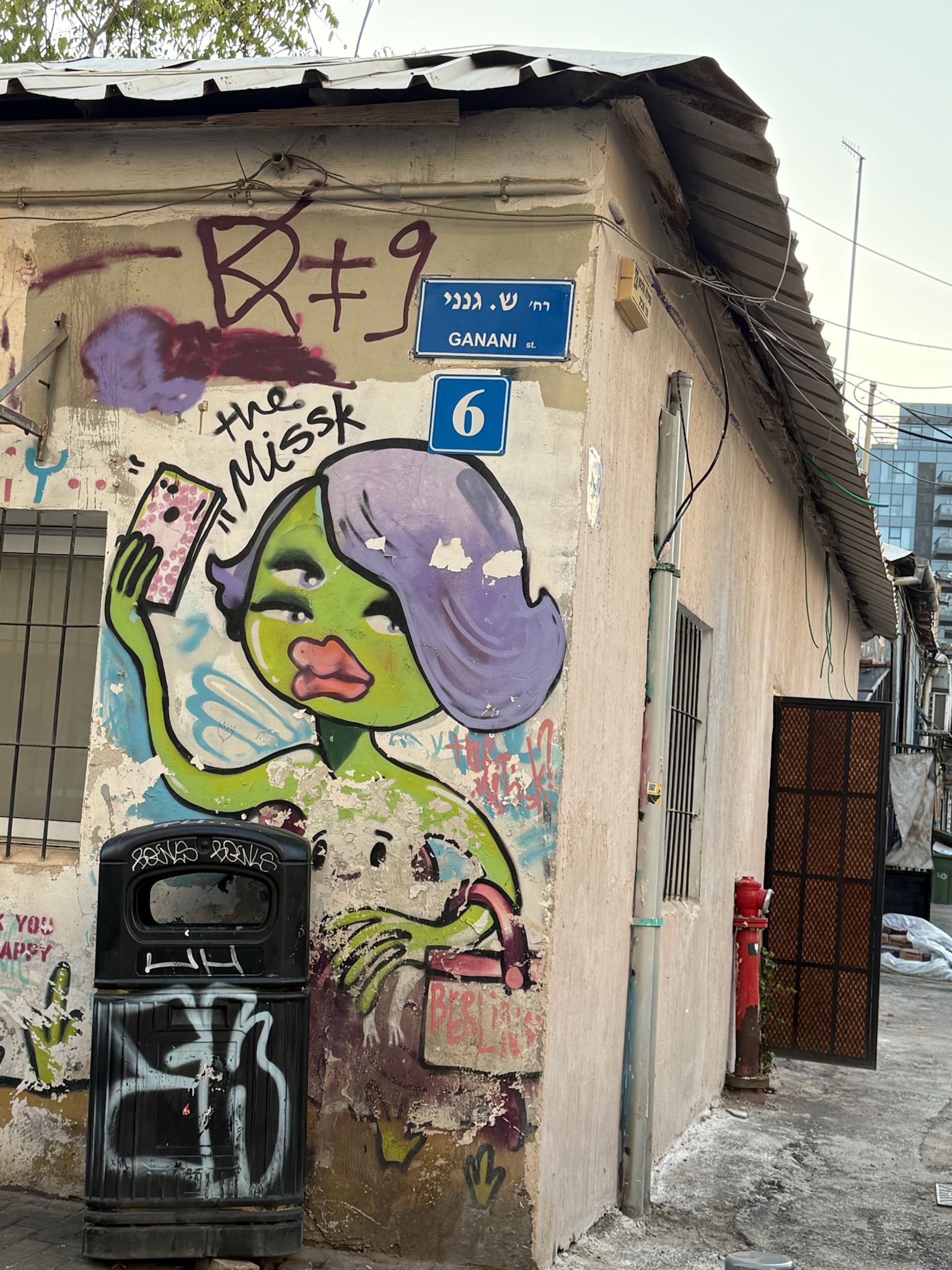
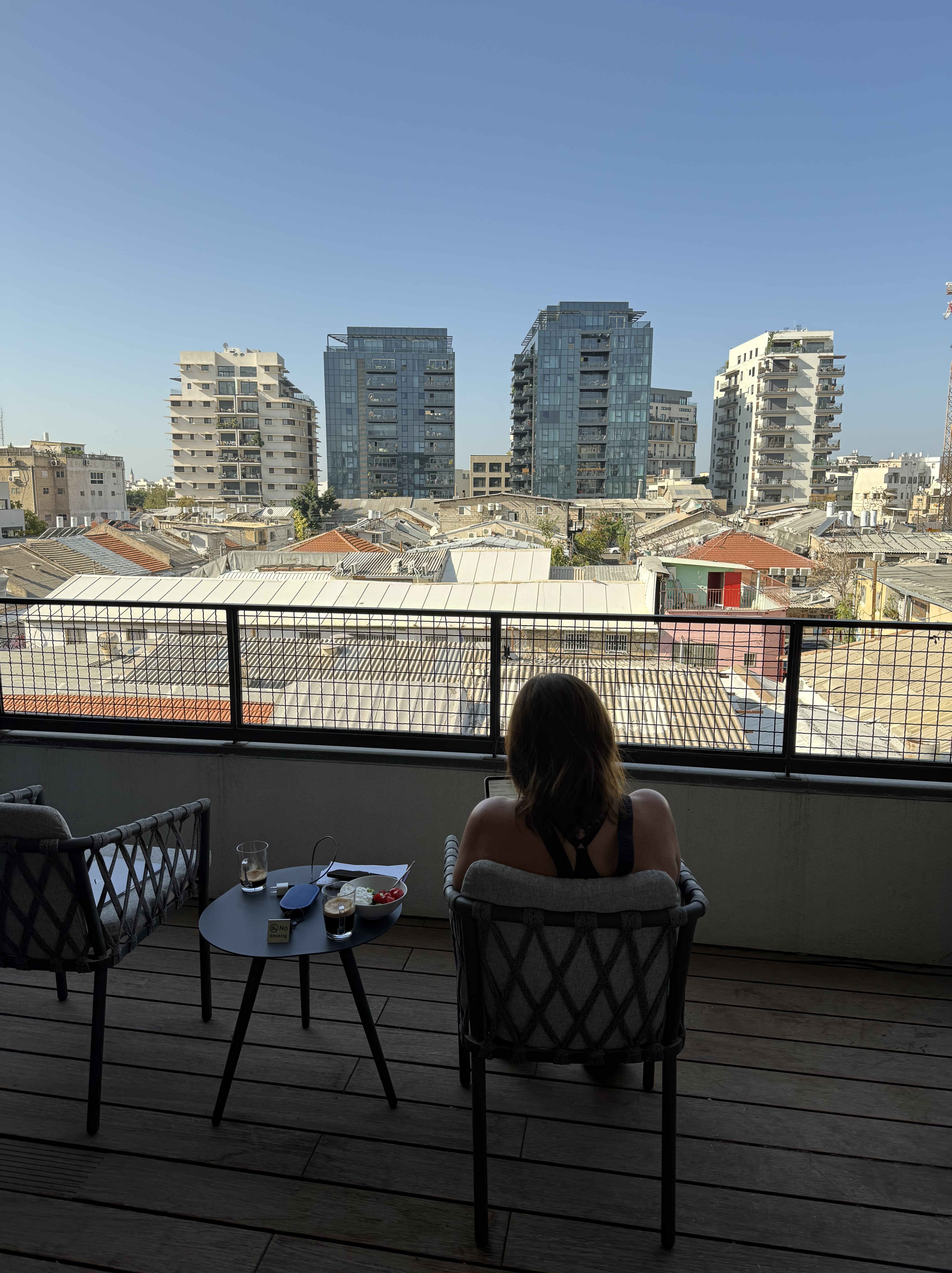
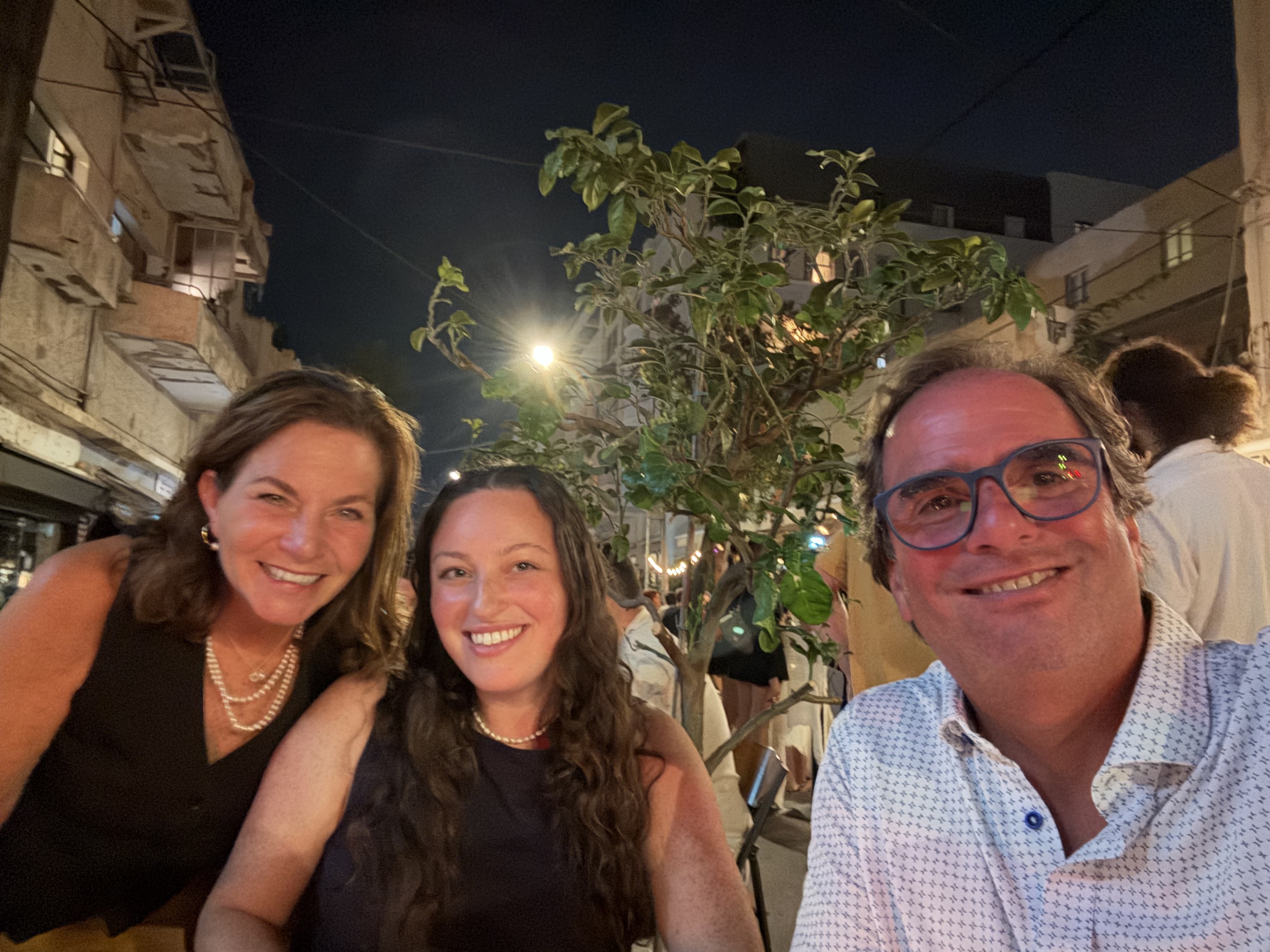
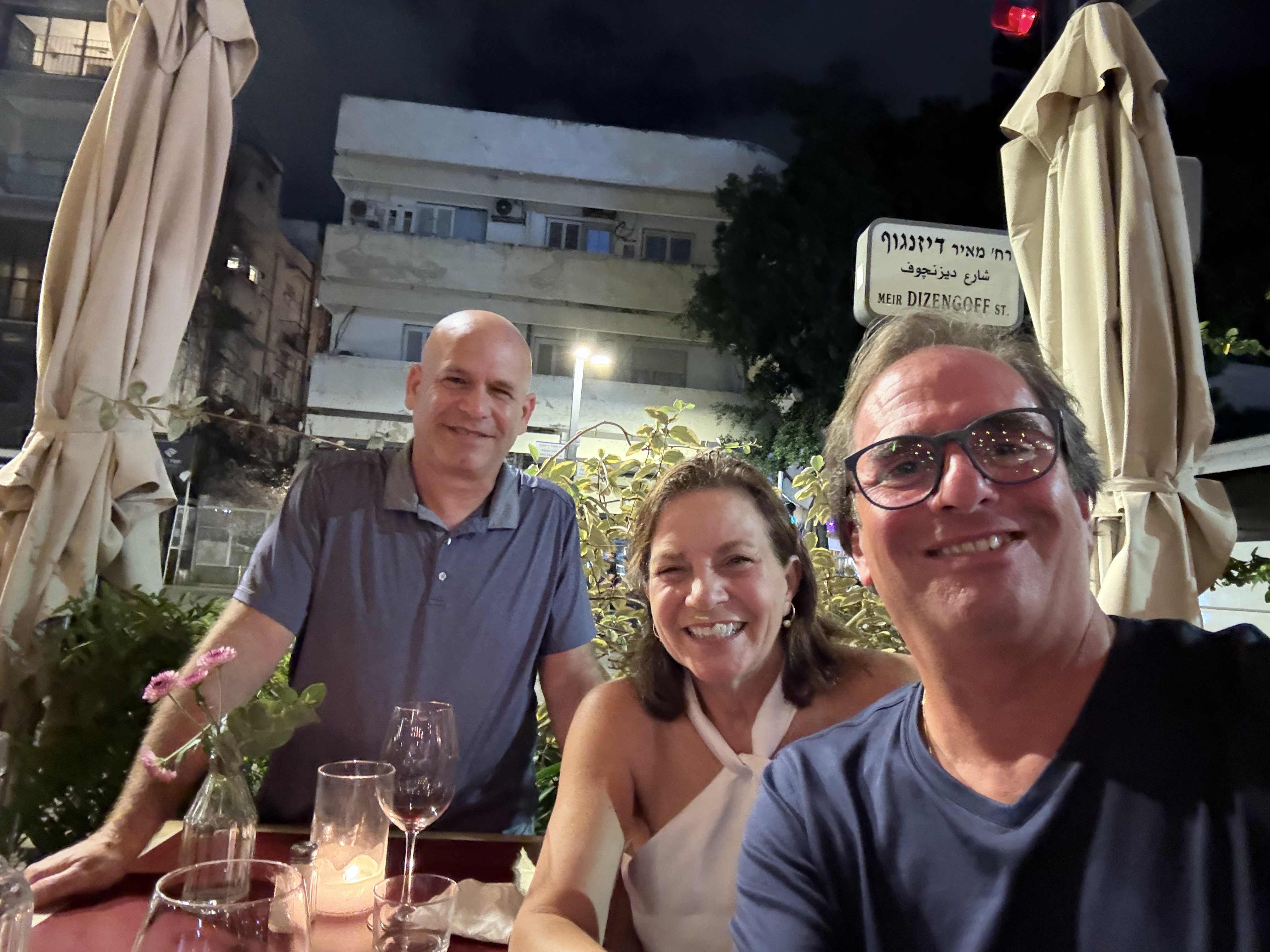
First off, where to stay? Tel Aviv offers many alternatives: modern apartments overlooking the beach, the promenade (Tayelet), and the Mediterranean; sophisticated Neve Zedek; the vibrant and always busy (except for Shabbat) area around the Carmel Market (the Shuk)…. The potential choices were daunting. And then there was Florentin, the gritty, graffiti-filled, noisy, hip area with seemingly endless numbers of cafes, bars, and restaurants, the Levinsky Market, and one delectably perfect Airbnb. From the moment we saw it, it felt Beshert (meant to be).
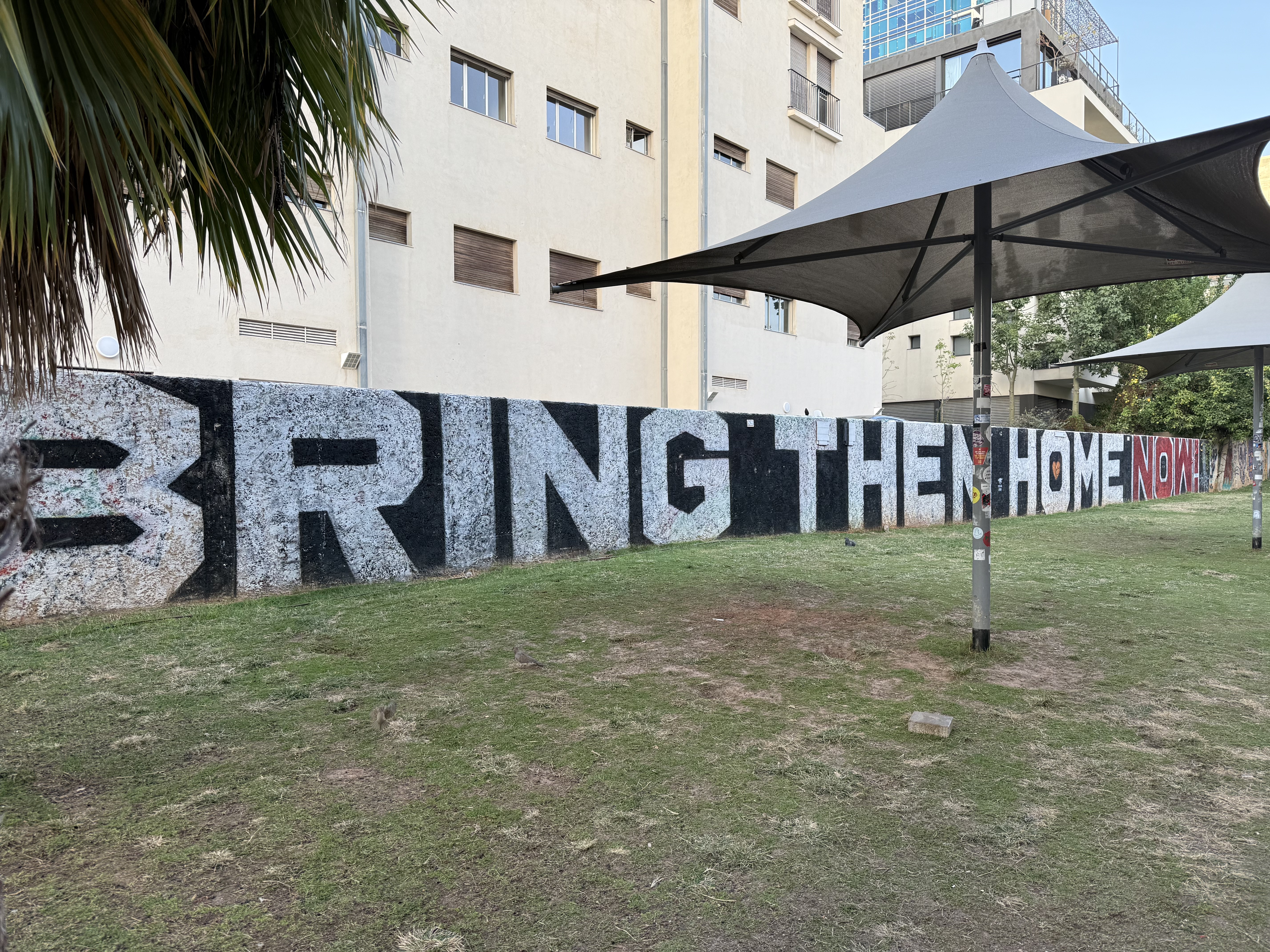
Off we went, only days after the ceasefire, to a country that was issuing a collective sigh of relief and yet still grappling with the horrors of the October 7 massacre and the fallout of the ensuing war against Hamas. We witnessed this in an emotional and poignant rally at Hostage Square two days after our arrival and at the end of our first Shabbat in the country, the first rally since the announcement of the ceasefire and the return of the live hostages. We couldn’t understand a word of the speakers’ Hebrew, some of whom were family members of the deceased hostages who had yet to be returned to Israel, but in this instance, the literal translation was unnecessary—the meaning of the words was revealed in the anguished tone in which they were spoken. The rally culminated in a heart-warming singing of Hatikvah by a young woman with an angelic voice, with the gathered thousands joining in, tears flowing in abundance.
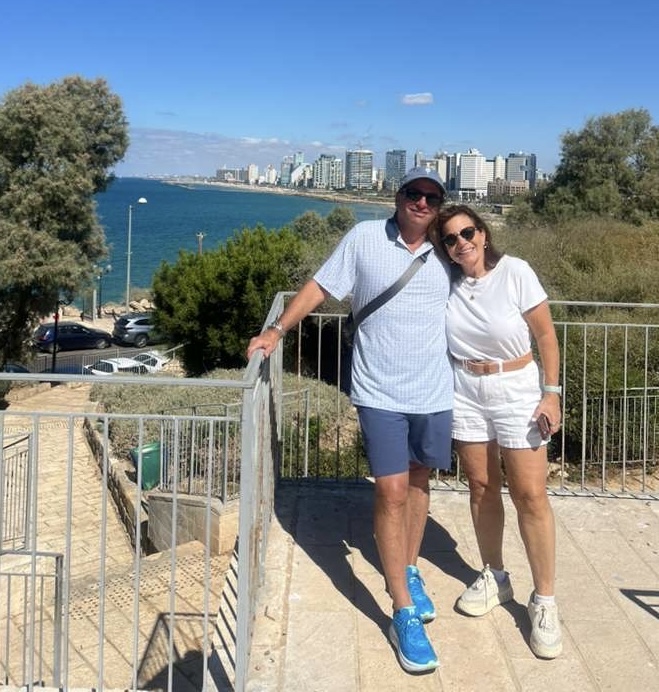
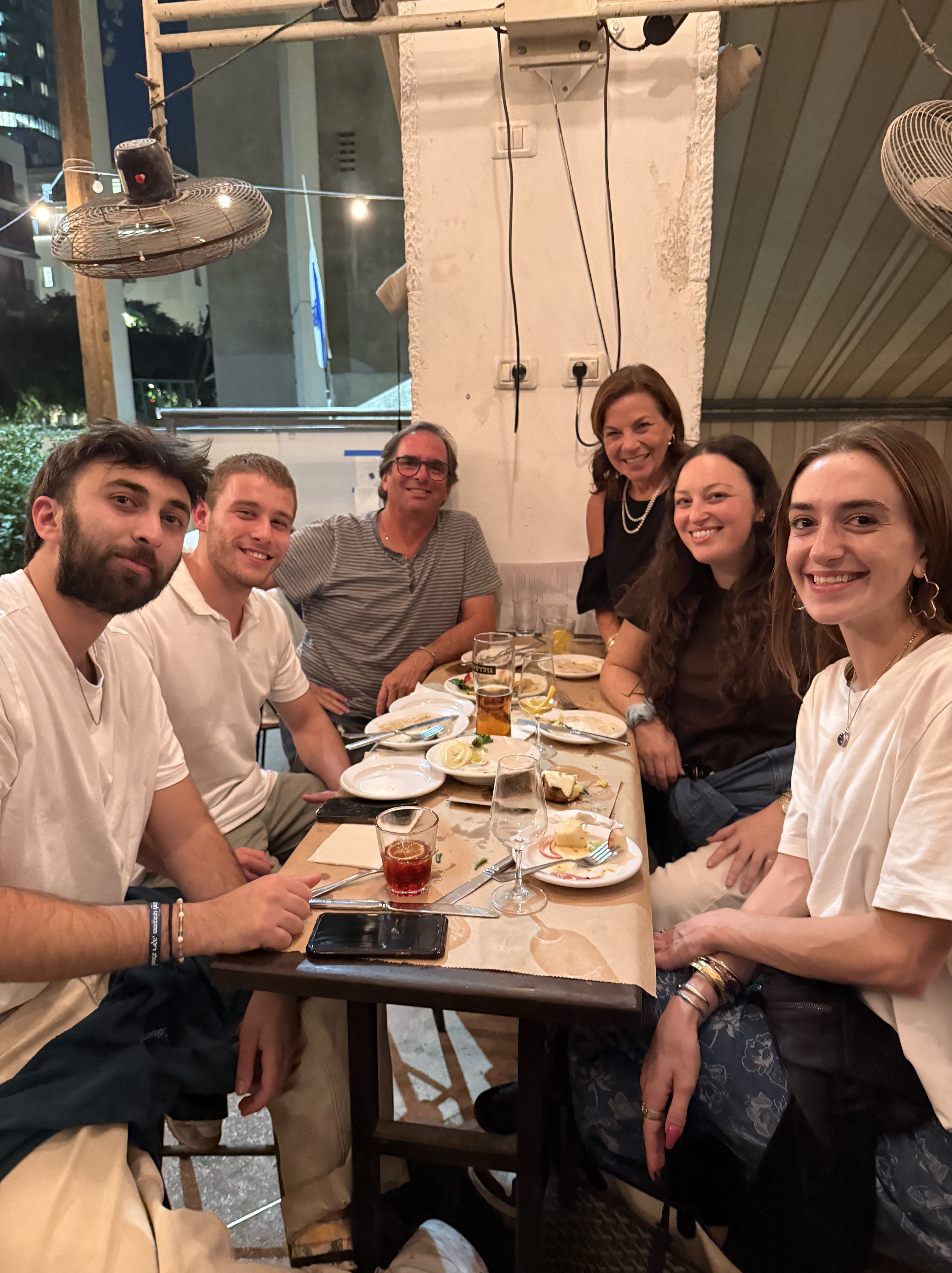
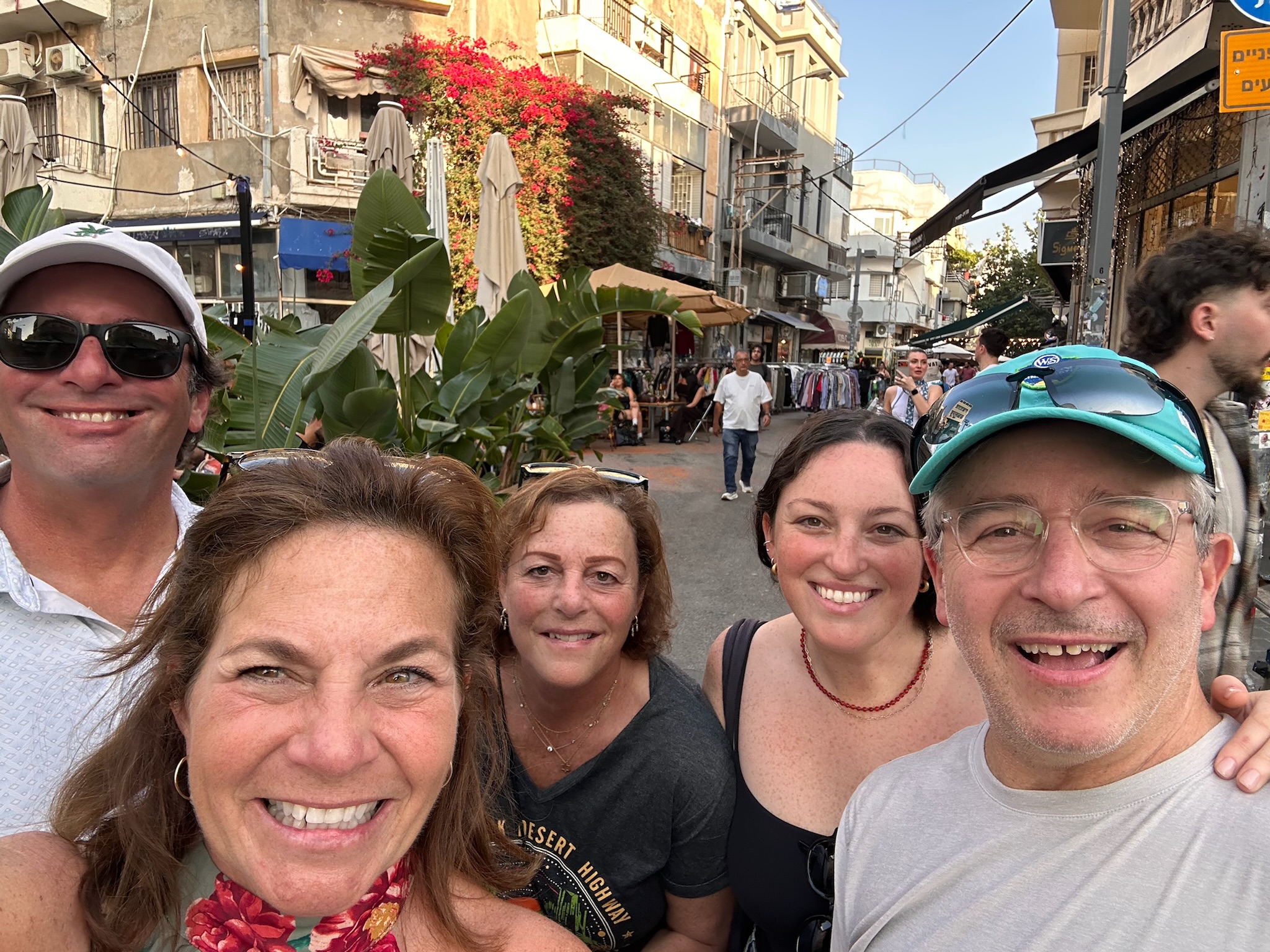
We were fortunate to have our niece, Ellie Krasnick, who made Aliyah, give us an early tour of Yafo and help us get our initial bearings. After we wandered the streets for a few days, what we observed could only be described as astonishing in the differences from our last visit—massive new office and residential buildings going up everywhere, multi-lane highways, high speed rail lines, streets under construction for light rail and a new subway system. And yet, it was the diversity of the people that was the most profound and most noticeable aspect of the city: overwhelmingly young, encompassing all races, religions, nationalities, and sexual preferences, kippot and tsitsit wearing, tattooed and pierced. Lots and lots of them smoking (hand-rolled cigarettes—a huge thing in Israel). And LOTS of pregnant women and those with newborns, as we discovered that Israel was experiencing a major baby boom since October 7.
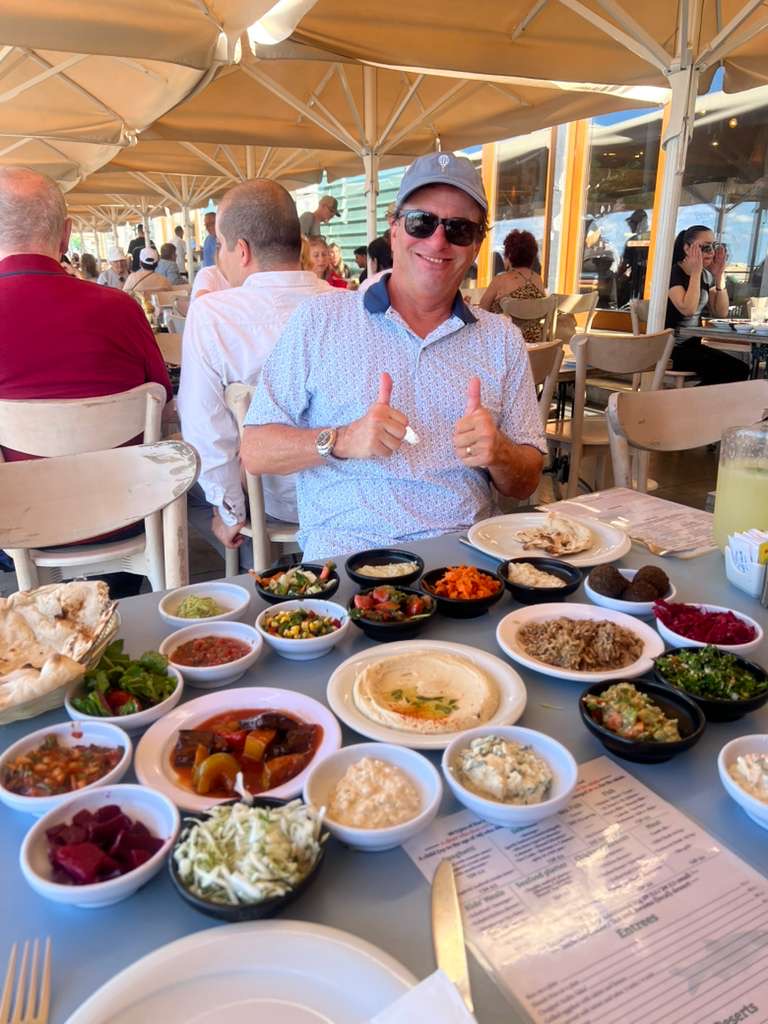
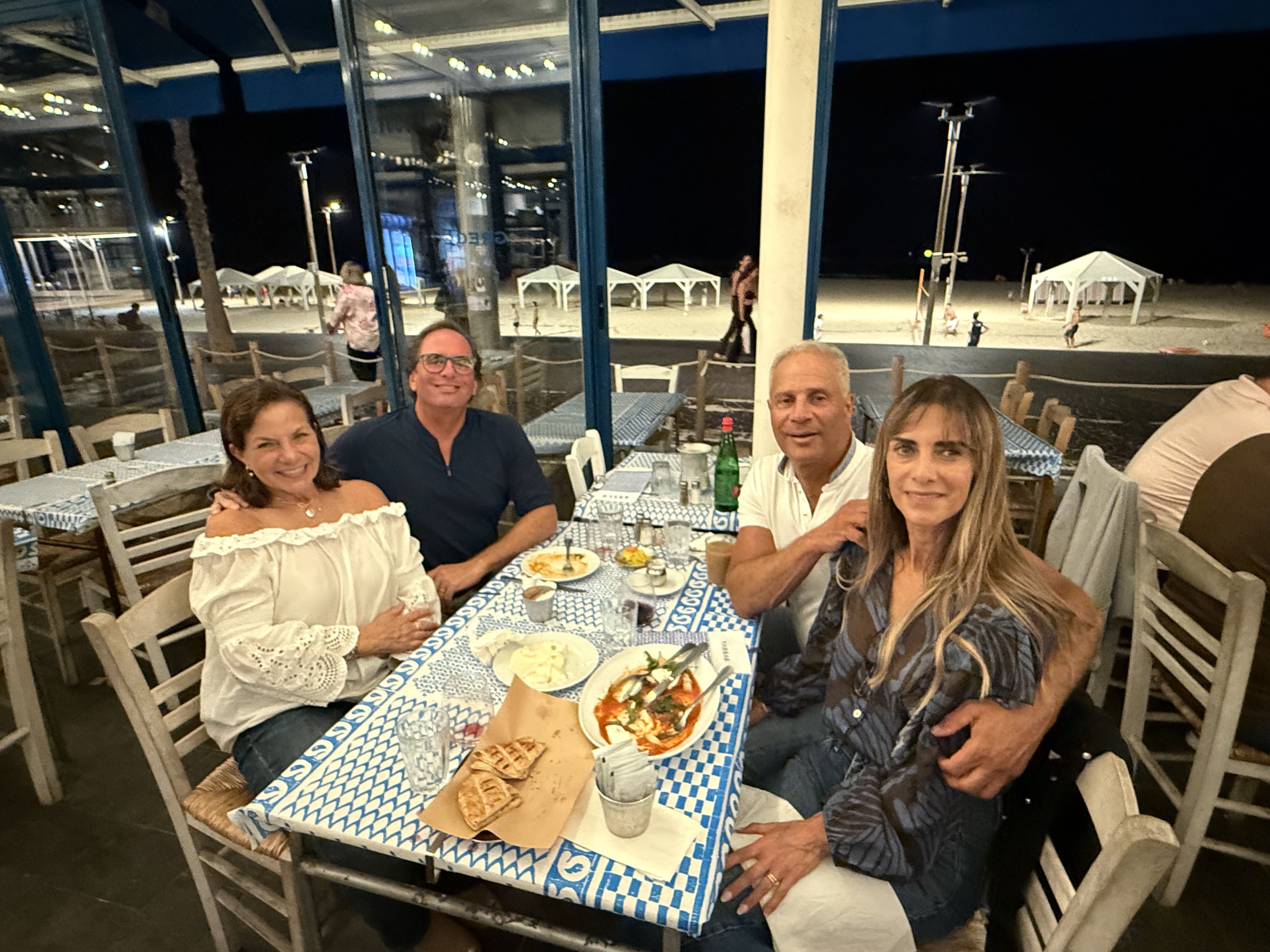
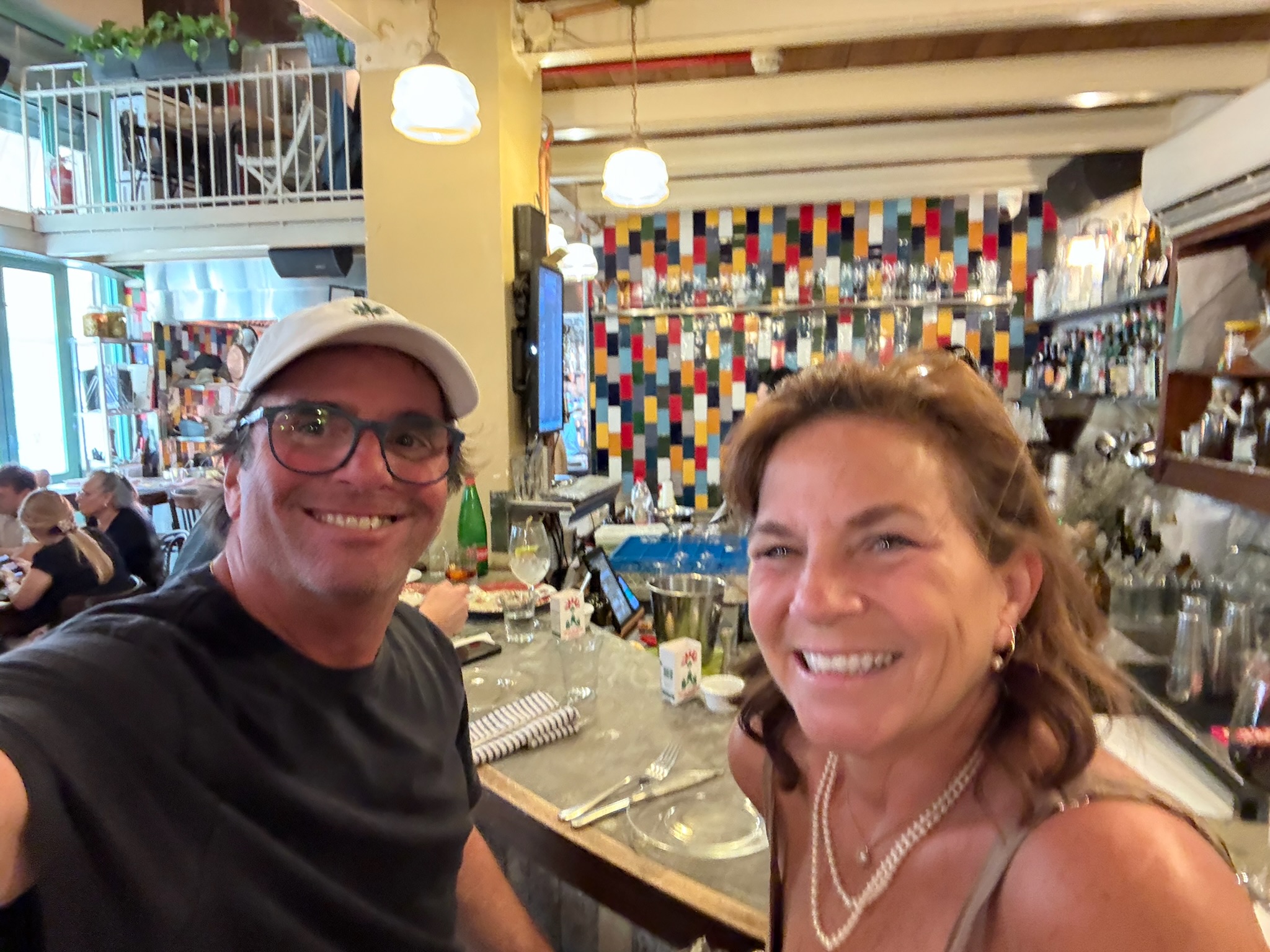
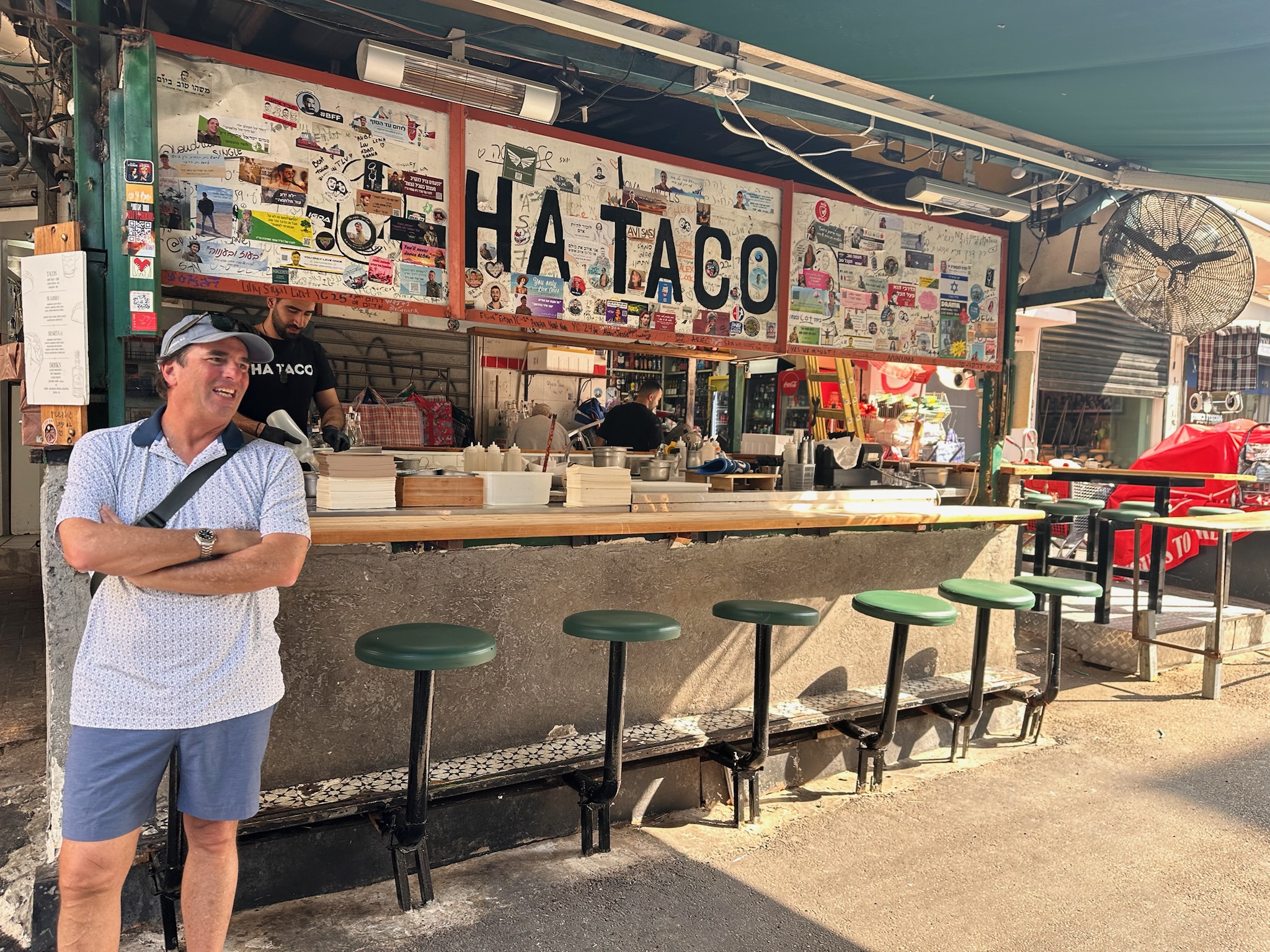
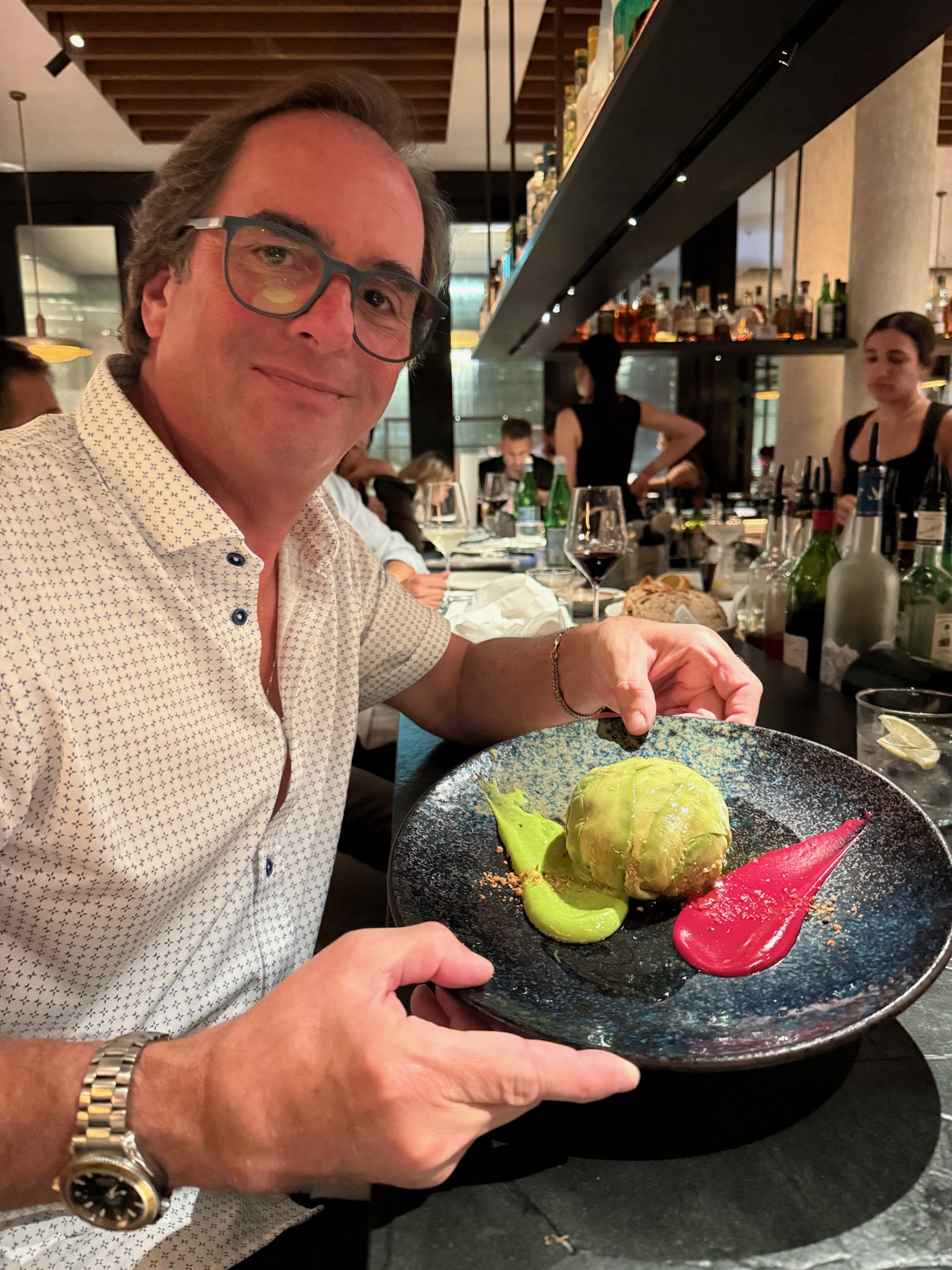
Tel Aviv is also very much a melting pot reflecting the origins of its people and the enclaves in which they live. Food-wise, you can find Yemenite spice shops and restaurants, French patisseries and boulangeries, Italian restaurants and pizza shops, burger joints and cocktail bars lifted straight out of Manhattan, gin joints from the British influence, and of course, falafel, shawarma, sabich, shakshuka, and bourekas stands. Similarly, the music, art, jewelry, and languages reflect a multiplicity of cultures and influences. And speaking of cultural influences, Tel Aviv is very much of a European vibe, from the Bauhaus architecture to the restaurants that sprawl out into the middle of Nachalat Binyamin Street to the late dining (you’ll be the only one there if you go before 8:30 p.m.).
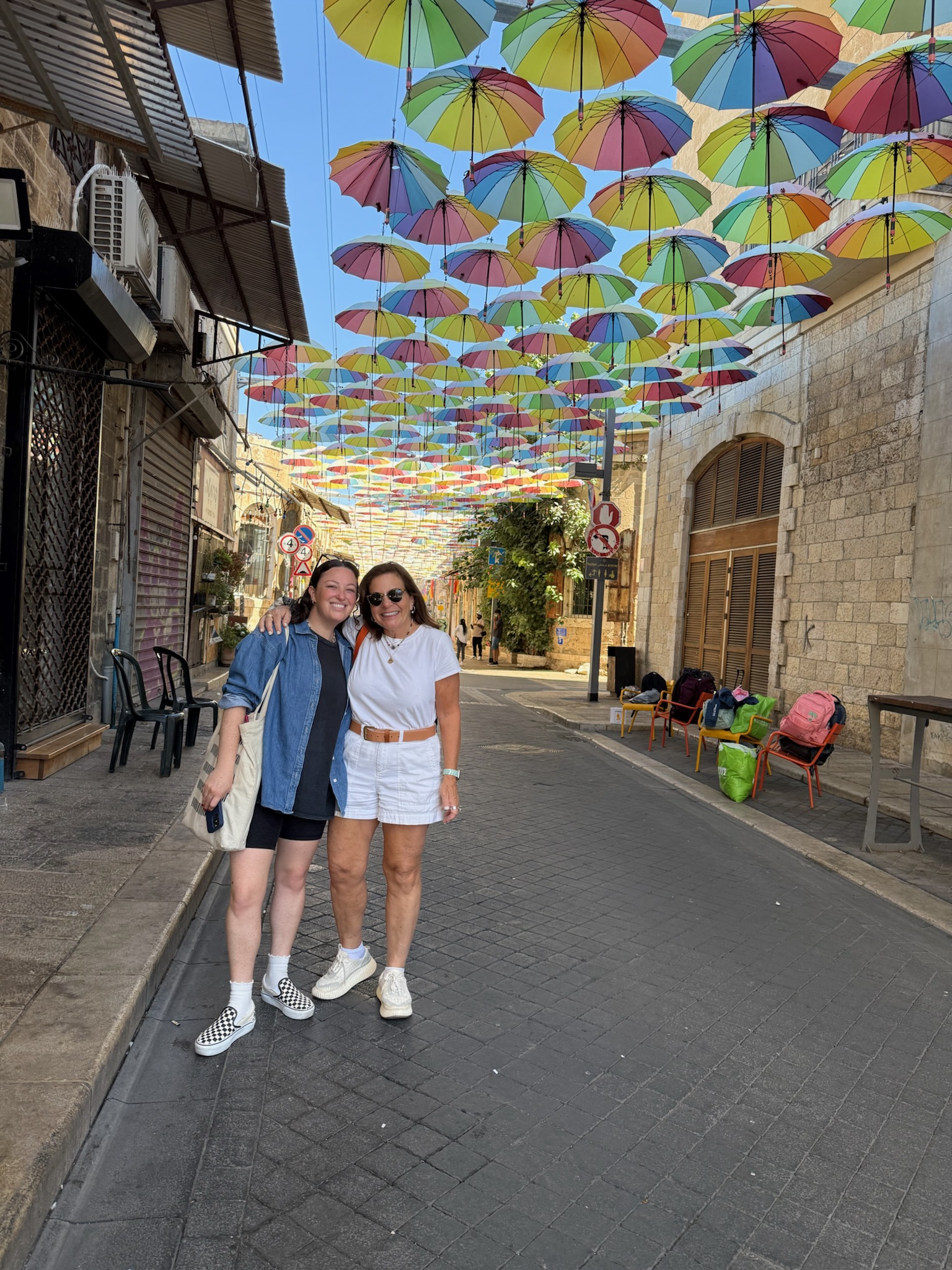
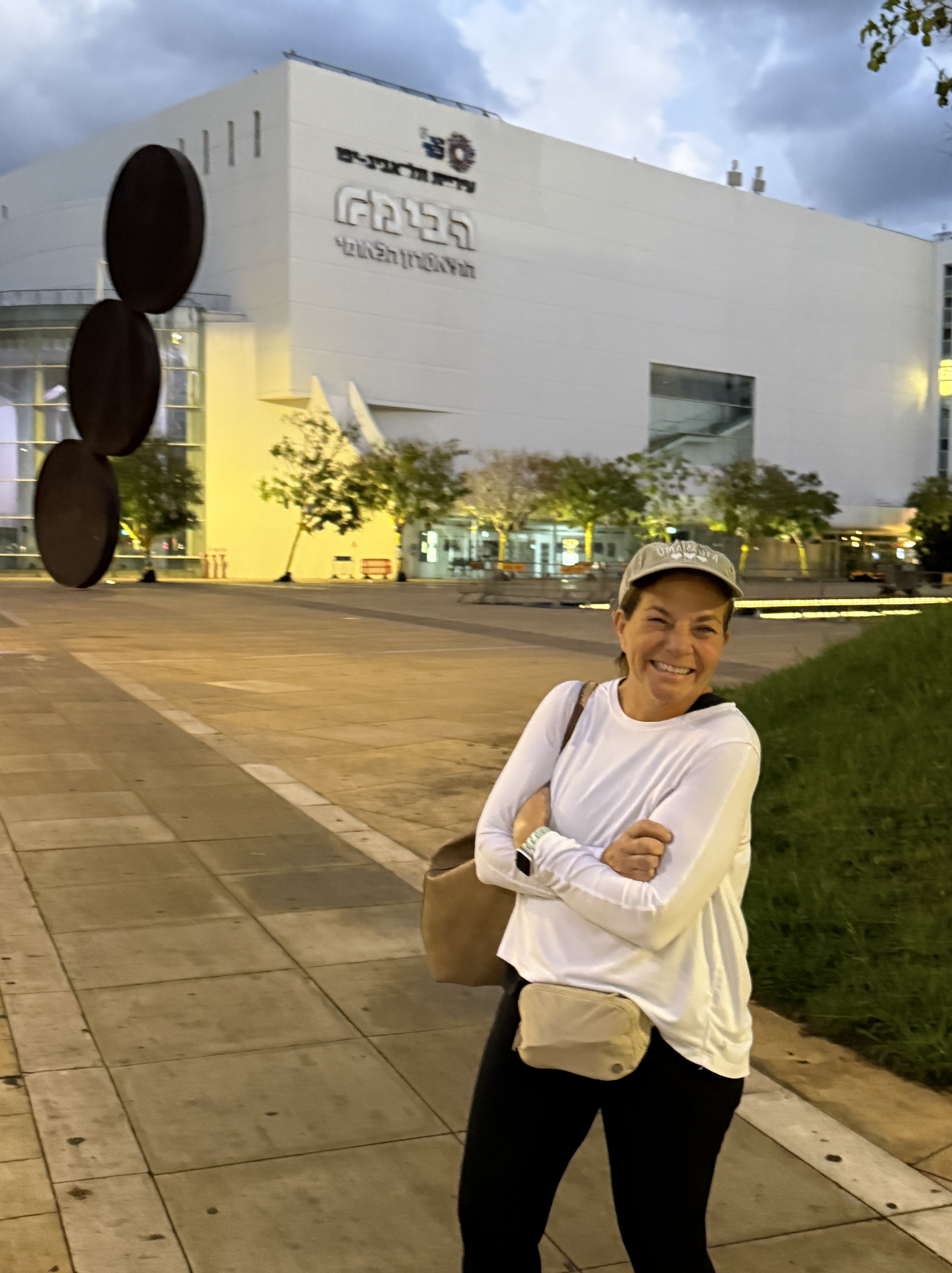
We walked to every corner of Tel Aviv, from Hayarkon Park in the North to the quaint old city of Yafo in the South, from Park HaMesila in Neve Zedek then along Rothschild Boulevard all the way to Rabin Square. While we initially thought that our Semesters Abroad would allow us to experience our destinations like locals, we have found that it is actually more of a slower, more relaxed version of tourism. On this trip we had a lot that we wanted to see and experience, and we had the luxury of doing it at our pace. That being said, we never took a day “off” and did nothing—we just couldn’t bring ourselves to be THAT relaxed. So, on our lazier days when we sat in our Airbnb reading our books over several cups of coffee, we had to eventually motivate to get out and about, even if it meant just walking aimlessly along tree-lined Rothschild Boulevard, or to Levinsky Market or the Carmel Shuk or the Tayelet.
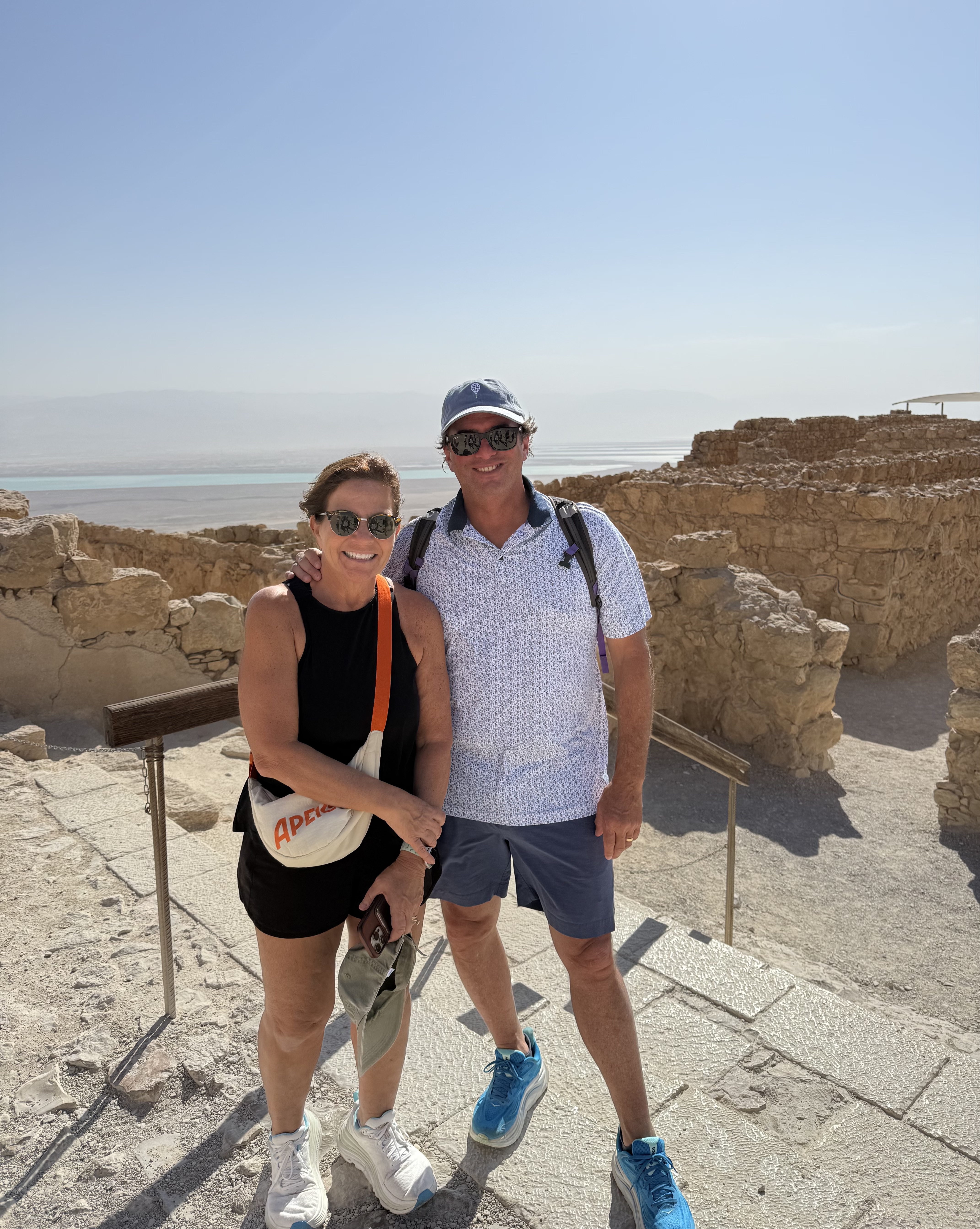
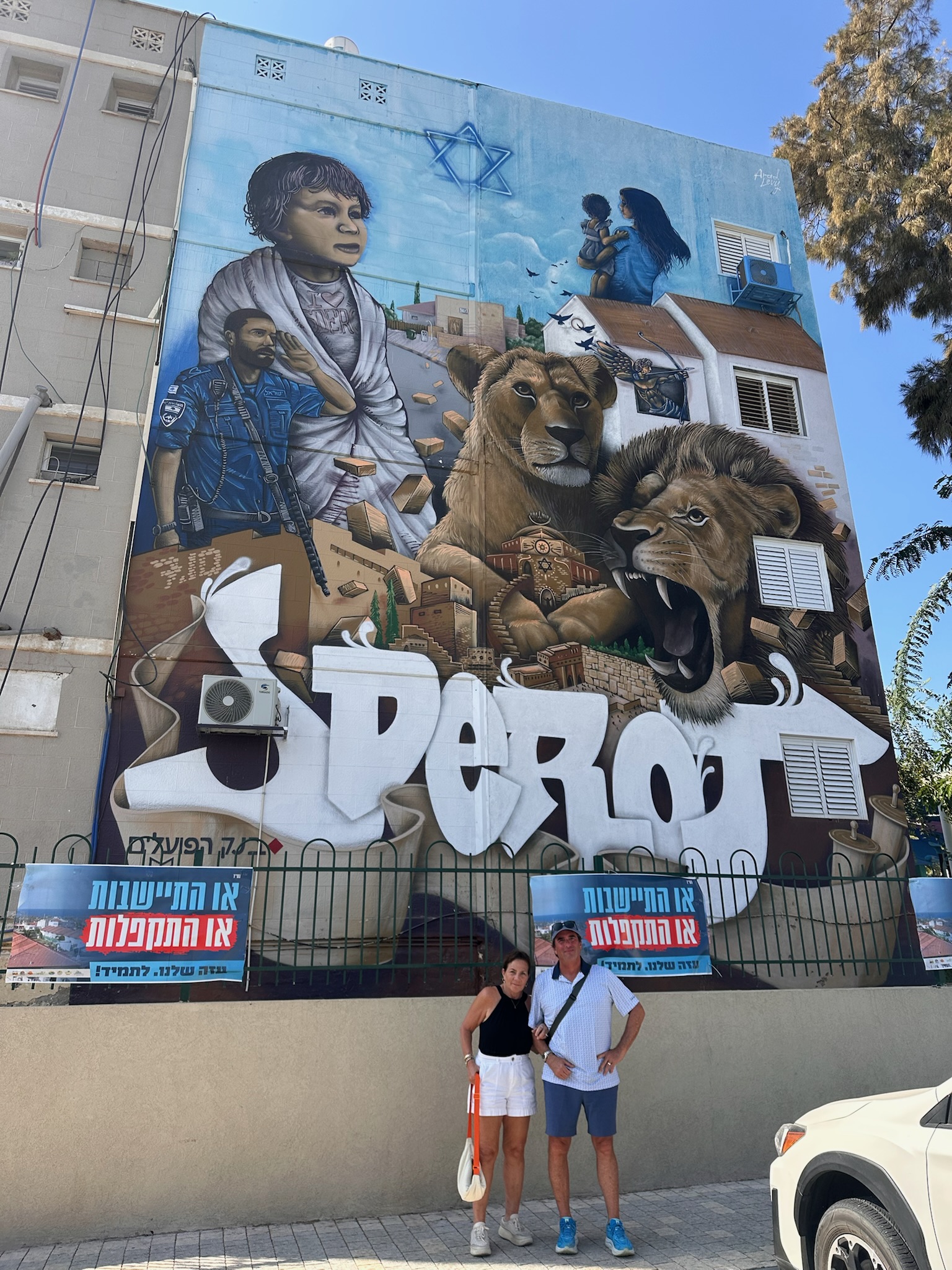
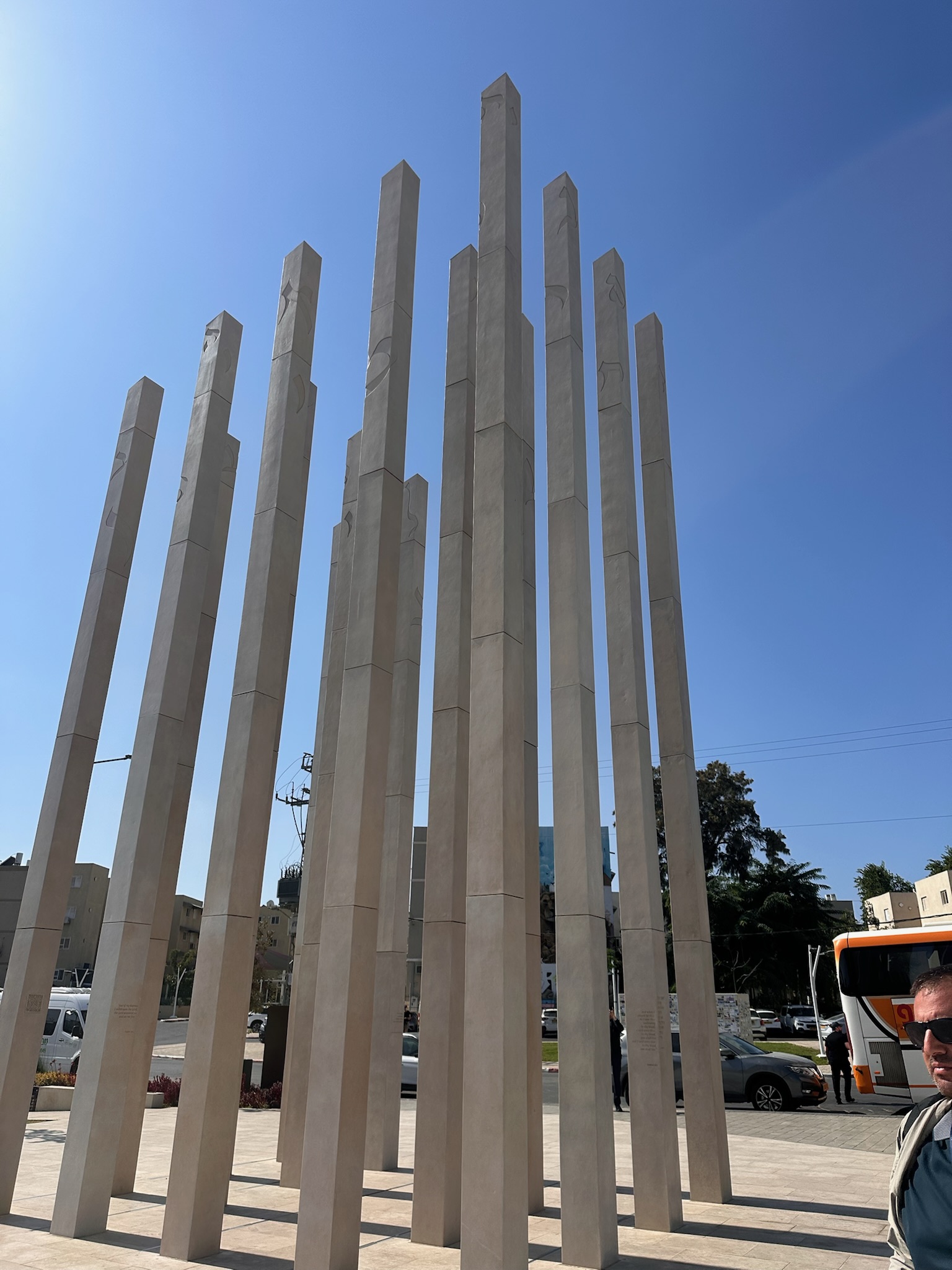
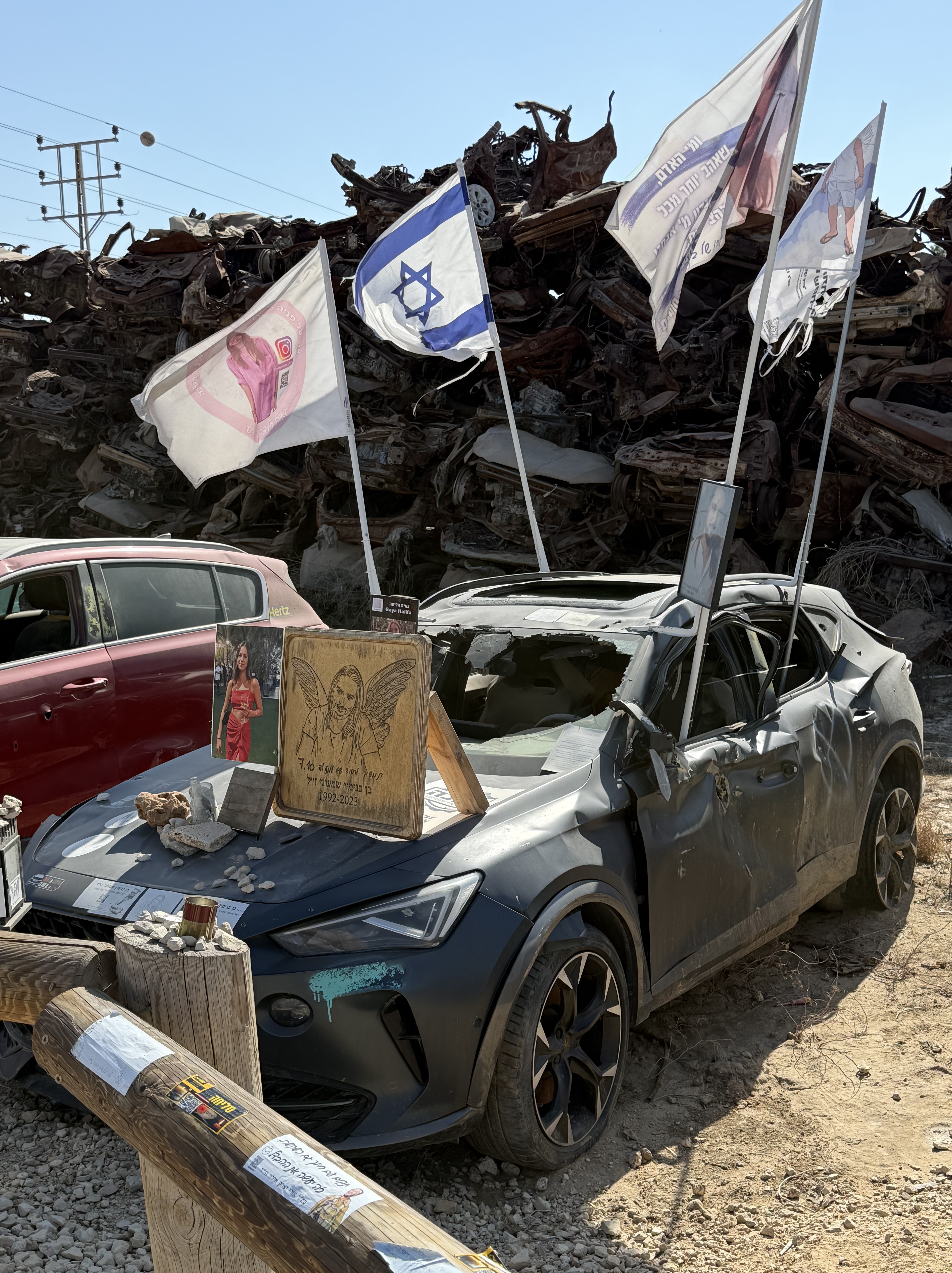
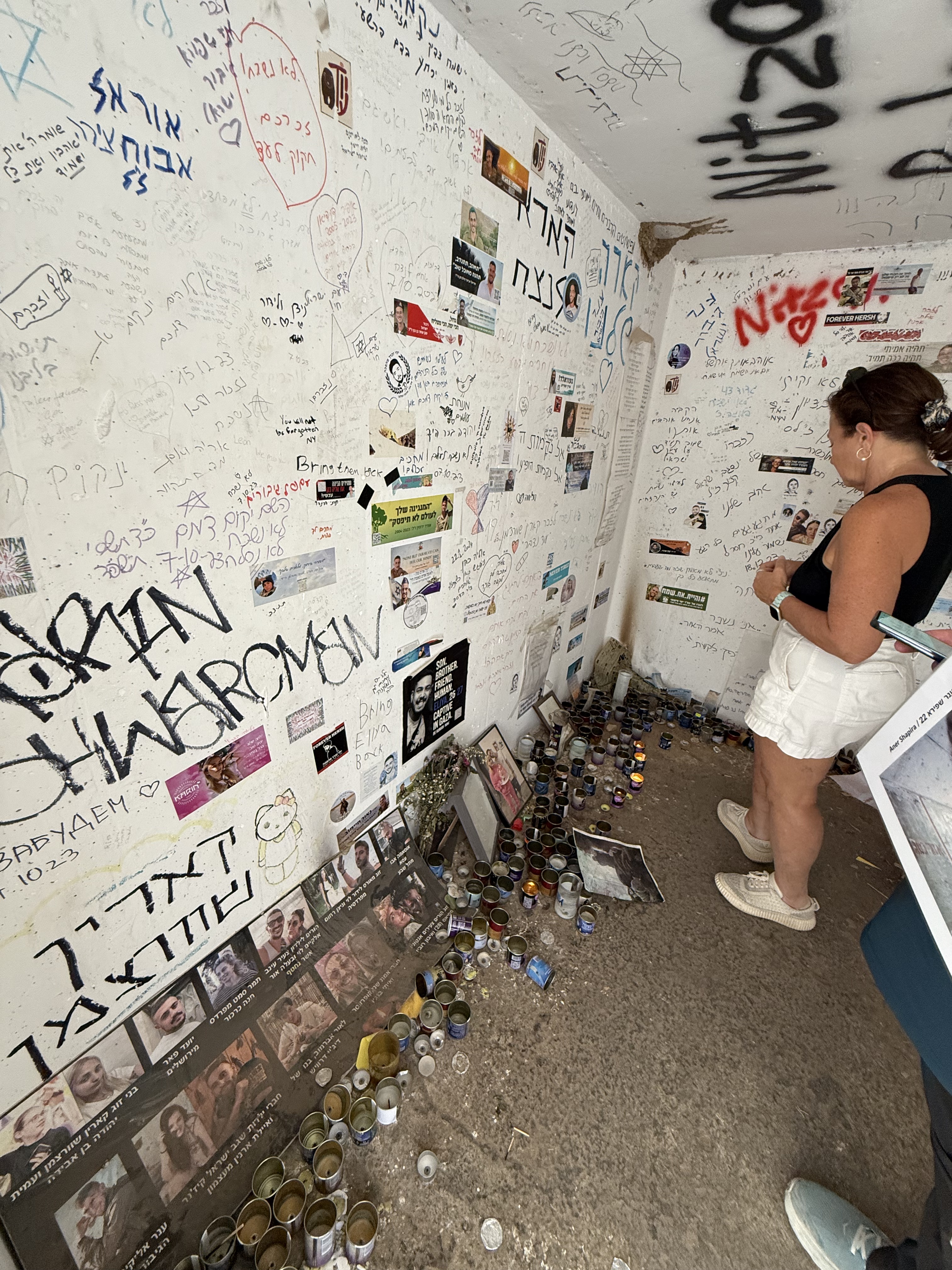
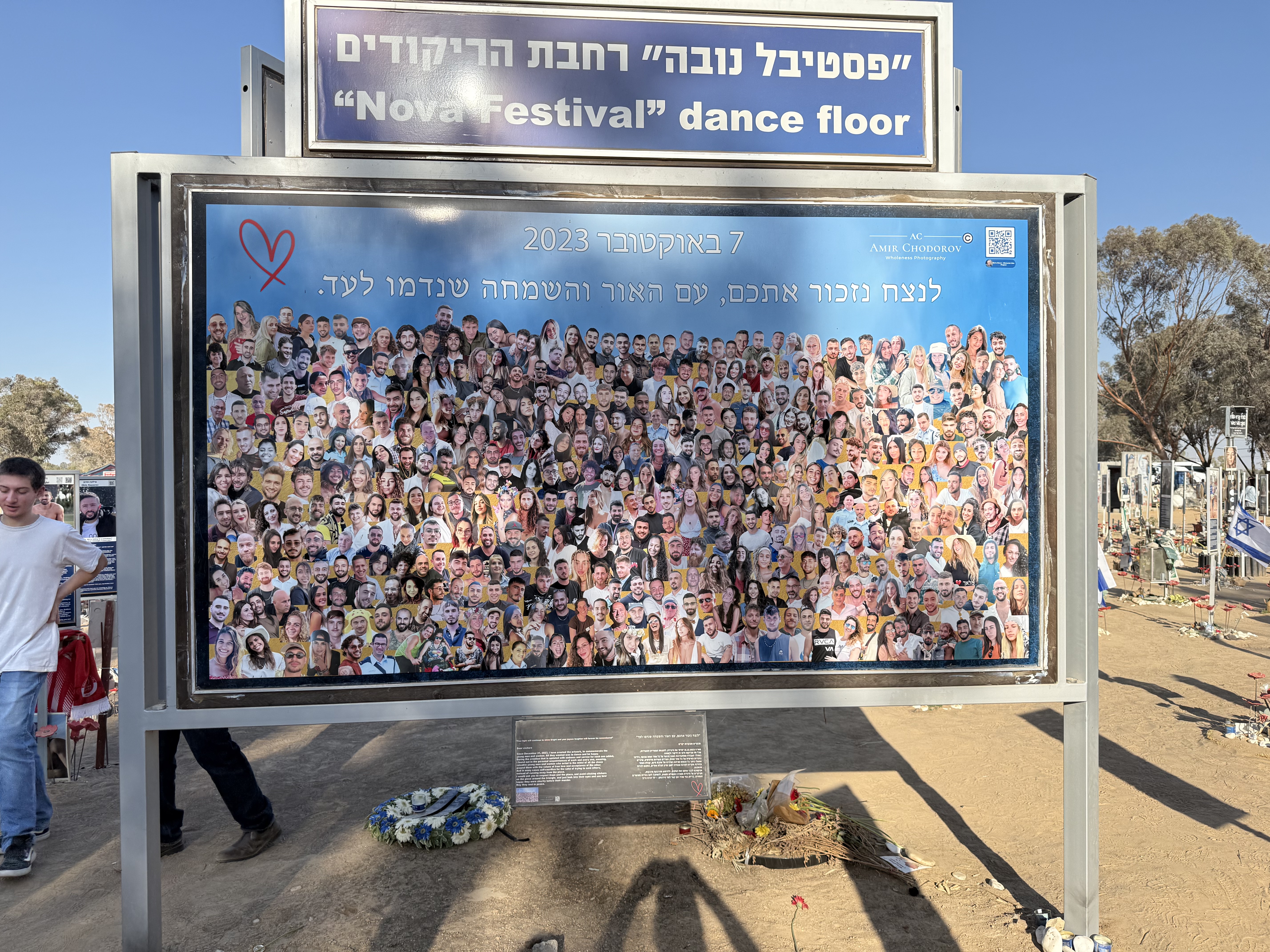
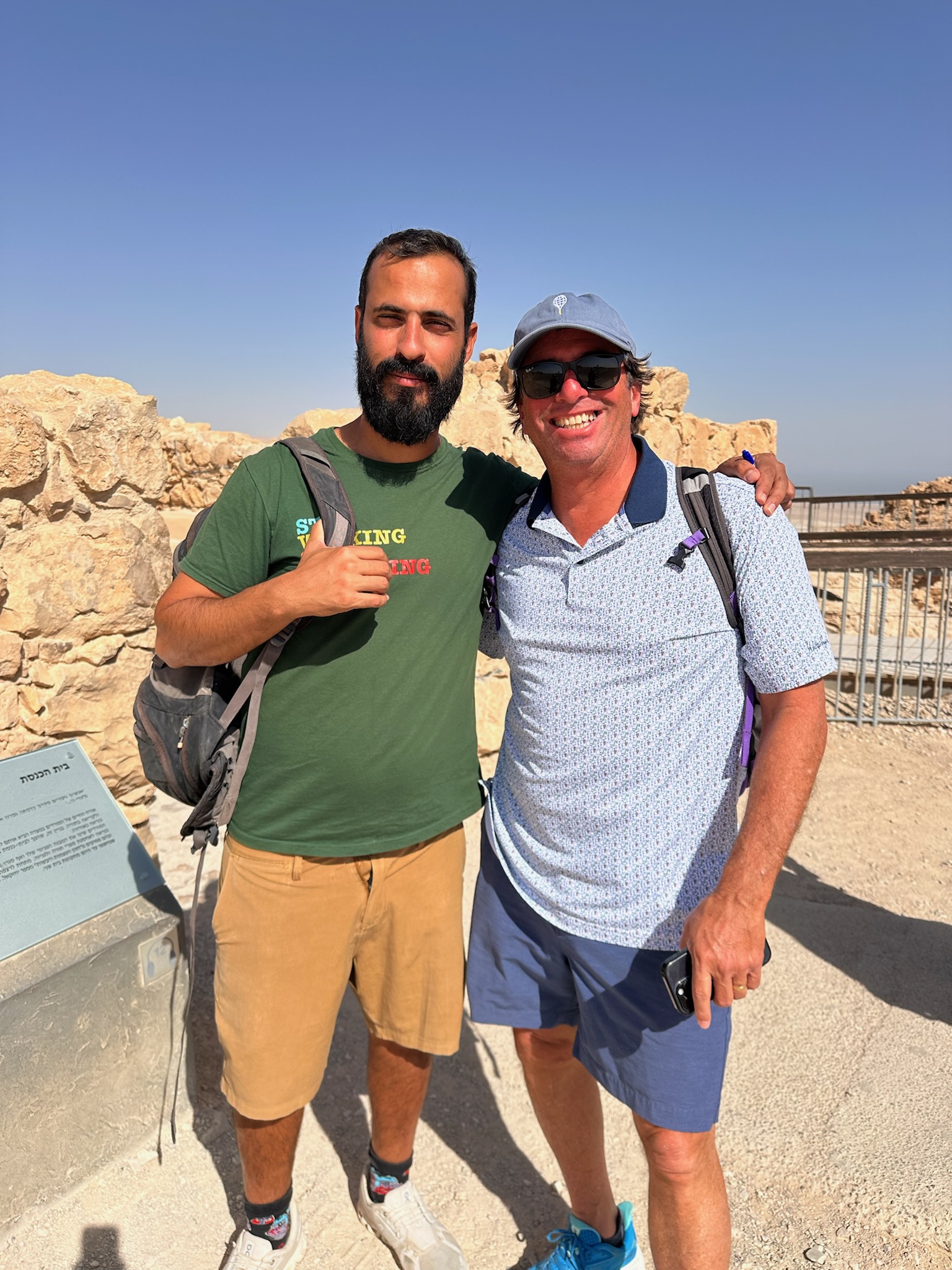
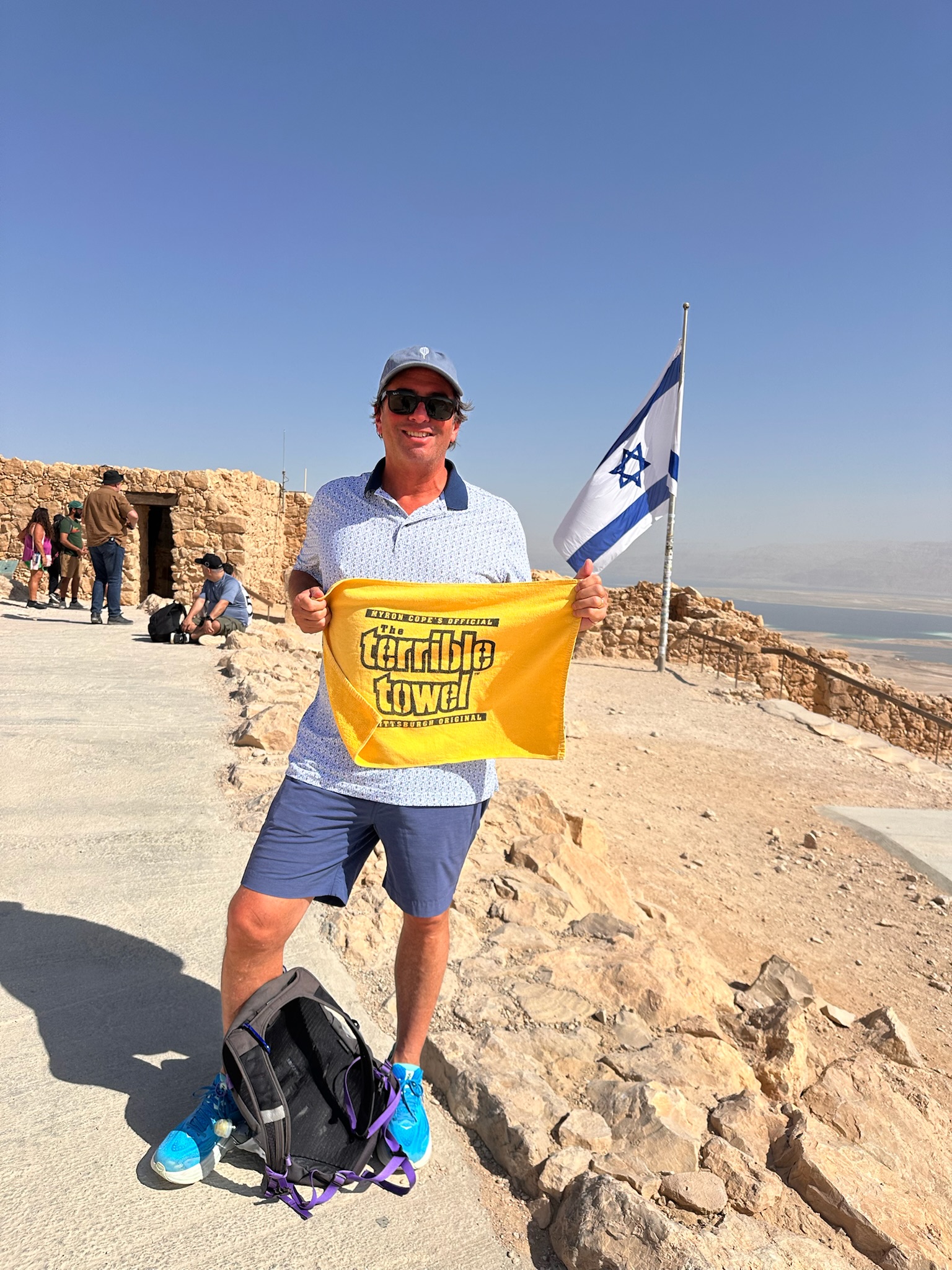
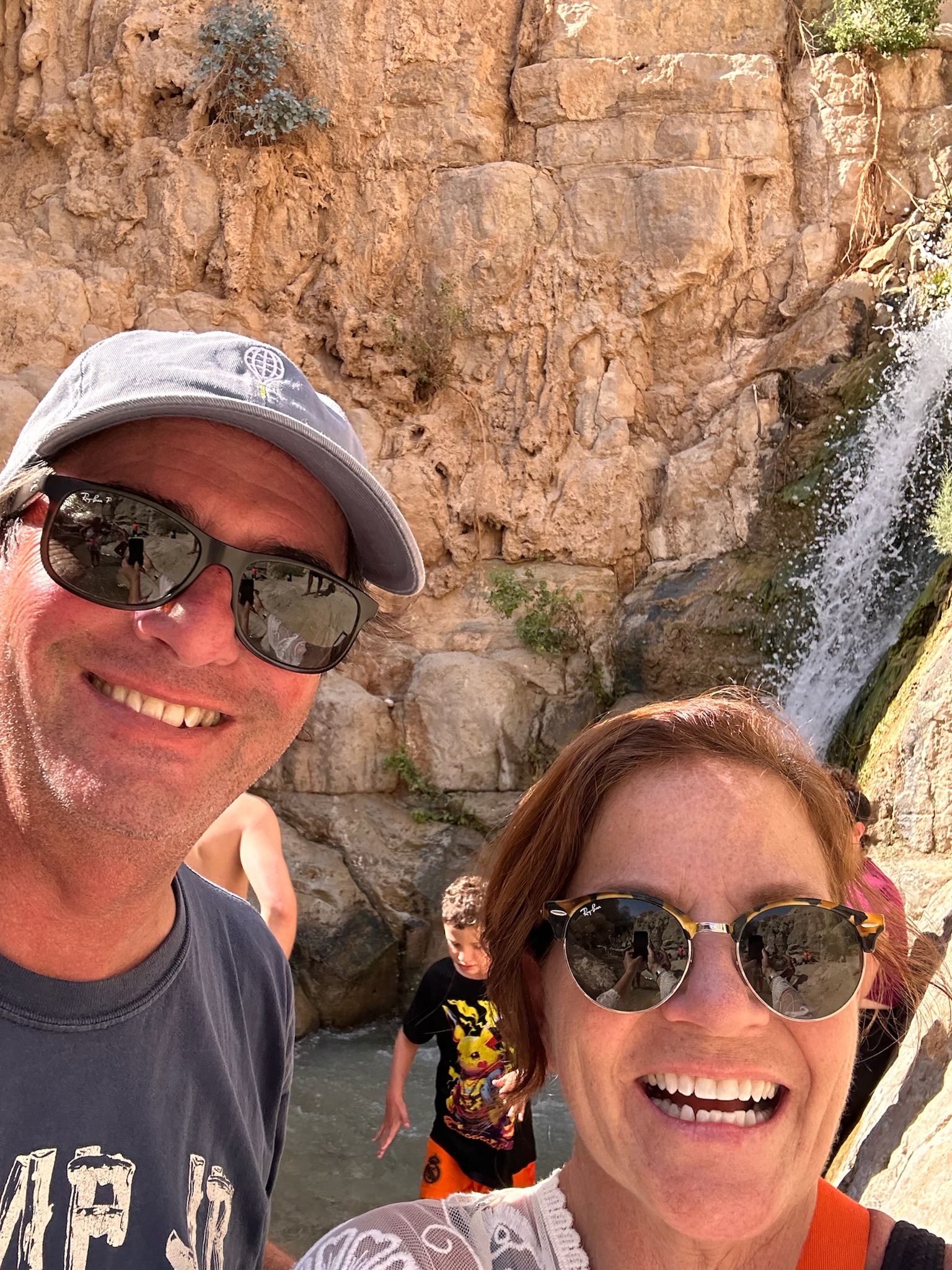
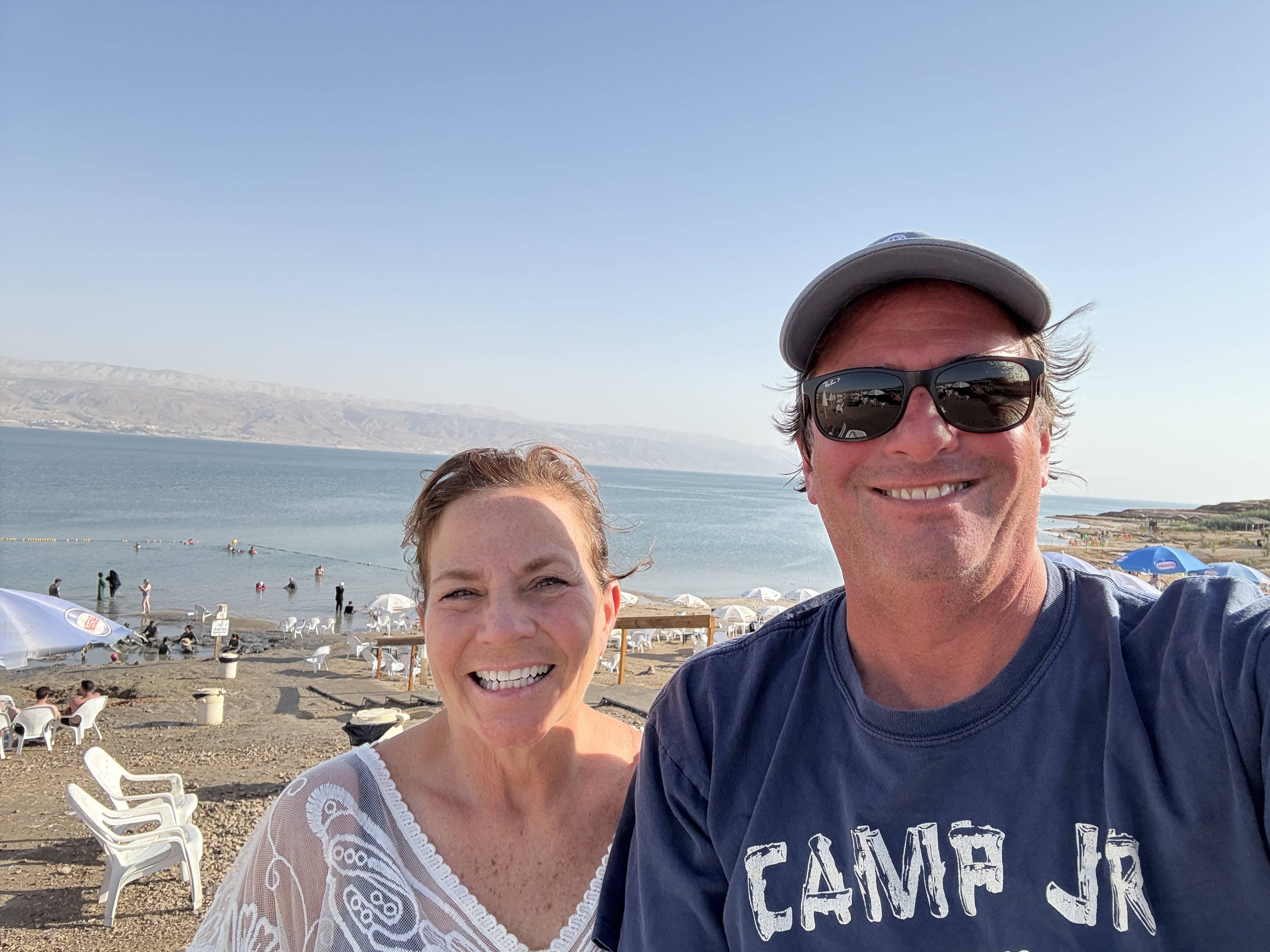
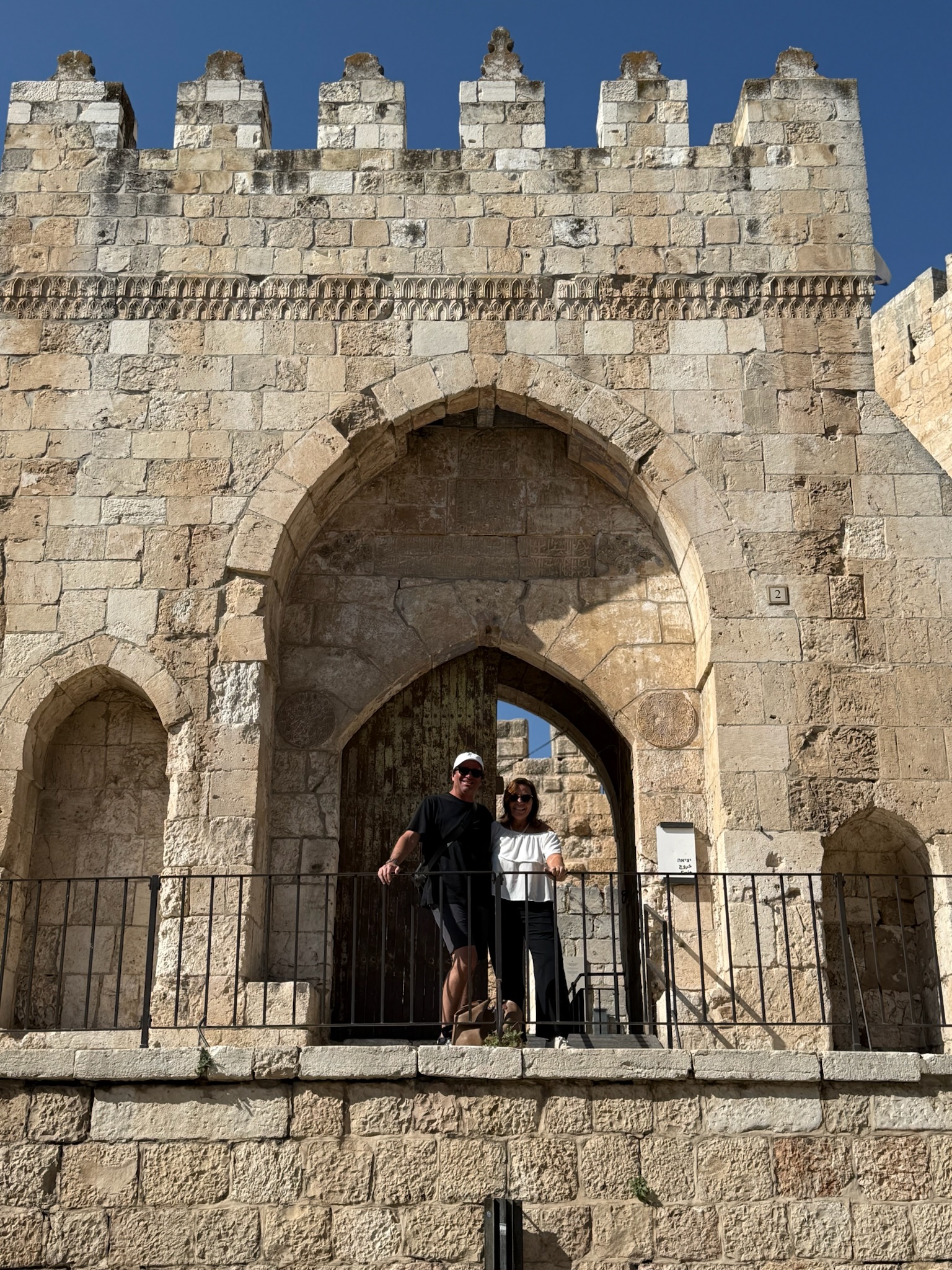
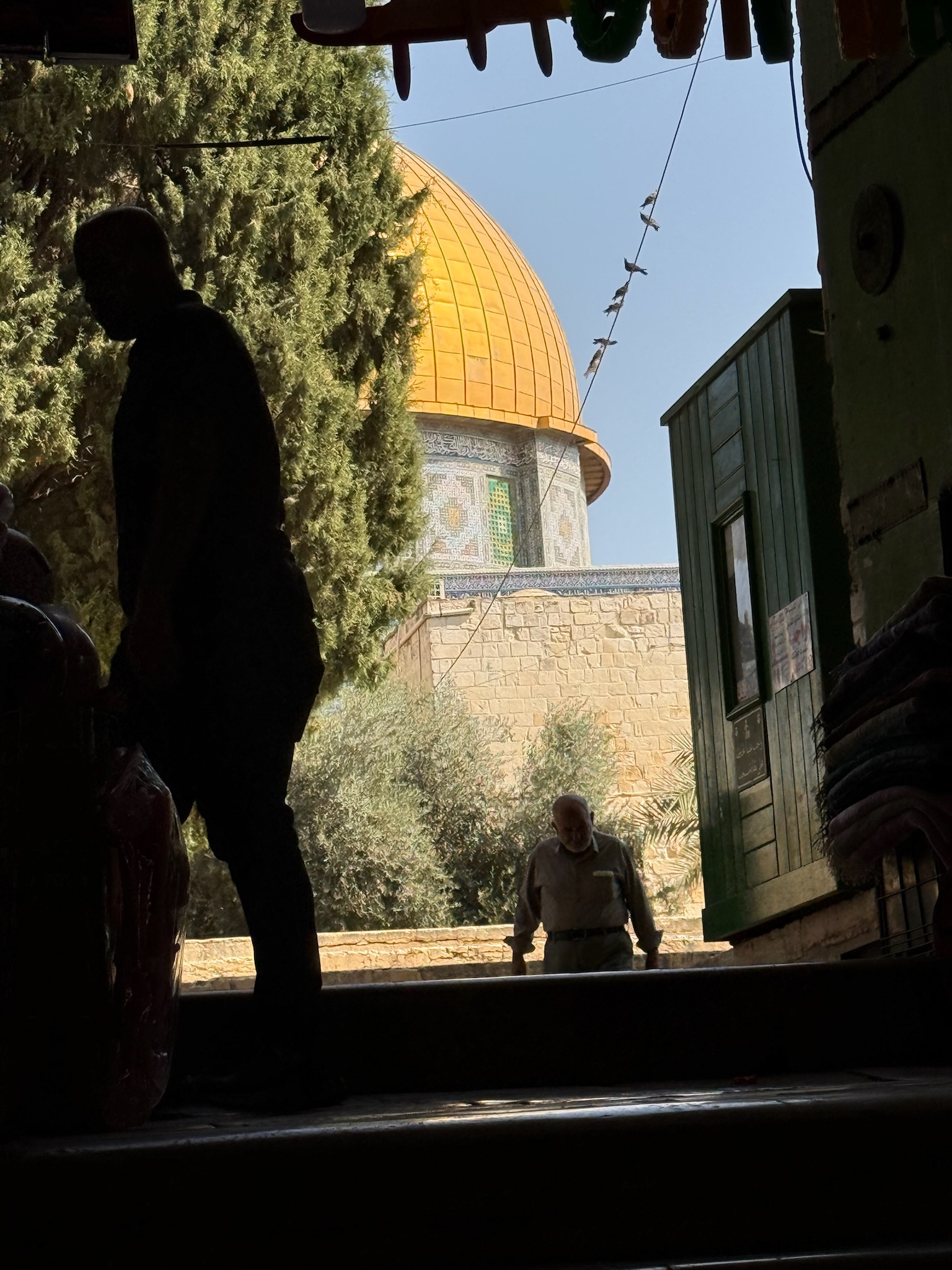
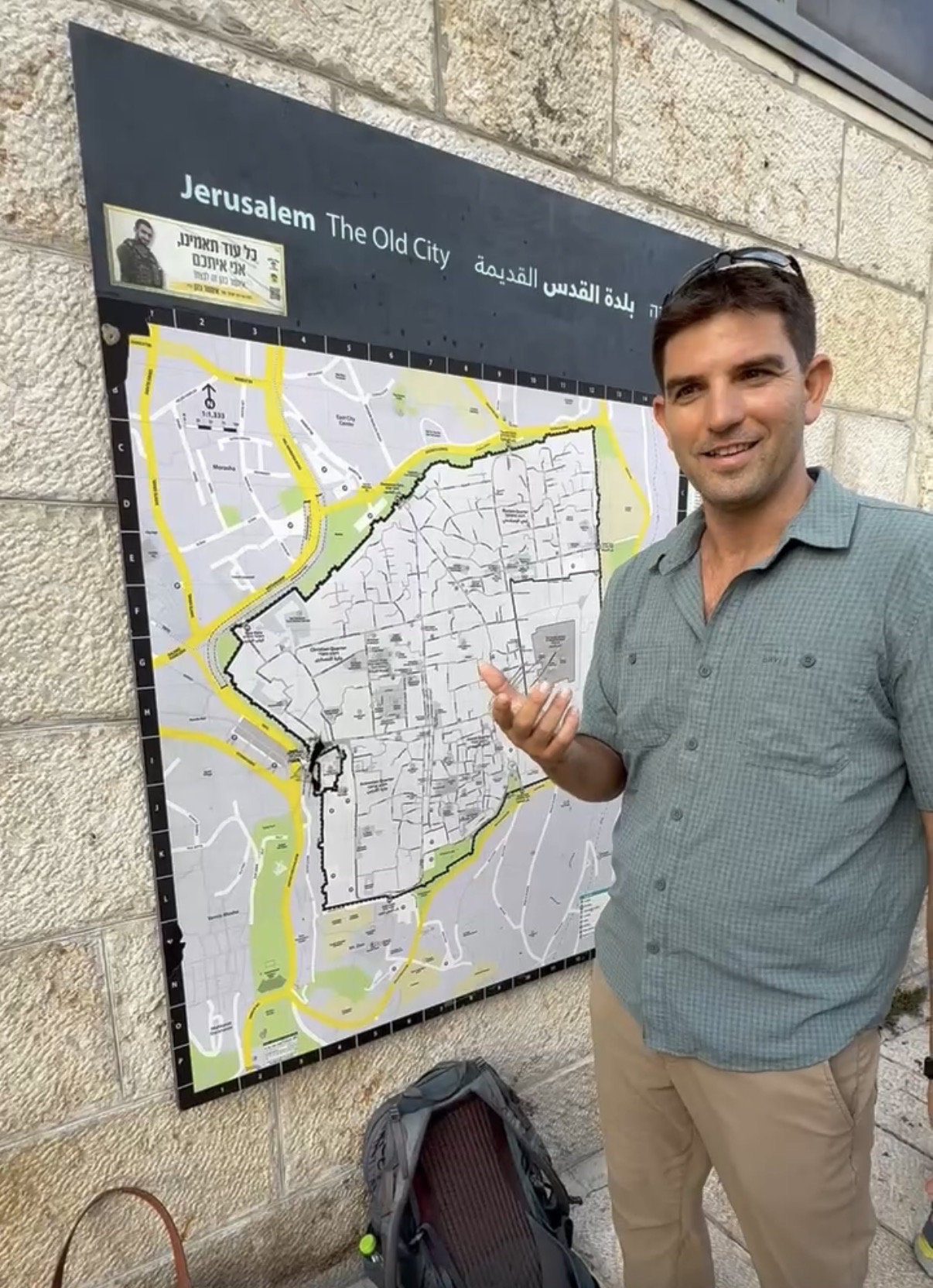
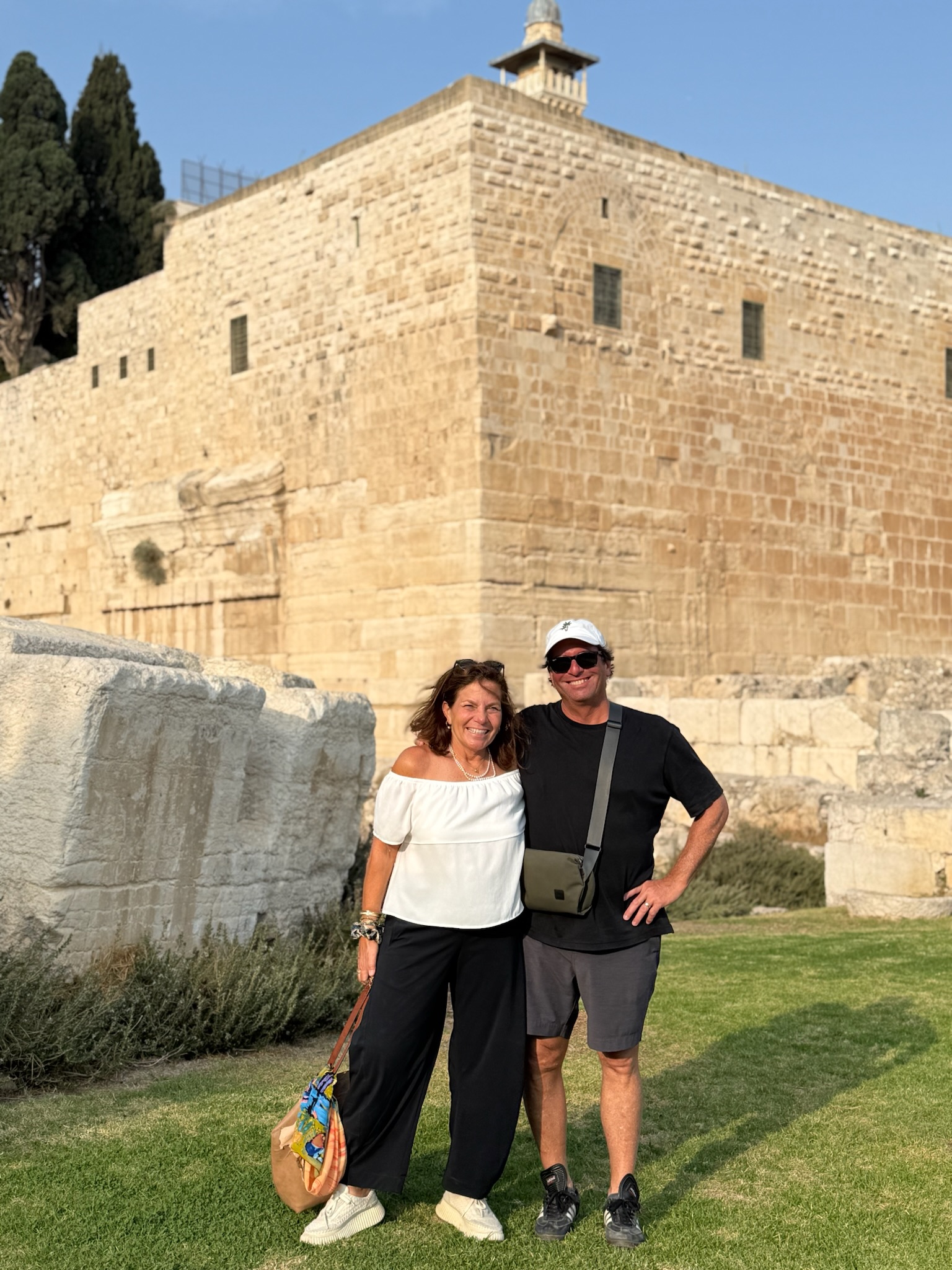
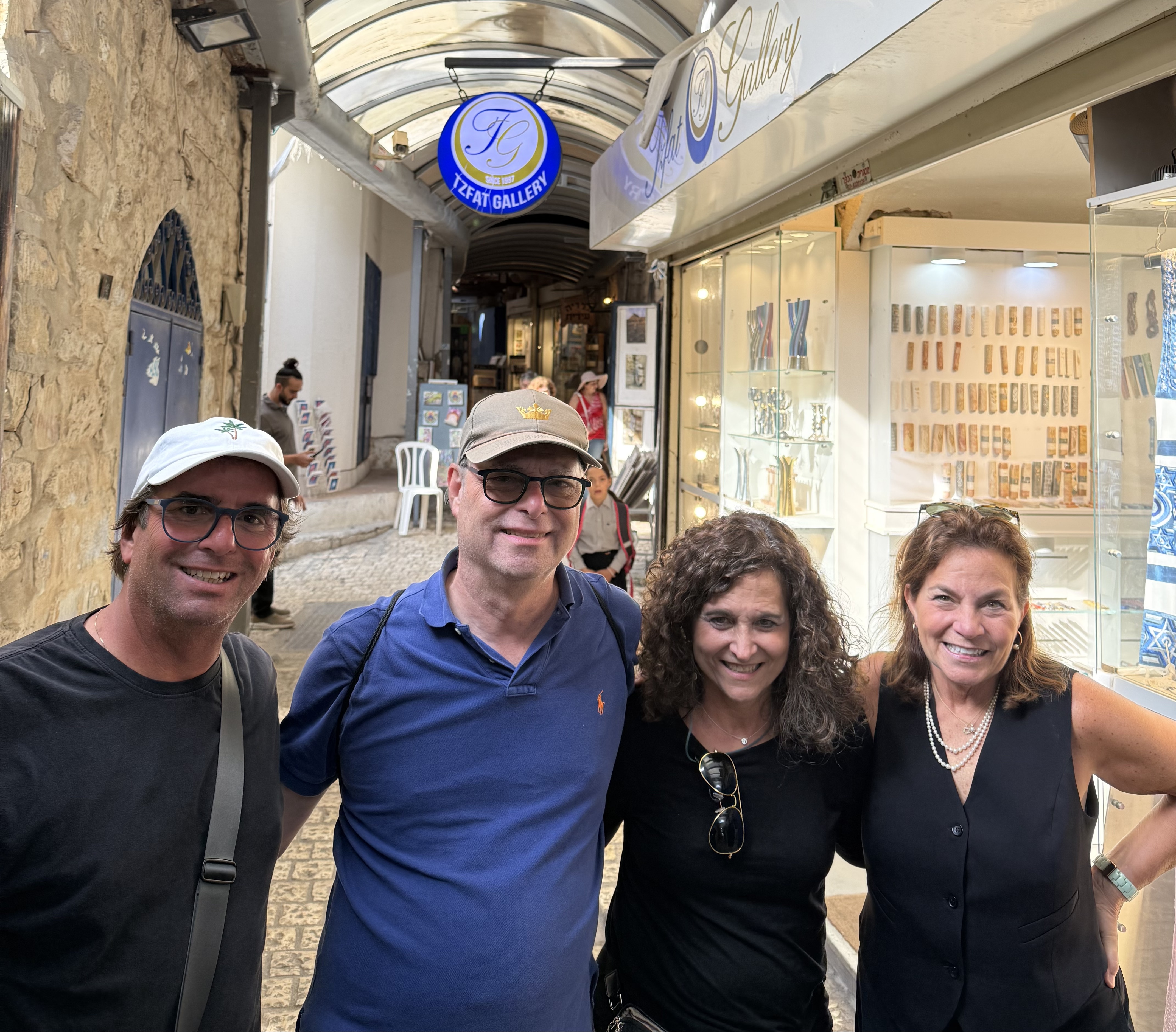
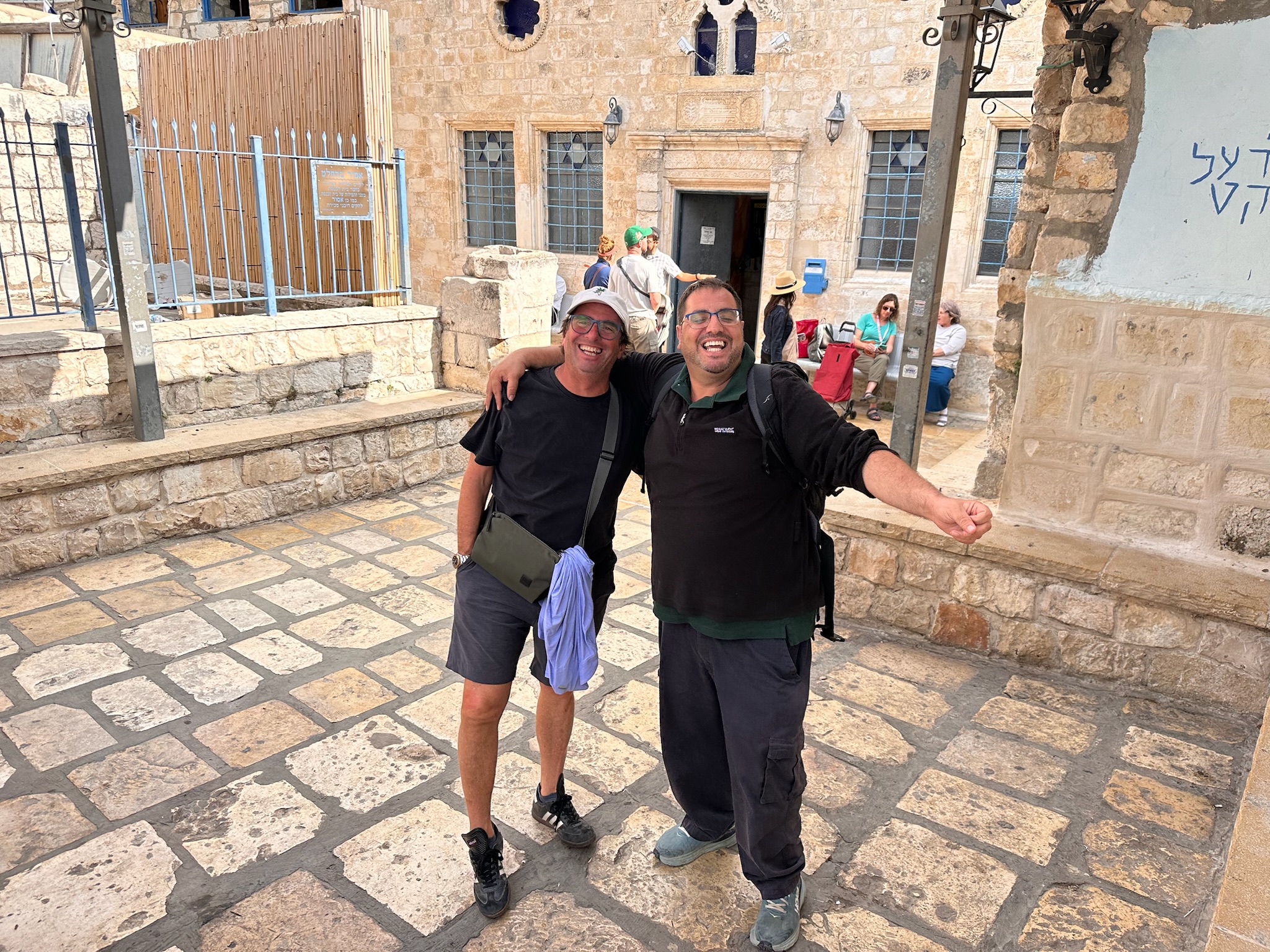
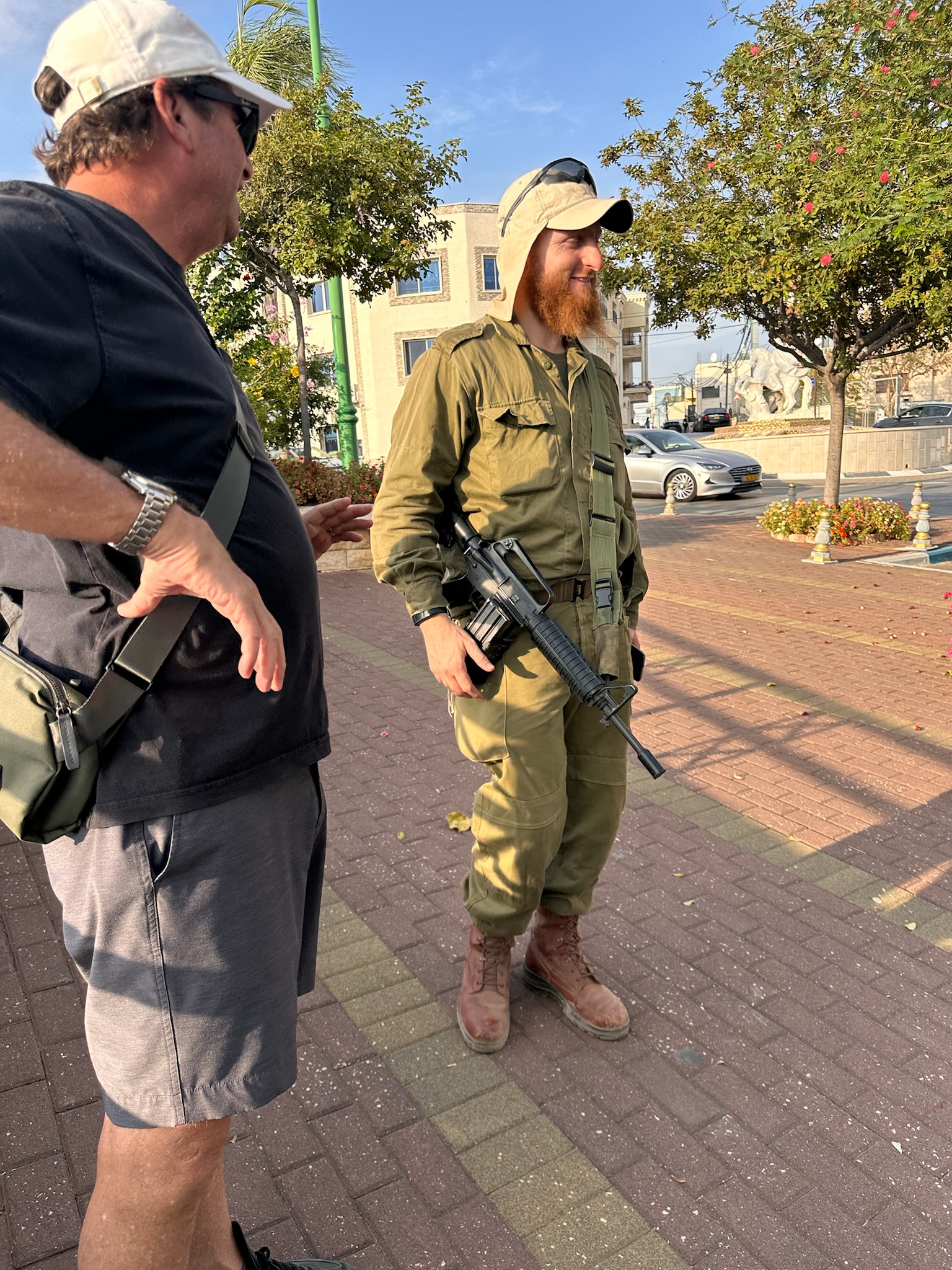
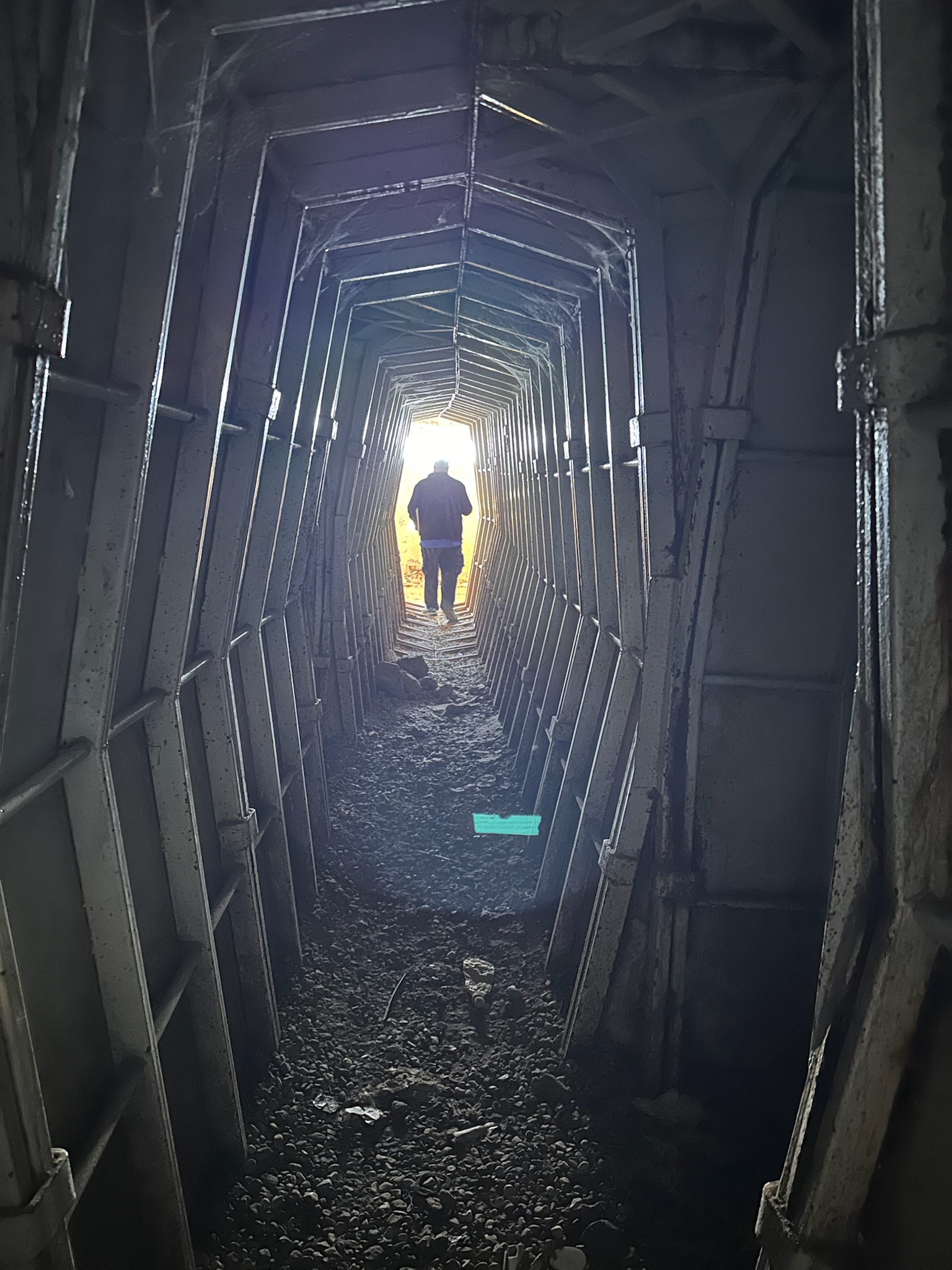
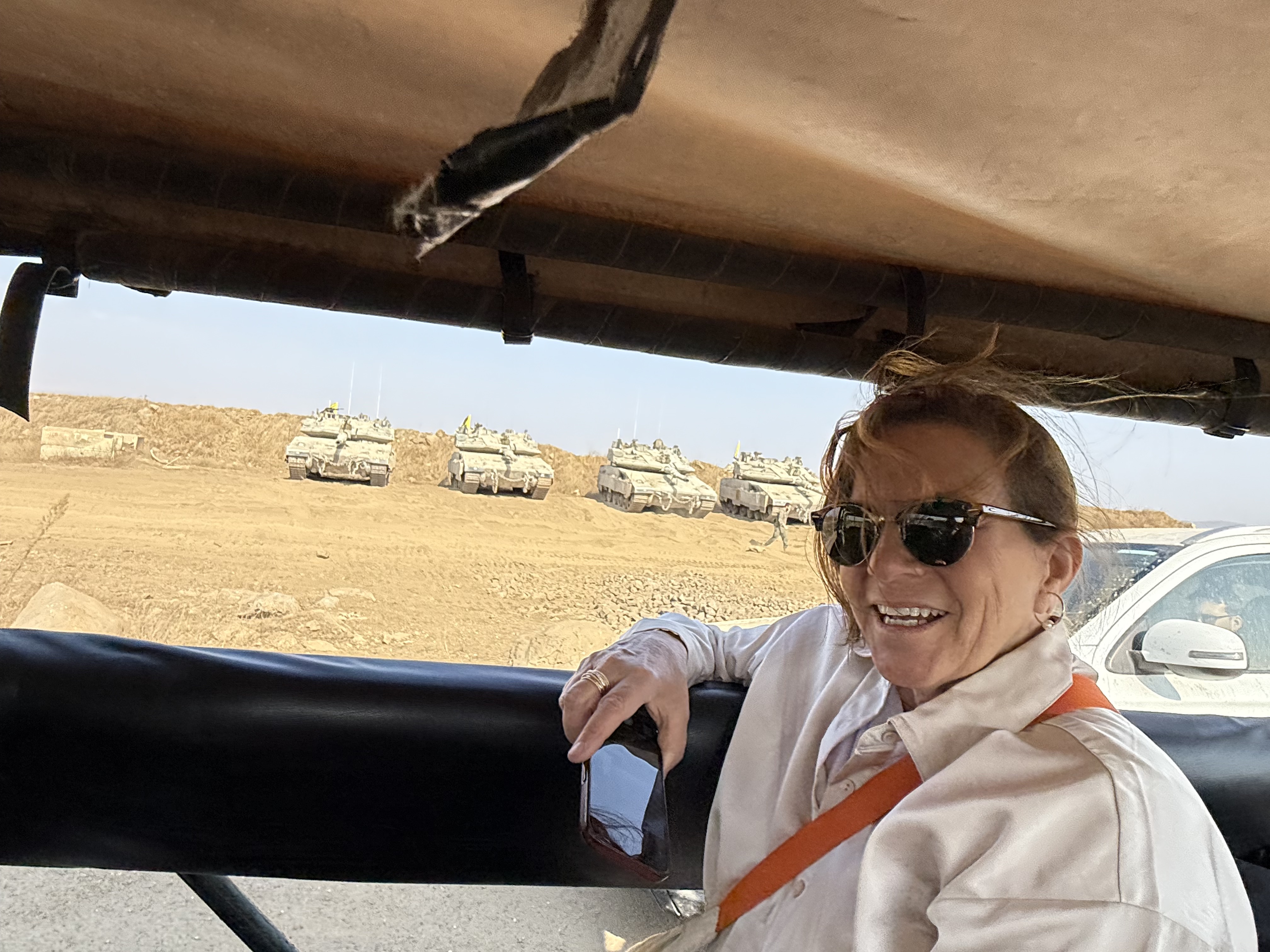
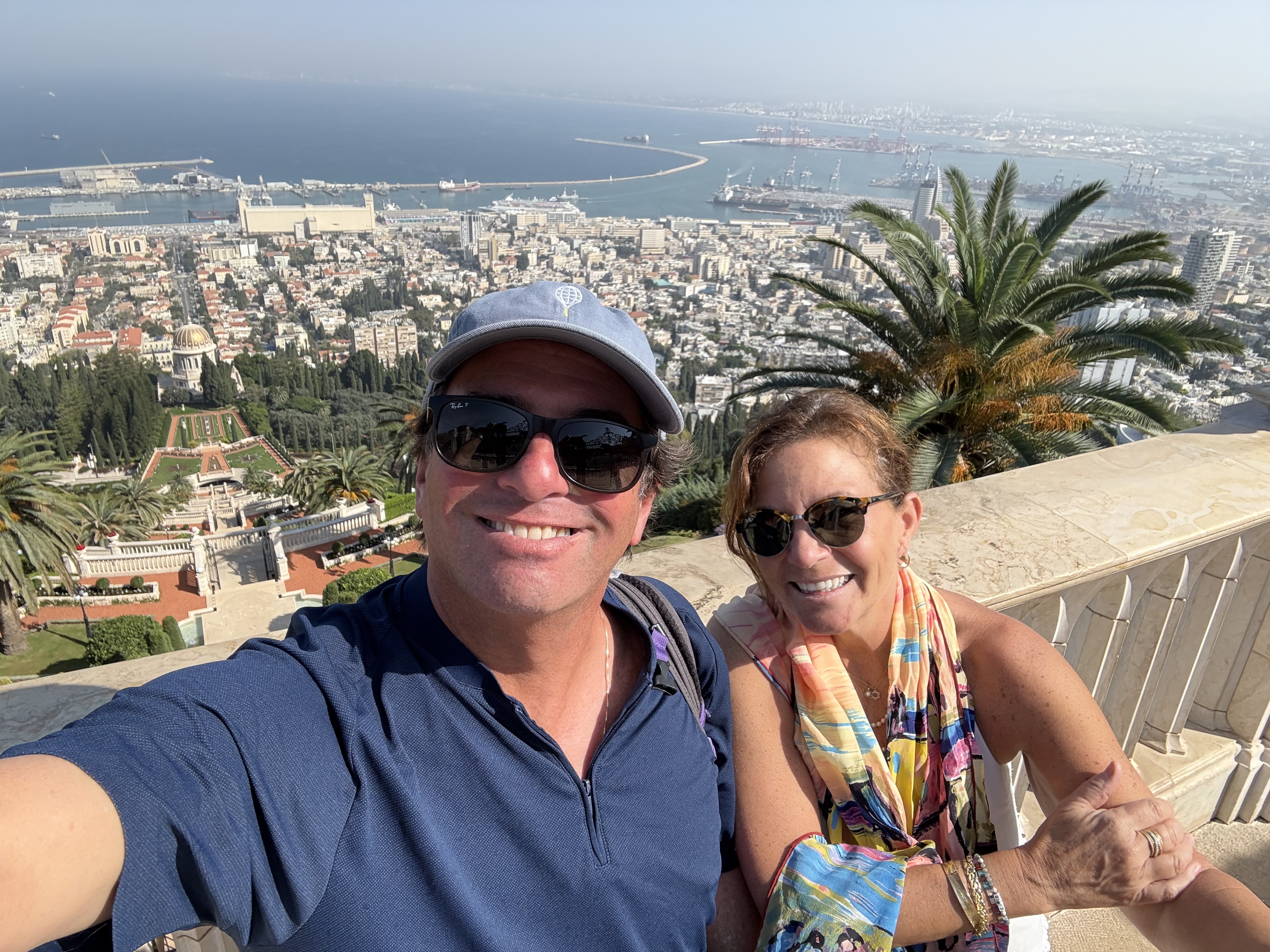
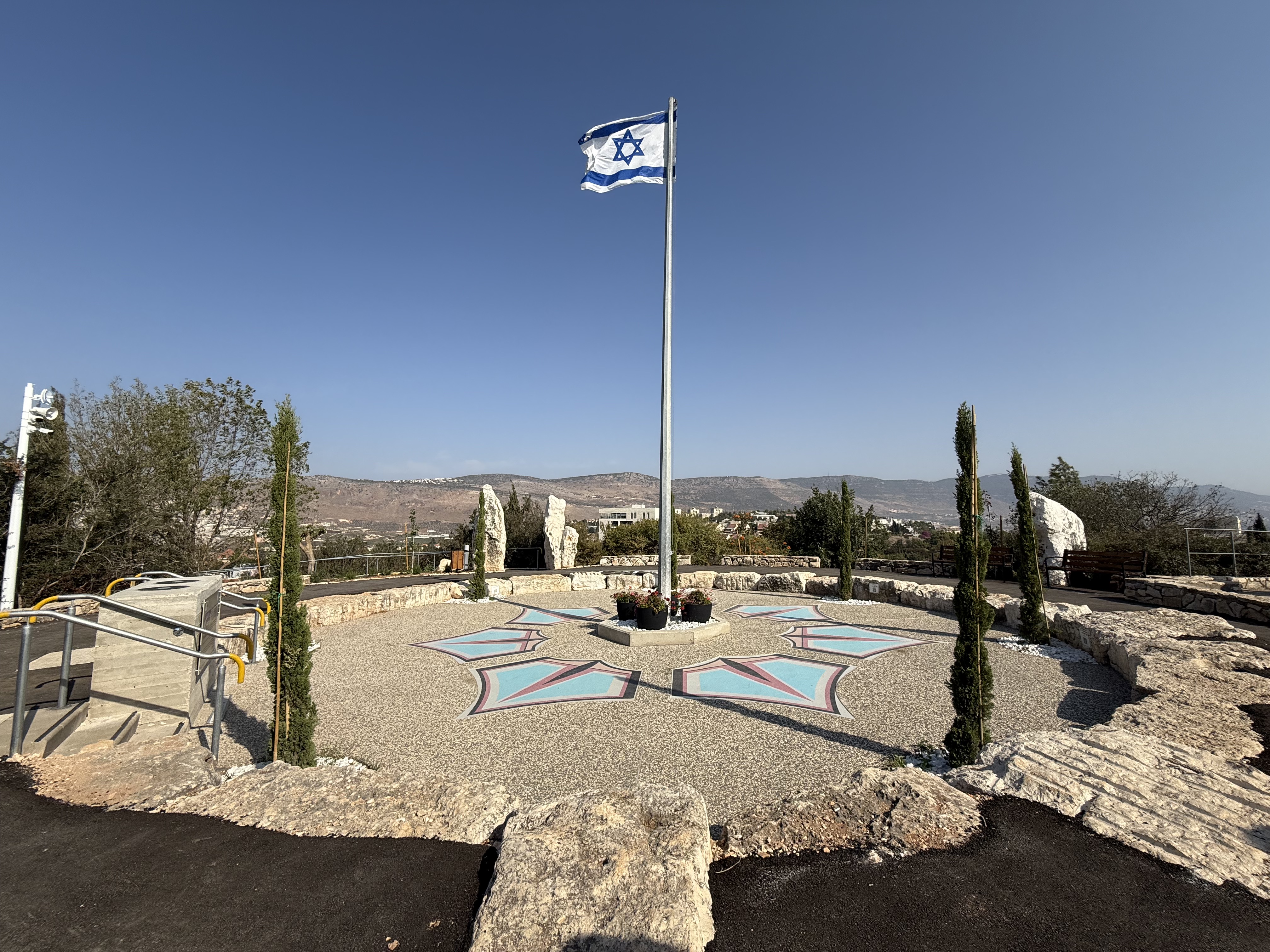
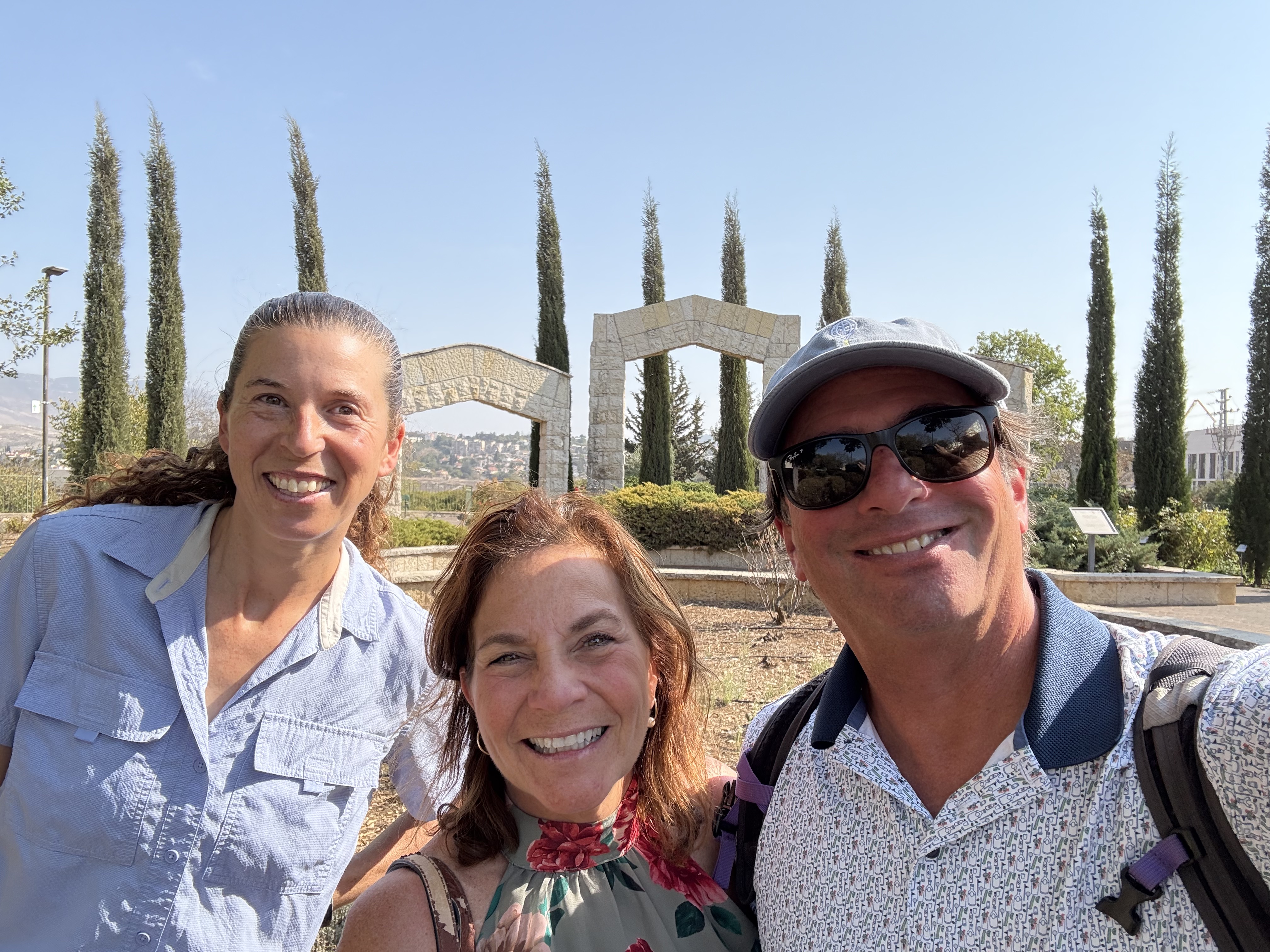
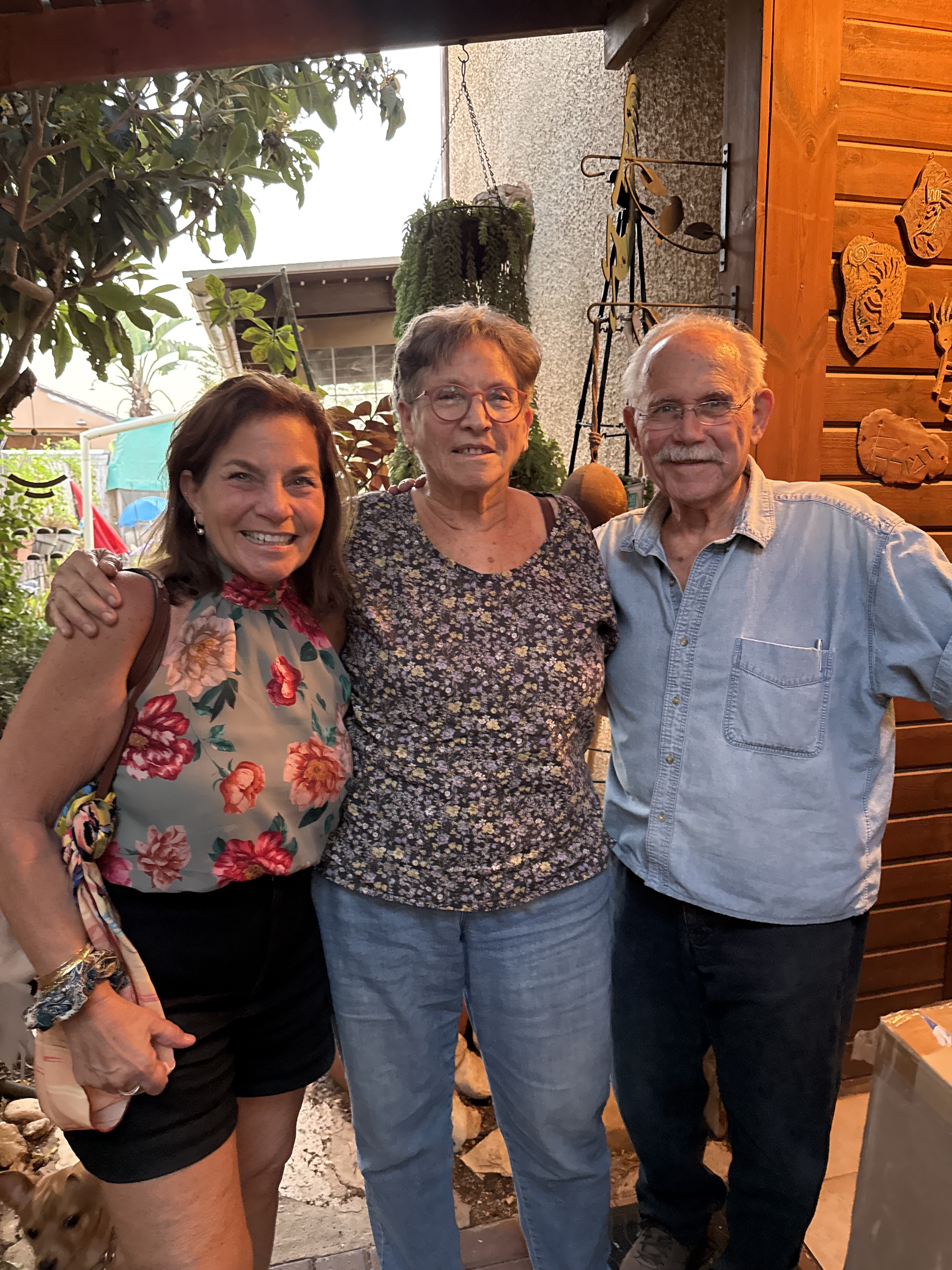
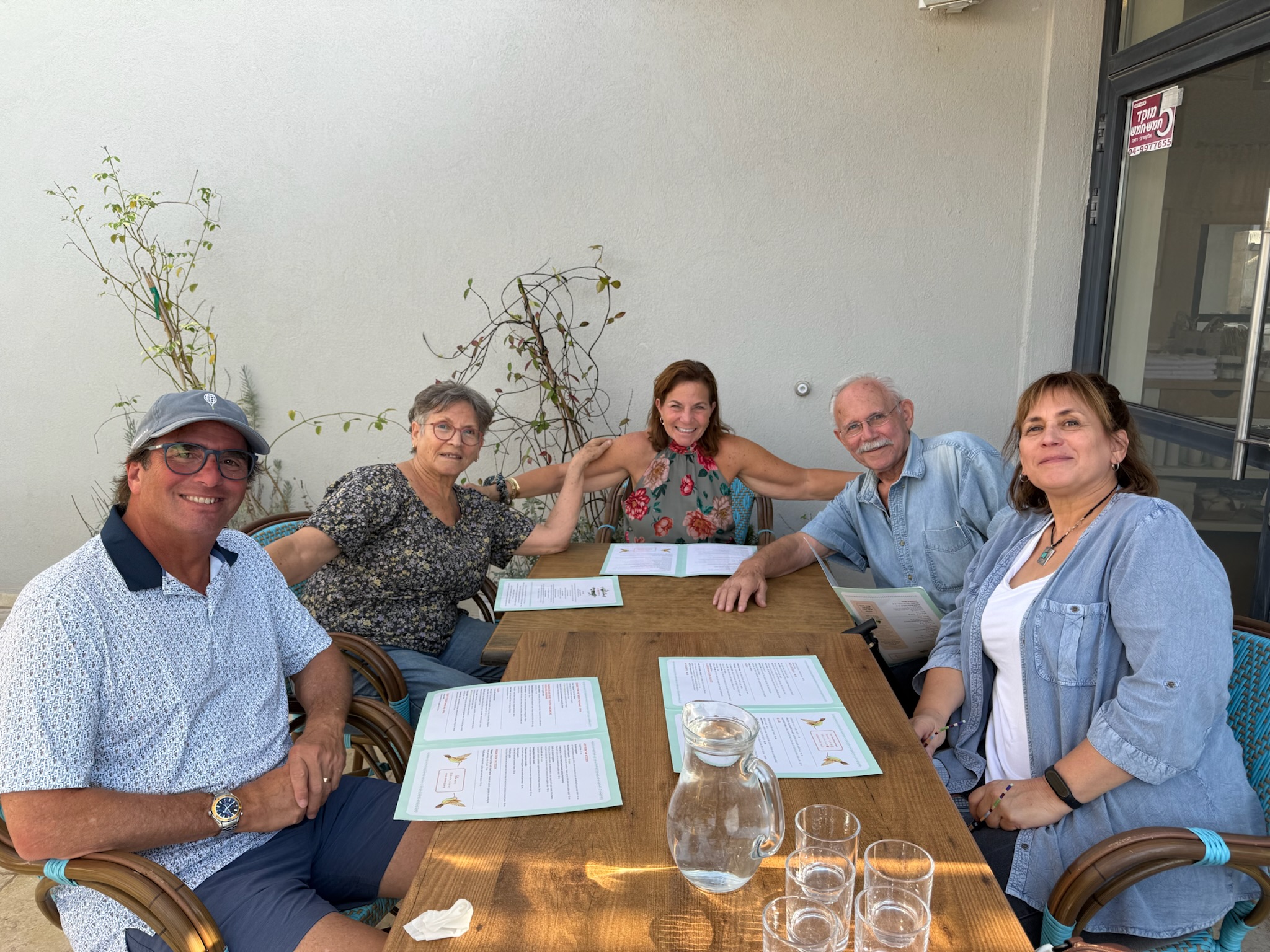
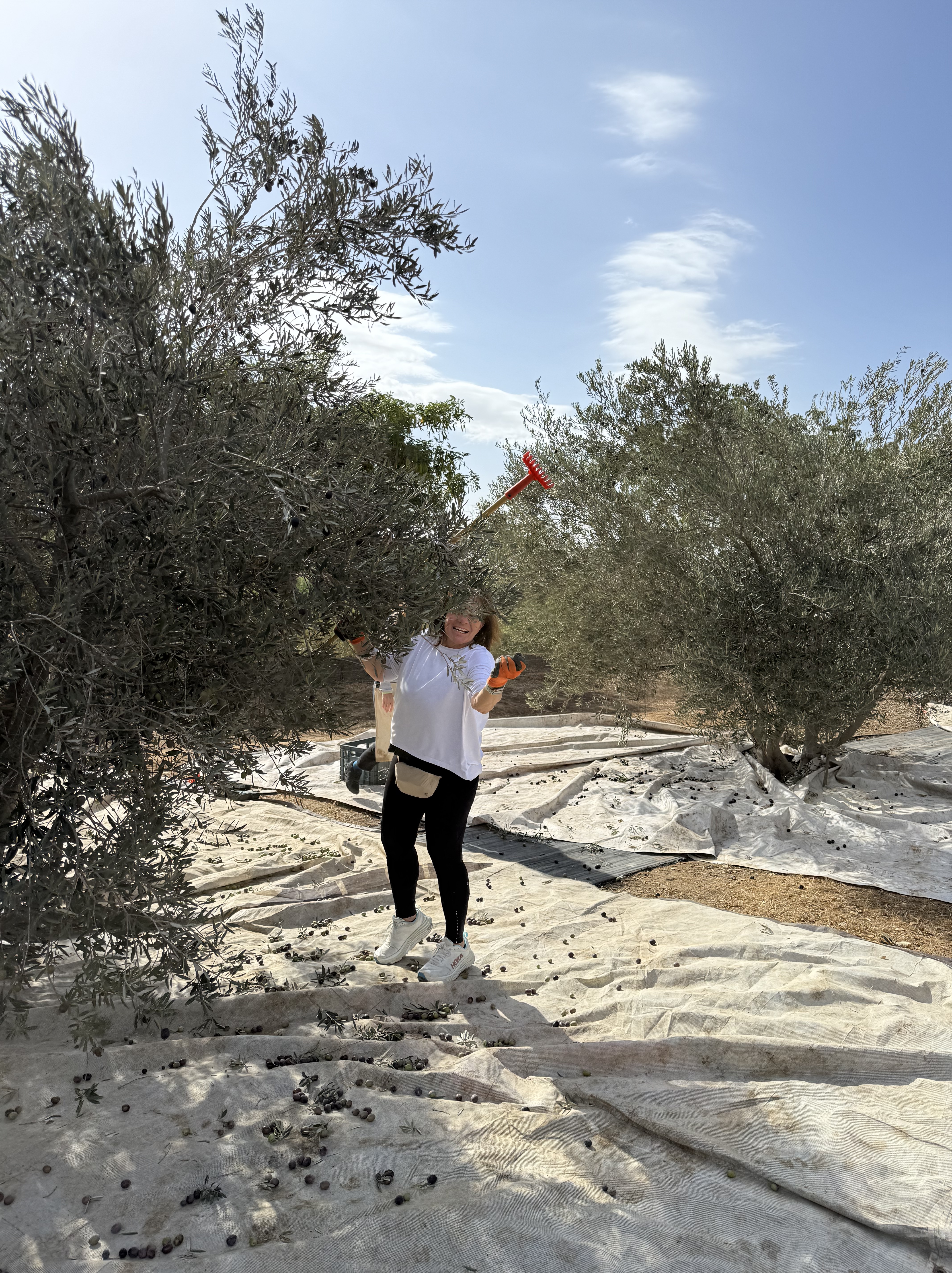
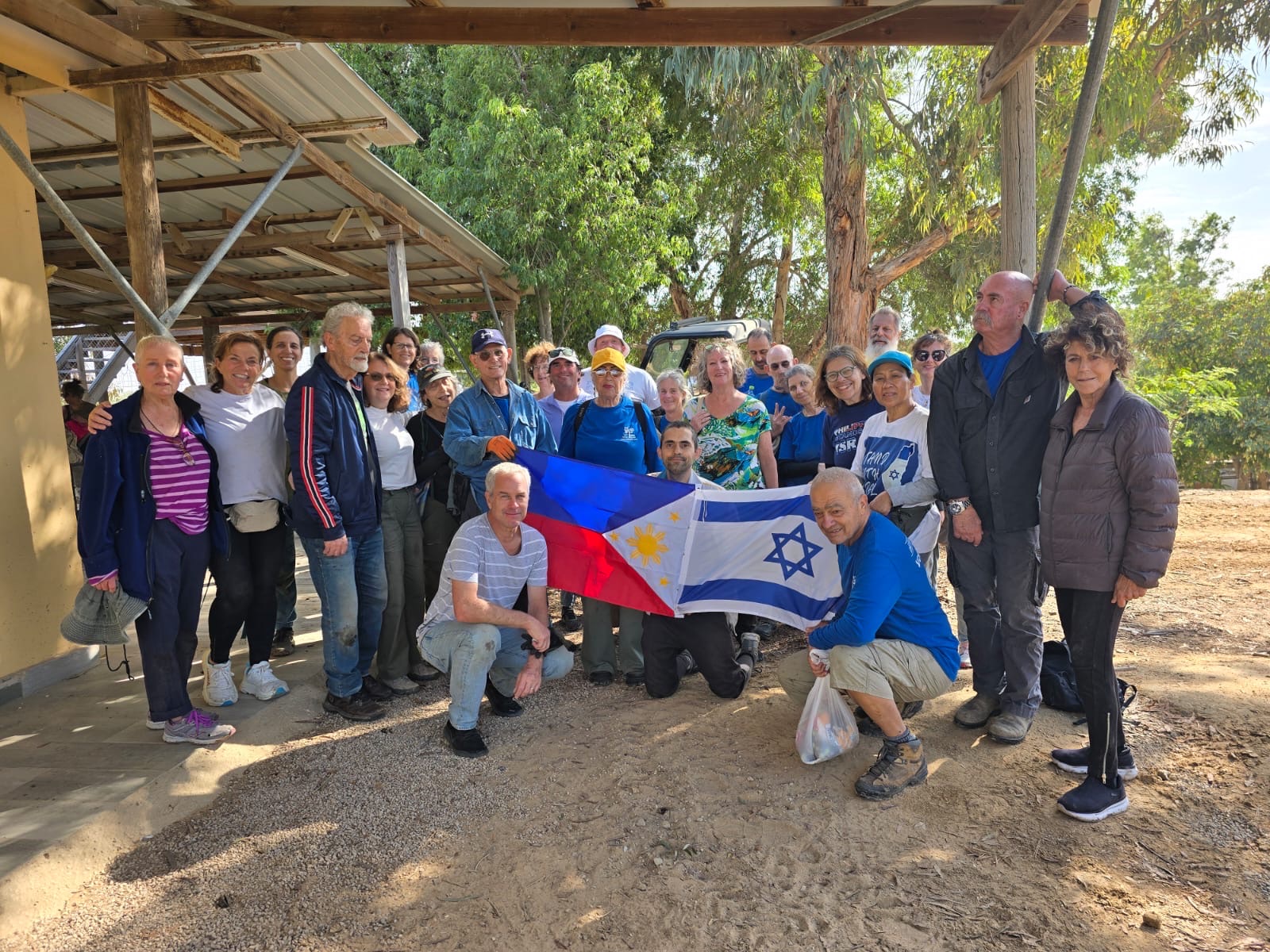
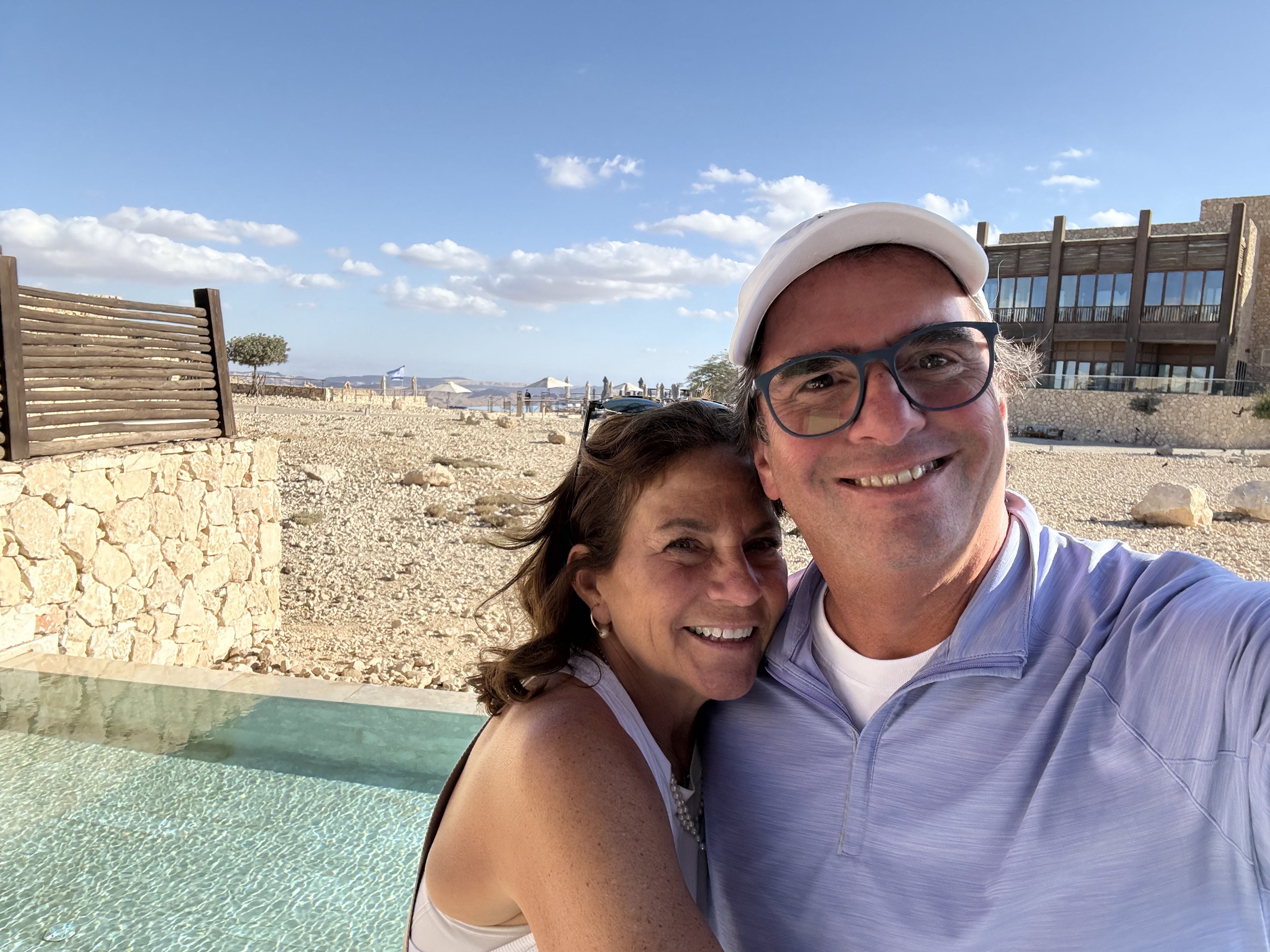
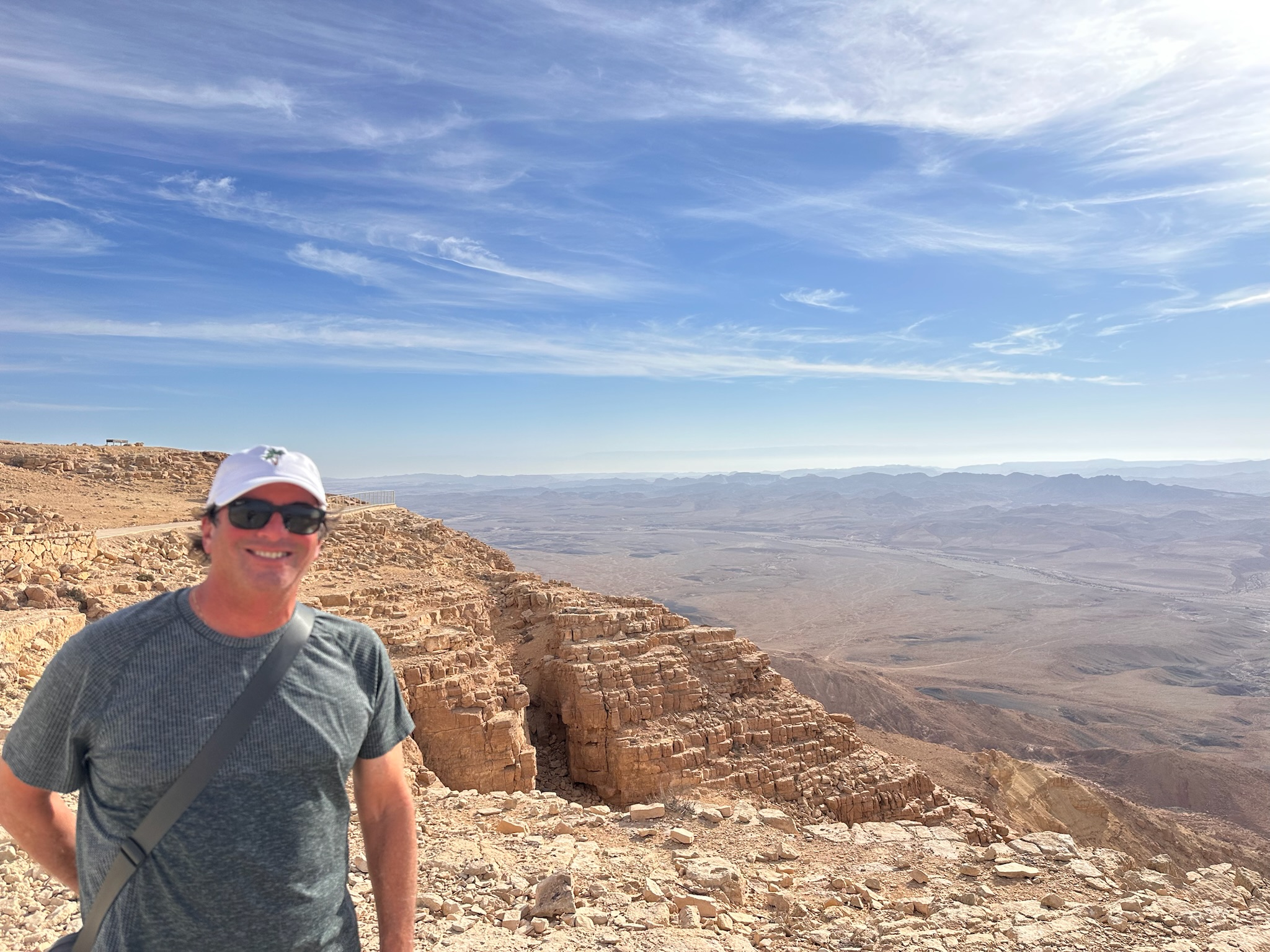
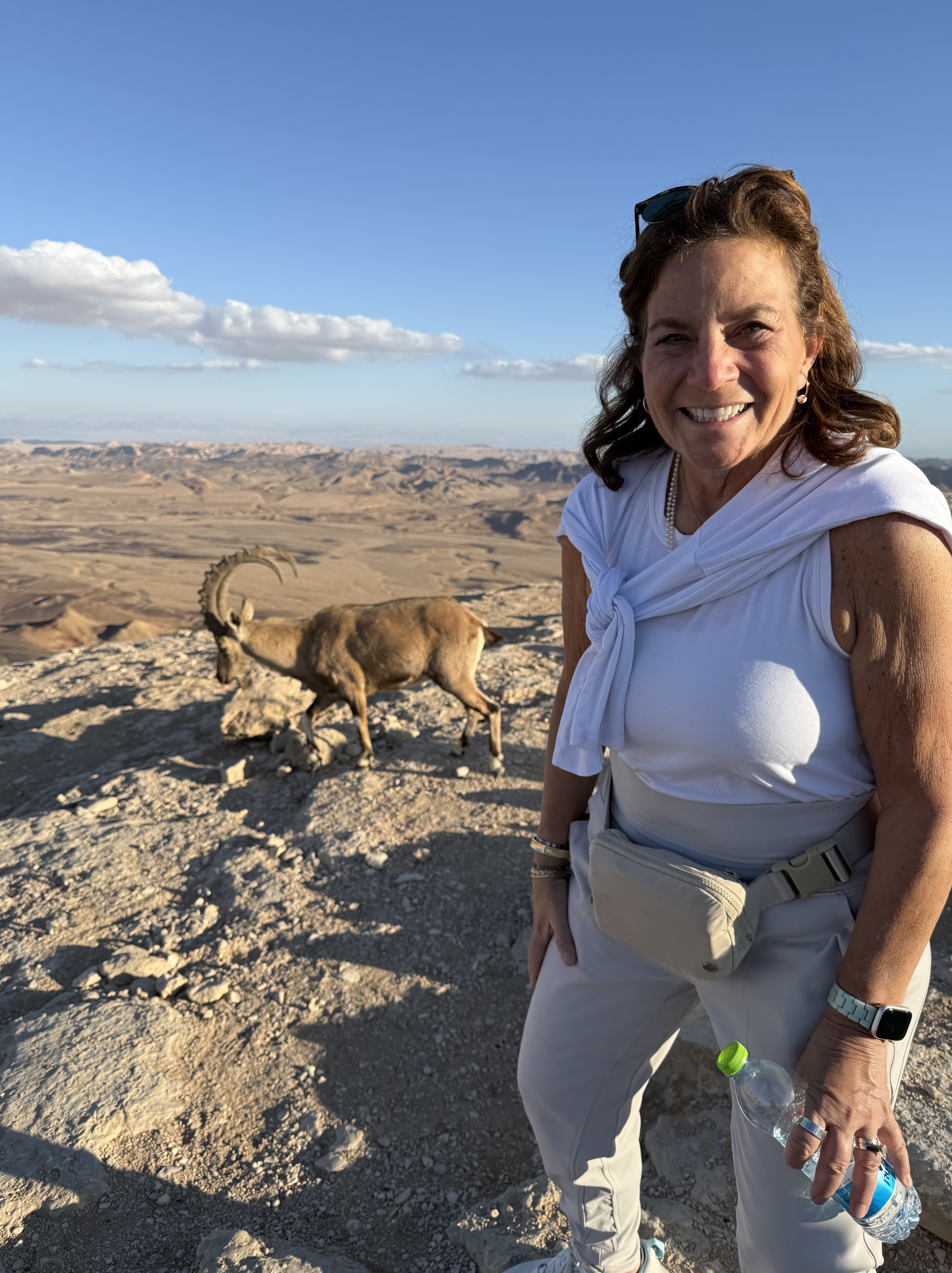
Around the country we spent a day at Masada (as breathtaking as we remembered), Ein Gedi (a true oasis in the desert), and the Dead Sea (hey, we’re floating!); did a tour of the Old City of Jerusalem with our great guide, Avi, and spent time wandering the eclectic Machane Yehuda market; took a two day trip to Tzfat and the Golan Heights with another great guide, Itzik, sleeping overnight at a cute hotel/resort at Kibbutz Merom Golan; spent a “heavy” day in the Gaza envelope, visiting Sderot, the car cemetery, the shelter where Hersh Goldberg-Polin sought refuge and from which he was captured and taken hostage, and the Nova festival site, all of which were heart-wrenching; did an overnight stay at the awesome Bereshithotel perched on the edge of the Ramon Crater in the Negev; took a daytrip to see the Bahá’í Gardens in Haifa and walked the Old City in Akko, culminating with a great meal at restaurant Uri Buri overlooking the fortifications and the Mediterranean; spent a day volunteering with others at an olive farm in the South; did a day trip North and were led on a wonderful and informative tour of Karmiel, Pittsburgh’s sister city, graciously guided by Kim Salzman, Jewish Federation of Pittsburgh’s Director of Israel and Overseas Operations, especially their beautiful and touching Tree of Life memorial and the Mahal volunteer integration program, and visited our dear relatives at their home in Kfar Vradim.
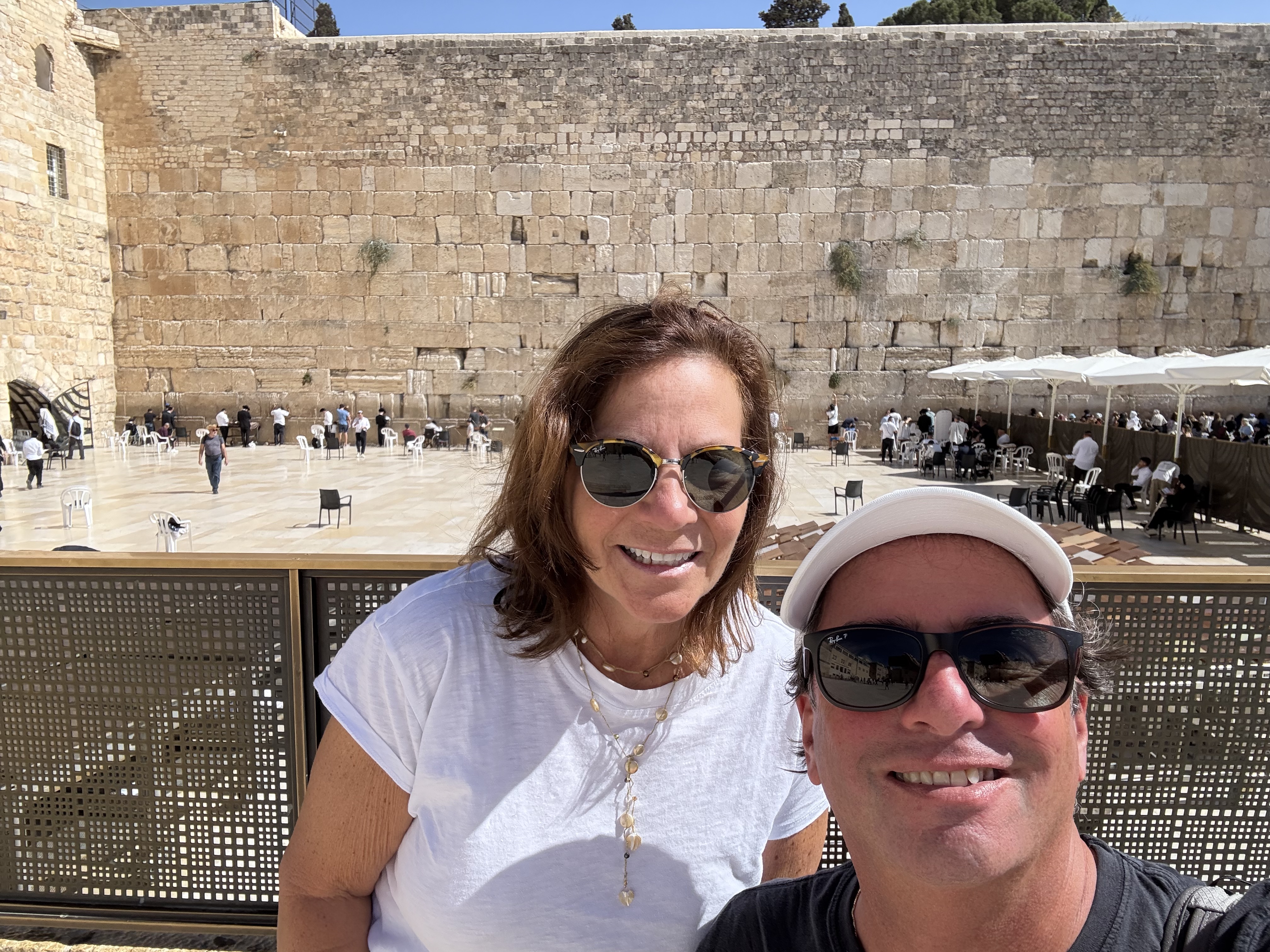
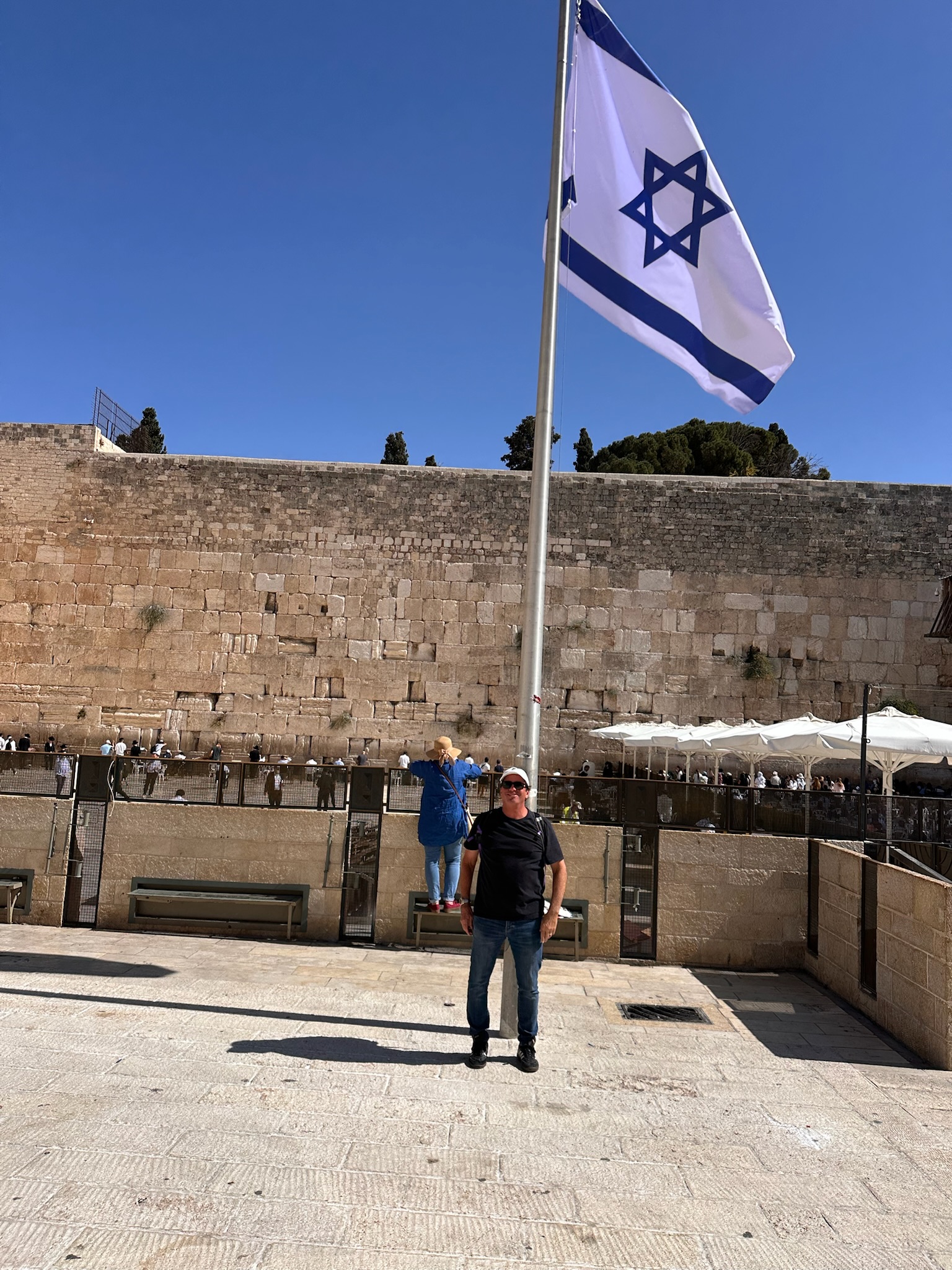
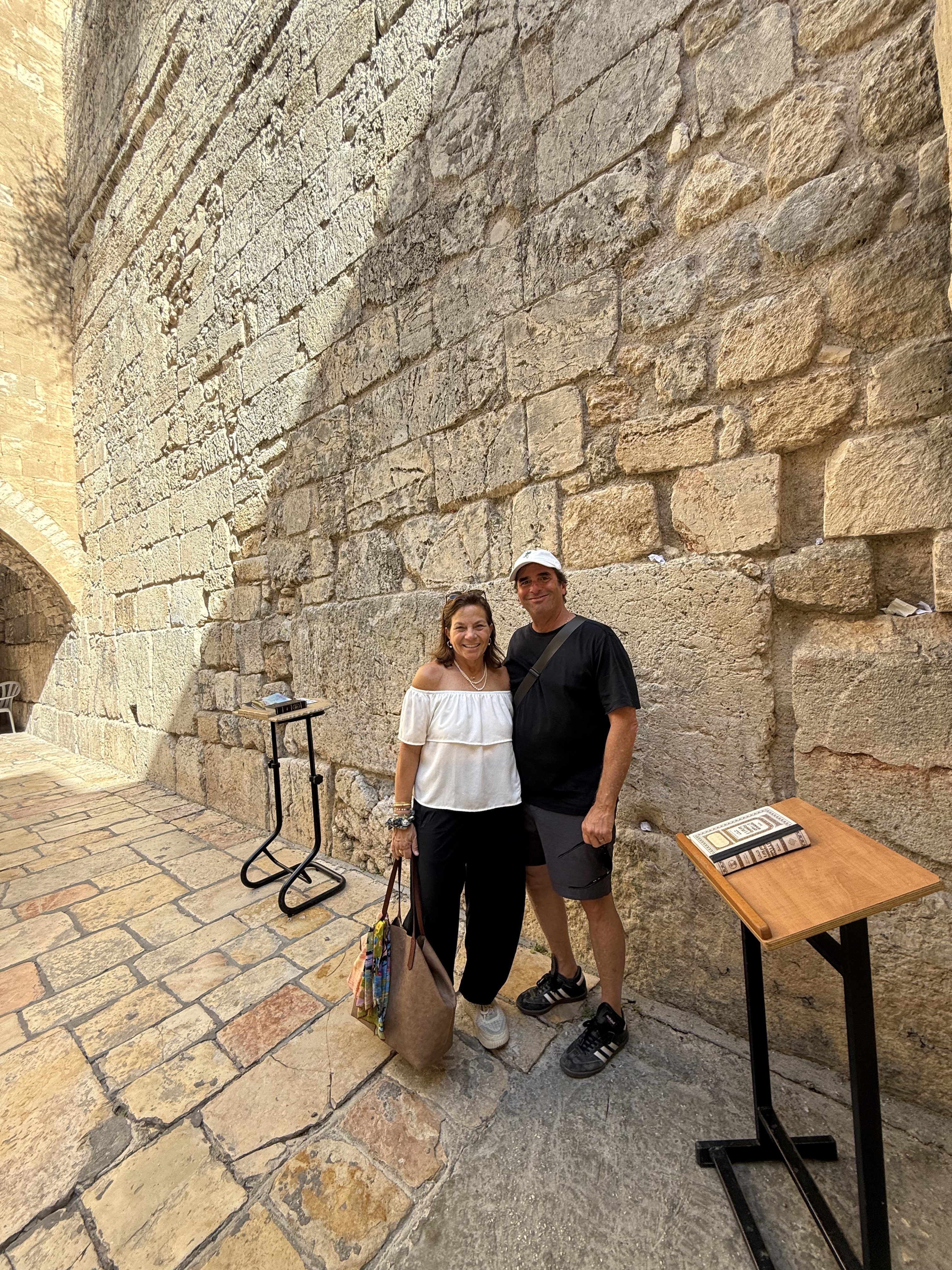
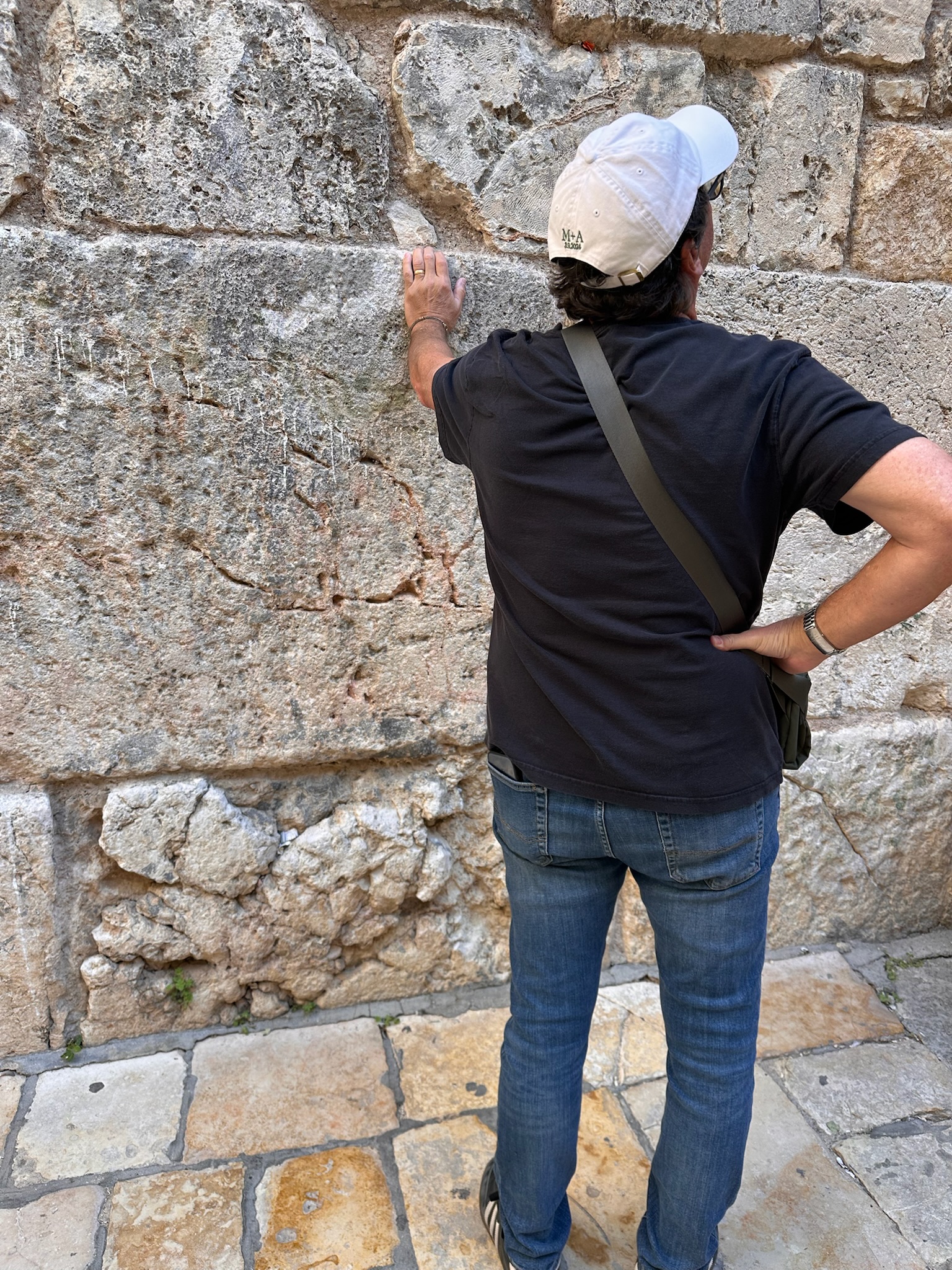
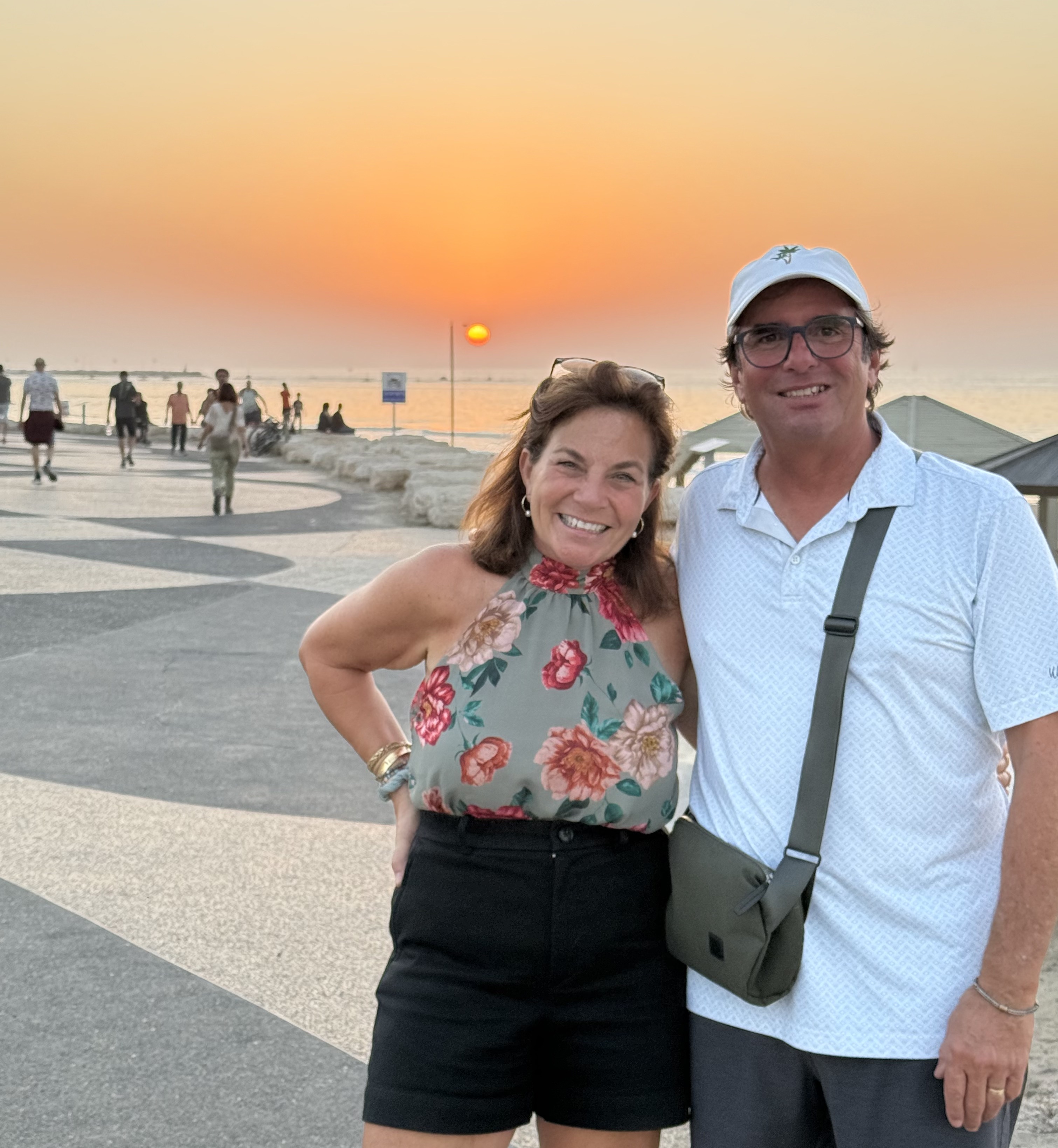
It is hard to describe our emotional state while touring through Israel and living in the country for our six week stay. Of course being on top of Masada or at the Western Wall or just seeing the walls of the Old City lit up at night brings on a myriad of emotions, as did visiting the Nova Site and Yad Vashem. But also walking the streets on Shabbat, being wished Shabbat Shalom over and over again and finding ourselves gradually adapting to the slowing down of life that Shabbat brings on Friday nights and Saturdays, hearing the language being spoken by everyone around us that is the language of our ancestors, watching the vibrant scenes on the Tel Aviv beach of people playing volleyball and soccer/table tennis and doing yoga handstands and of families strolling the Tayelet—witnessing all of those things and realizing that there we were, in Israel, our historic ancient homeland, and that we were one with all of it and everyone around us. It brought us a sense of comfort and of being that is unique to that place and to which we felt an innate connection.
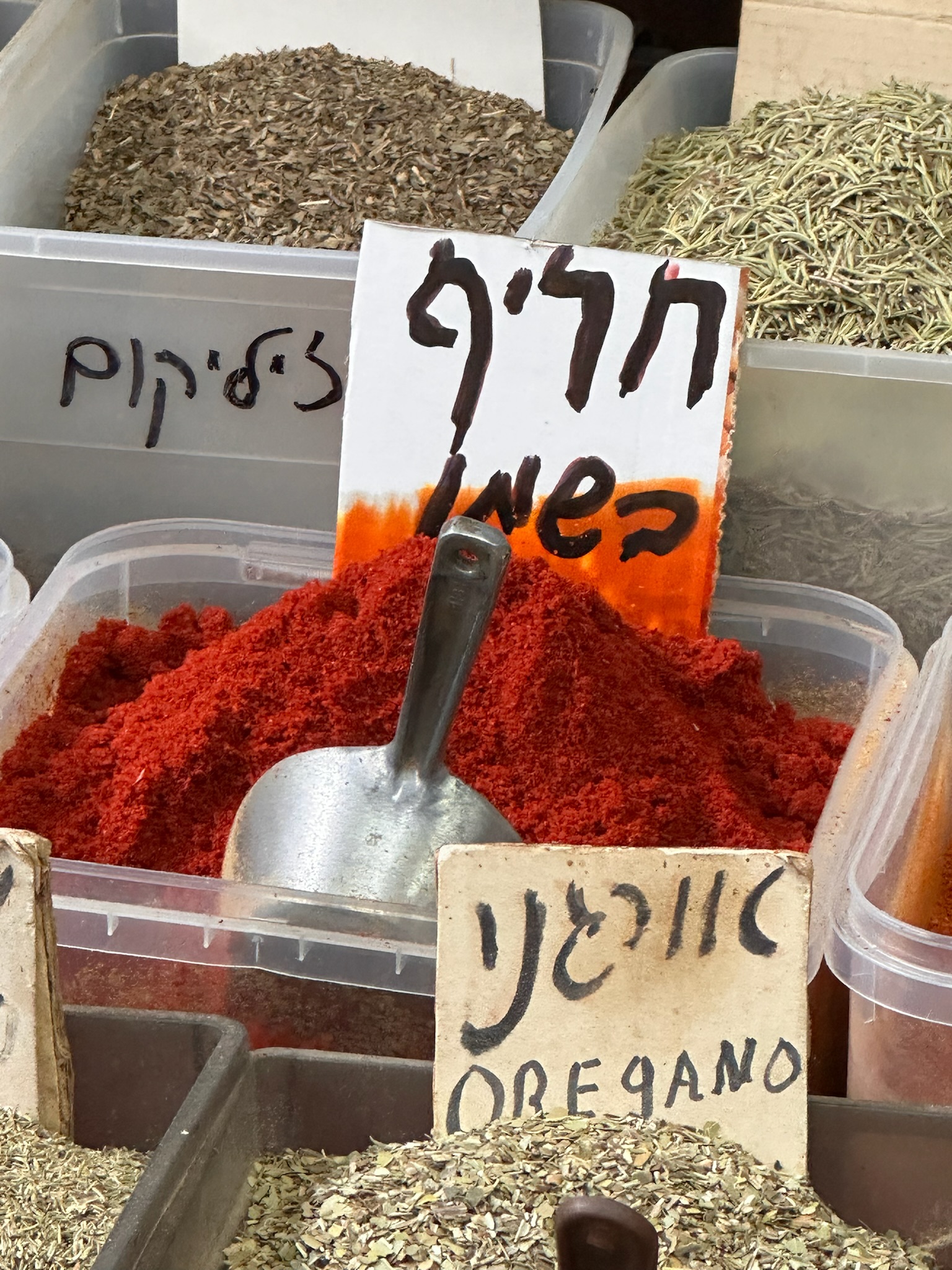
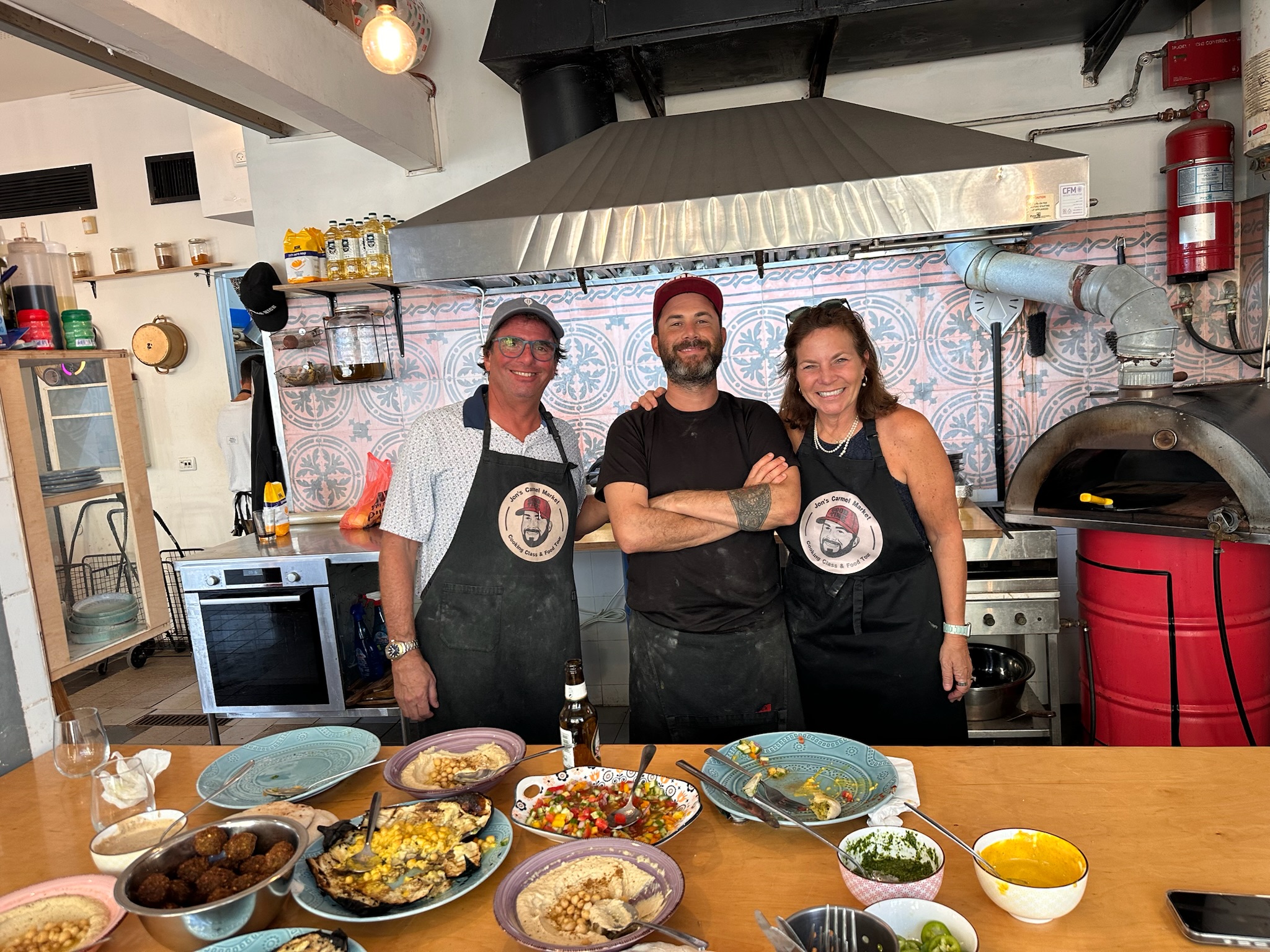
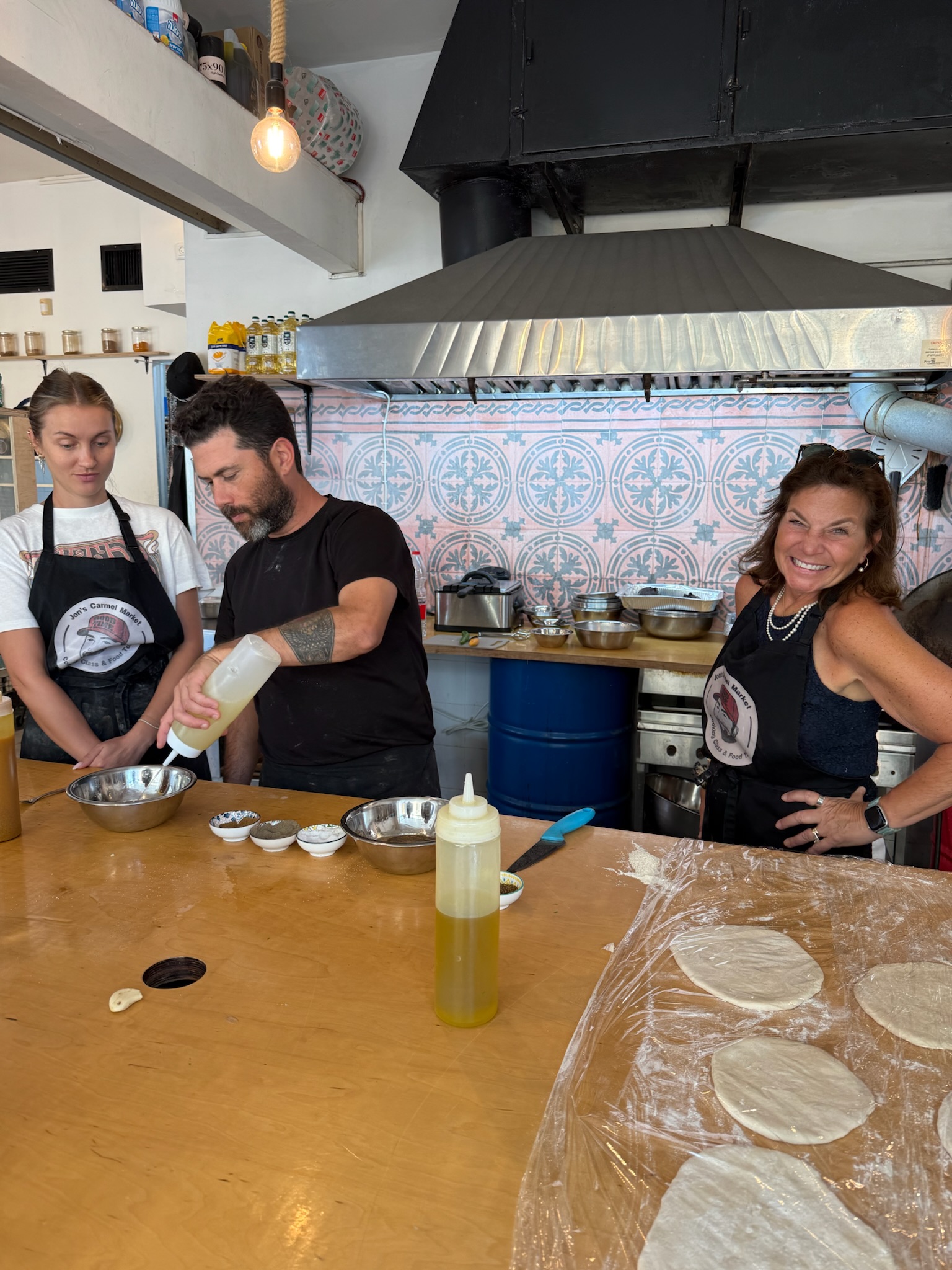
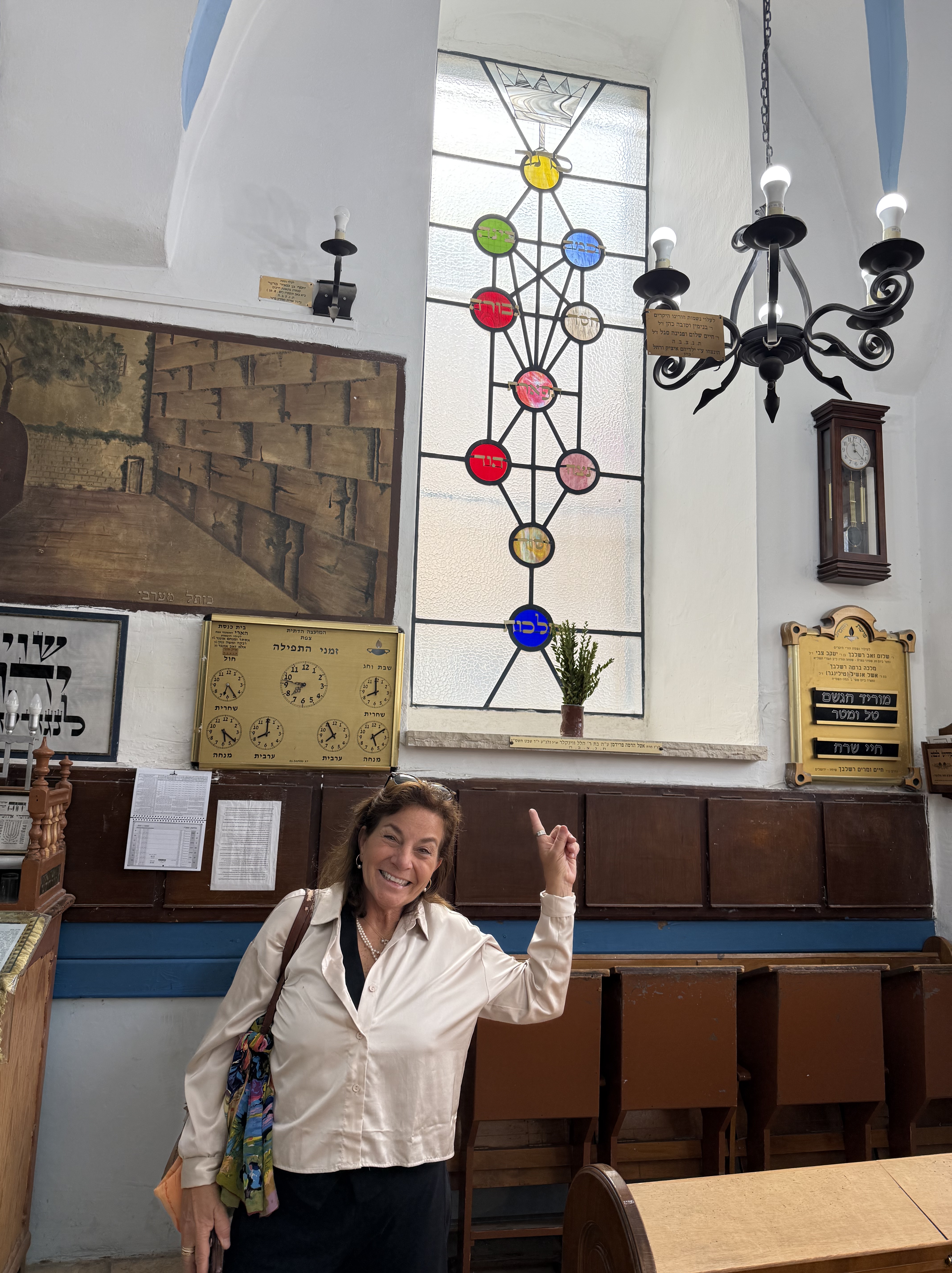
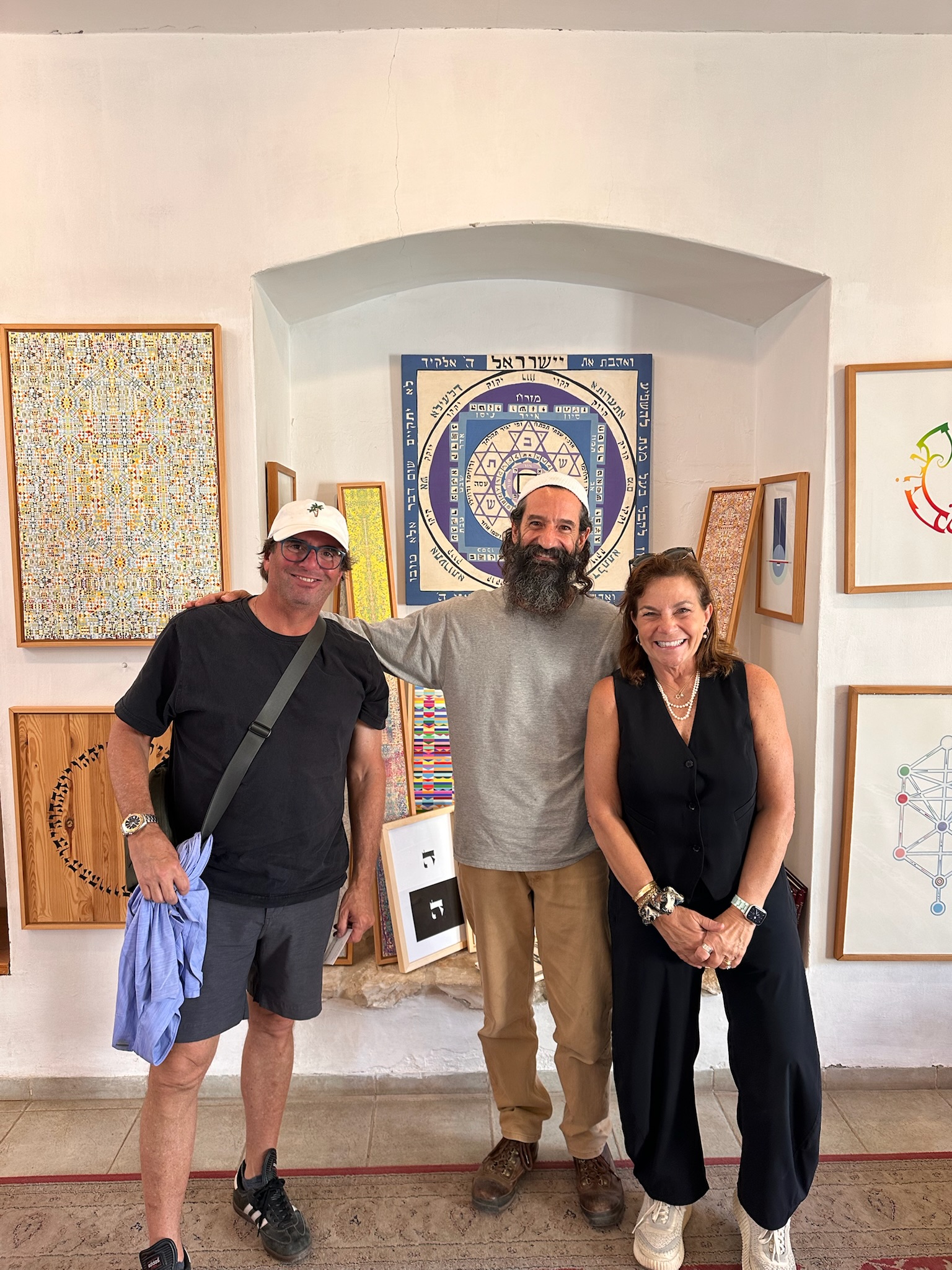
The highlights of this Semester: rolling out of bed, jumping on the high speed train, and arriving in Jerusalem in just thirty minutes; watching a herd of wild boar running during a Jeep tour of the Golan Heights; praying together (not separated) at the Small Wailing Wall in the Muslim quarter of the Old City; volunteering picking olives in the Gaza envelope; taking a cooking class and tour with Jon’s Carmel Market Class where we found all of the best spice merchants in the Shuk and made tahini, falafel, and pita from scratch; stumbling upon a warehouse of art and meeting the famous modern Kabbalah artist, Zygo; visiting Ghajar, the charming Alawite Arab village on the border with Lebanon (not “near” the border, literally “on” the border, and some say the border runs through the middle of the village); wine tasting with IDF paratroopers at Pelter winery in the Golan Heights; learning about Kabbalah through the art of Detroit native Avraham Loewenthal in Tzfat; attending a live nighttime Jazz concert on the rooftop of the Ilana Goor museum in Yafo; touring the great exhibit on the history of the Jewish people at the Anu Museum of the Jewish People at Tel Aviv University; taking in the sunsets over the Mediterranean and walking along the Tayelet.
Some observations: Israelis have zero sense of personal space and as you approach each other they do not move out of your way—they will literally walk into you; motorized bikes and scooters (as well as motorcycles) ride/weave on sidewalks and bike paths and don’t care much to look out for pedestrians; word to the wise: even if a “helpful” person tells you that the best way to go into the Old City to get to the Western Wall is through the Damascus Gate, don’t take that advice (use the Jaffa Gate); it is lovely to hear everyone say Shabbat Shalom and Good Shabbos everywhere you are on Fridays and Saturdays; similarly, it is so nice to see Mezuzahs on every door, even on stores, warehouses, museums, etc.; you can respond universally with Beseder or Sababa to almost everything said in Hebrew to you, even when you don’t understand Hebrew; Pines Street is not pronounced like the tree (think—body part ; )); every street in Tel Aviv seems to lead eventually to the Shuk; the ceviche and crudo at every restaurant is fresh, fresh, fresh; bars are full of gins, tequilas, bourbons, and araks—vodka-not so much; beware of the nut merchants in the markets who leave their product uncovered—pigeons love to land in the nuts and take a bite or two.
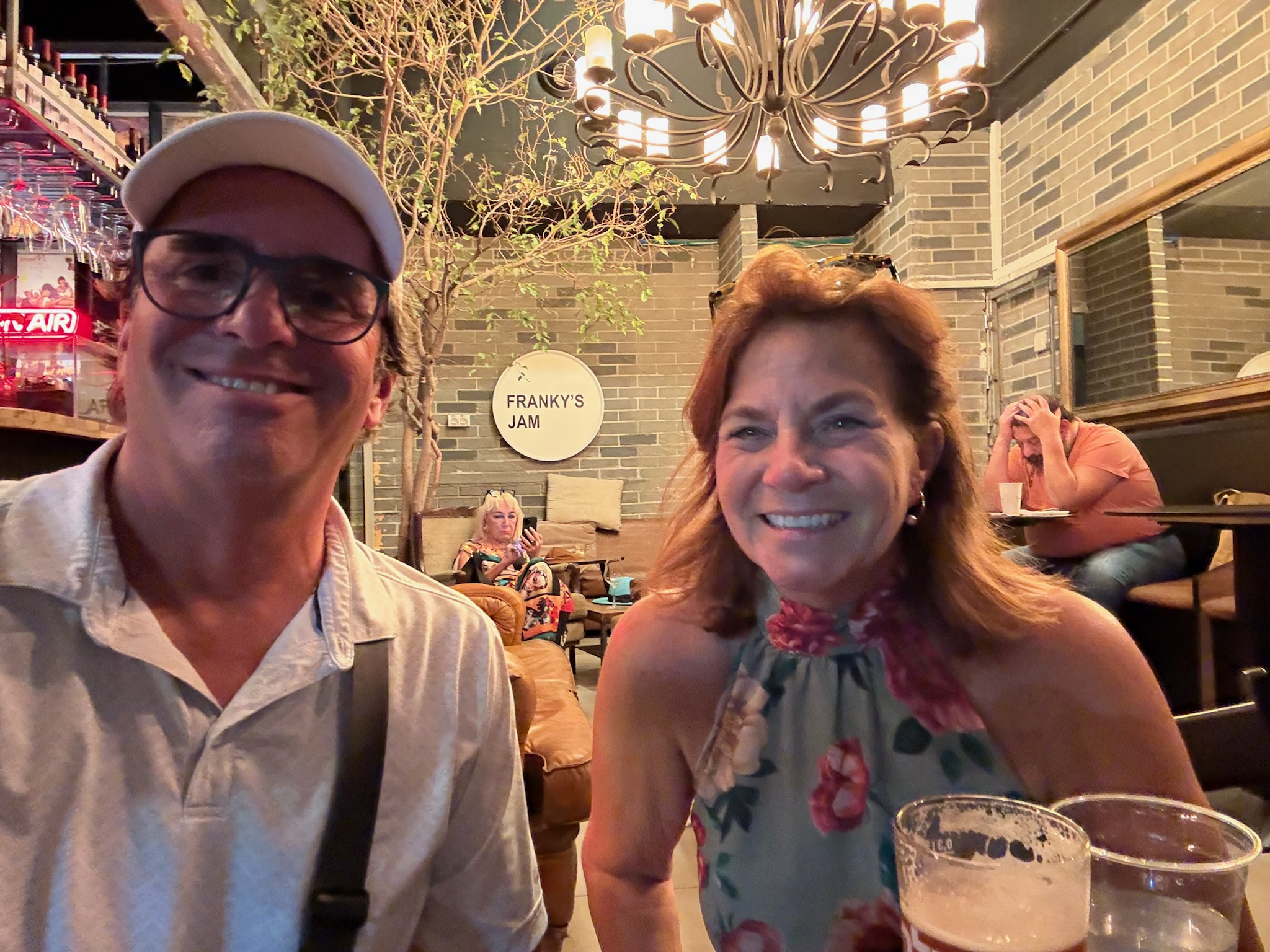
Just like our last Semester Abroad, the trip started with us thinking we had so much time ahead of us, then the days and weeks flew by so fast. The lesson being: slow travel is anything but, because no matter where you go and for how long, unless you end up staying forever, the trip always comes to an end, and you always end up lamenting how it all went by so quickly. So, on our last day we found ourselves café hopping, eventually landing at Hotel 48 on Rothschild Boulevard, having an afternoon drink and watching the hustle and bustle of Tel Aviv move around us. We went over all of our amazing experiences from the previous six weeks, the places we’d visited and the people we’d met. Could we rate our Semester Abroad a success? Sababa!
The idea had percolated for years: what my wife and I wanted to do once the kids were grown and we had the freedom, both time-wise and financially, to go/do/see whatever we wanted, wherever we wanted, for however long we wanted. In a nutshell, we would pick places to go and stay for an extended period, experiencing them like locals rather than as tourists. The plan became known jokingly as our “semester abroad,” because why should the college kids get to have all the fun?
We had just returned from our first such semester abroad, a five week excursion to New York City, when I realized that our little experiment had set a dangerous precedent: It had been everything we hoped it would be. This one was going to be hard to beat.
The scene was set after work for me became more flexible and she took an early retirement. We settled on New York City because our daughters were living there and we both had college friends there. Safety in numbers. We were adventurous but a little cautious as neither of us wanted to be looking at the other after a week or two thinking, “I’m stuck with just YOU for the rest of this trip?”
After scouring Airbnb for months looking for just the right place in just the right location, we ended up renting a tidy one bedroom in a fourth floor walkup—the walkup being better for exercise, we reasoned—then complained about every single time we began the climb. Note to self: Plan before exiting the apartment—you don’t want to have to scamper back up for a phone or wallet or umbrella. Second note to self: Climbing up four flights of stairs while full from dinner, or drunk (or both), or in need of a bathroom is just a mind-over-matter exercise. As per Nike—you’ve got to Just Do It. Our calves were stronger by the end, and we came to accept the trek, but it was never quite agreeable just for exercise’s sake.
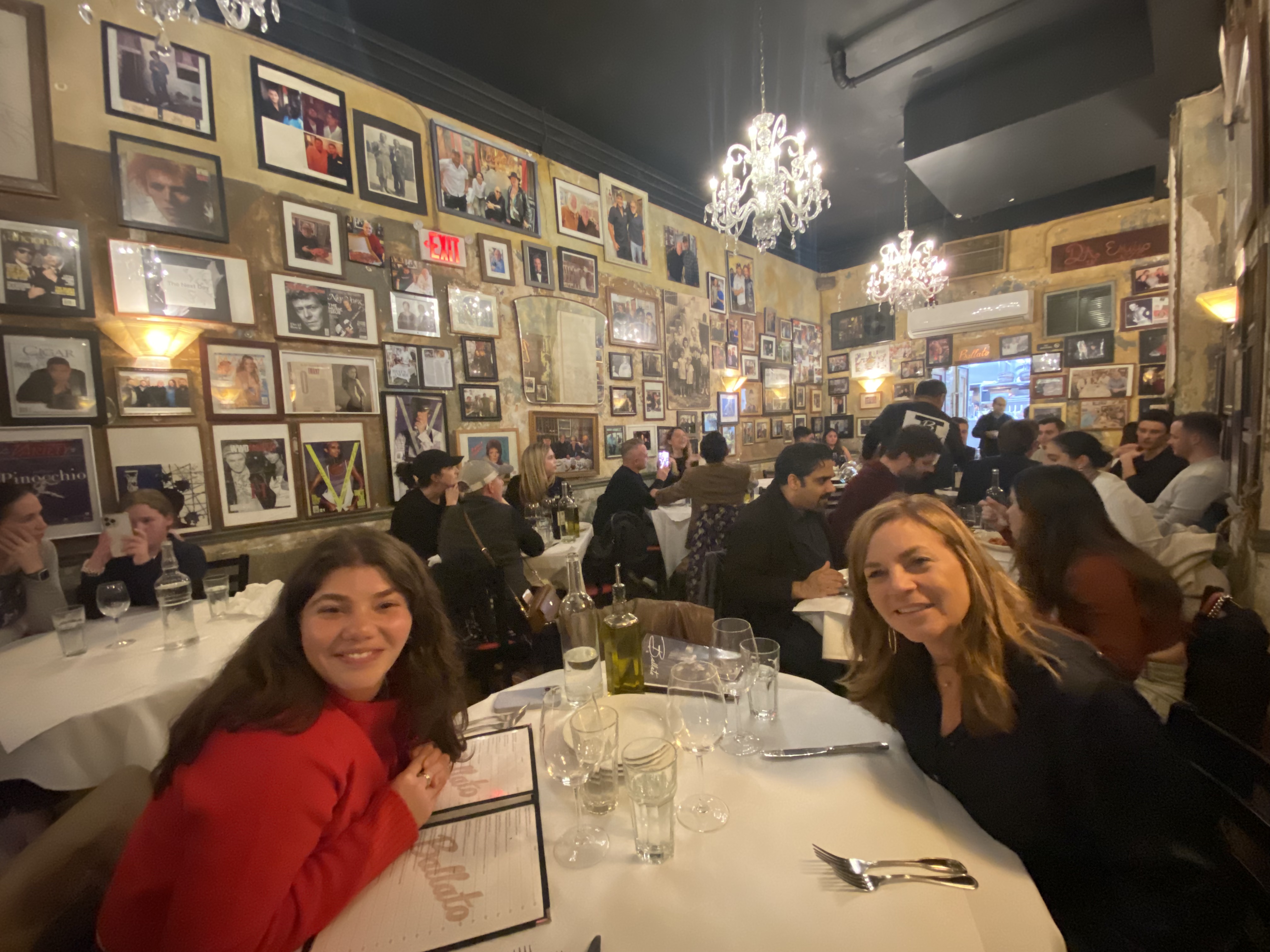
So, as the saying goes: location, location, location! Our apartment was in the West Village, on Jane Street, just down a block from…everything. A corner bar aptly named the Corner Bistro, a go-to tavern, a greasy spoon, a pastry store, a sandwich shop, great (and greater) Italian, French, and Mediterranean restaurants, etc. It was all there, just a block away. And beyond that, more and more and more. It was overwhelming. How were we going to figure out where to eat first?
And that’s where our plan kicked in. After four or five days, the world slowed down, we started to get our bearings, and things began to feel…normal. This wasn’t about having to fit everything in during a short trip. It was just about living life.
My routine was set each morning by work obligations, making calls and emailing while enjoying our “wonderful” view out of the apartment—looking at the back of the adjoining apartment building. Her mornings were a bit more fun, seeking out pickleball courts and people to play with, walking with friends on the Hudson River Park, browsing unique off-the-beaten-path shops. Late morning she’d return to the apartment and I’d finish up work, then we rolled. Our afternoons were spent together, exploring the city, walking, walking, walking. The only time we took the subway was to go to the far reaches of Brooklyn or the Upper West Side to visit friends.
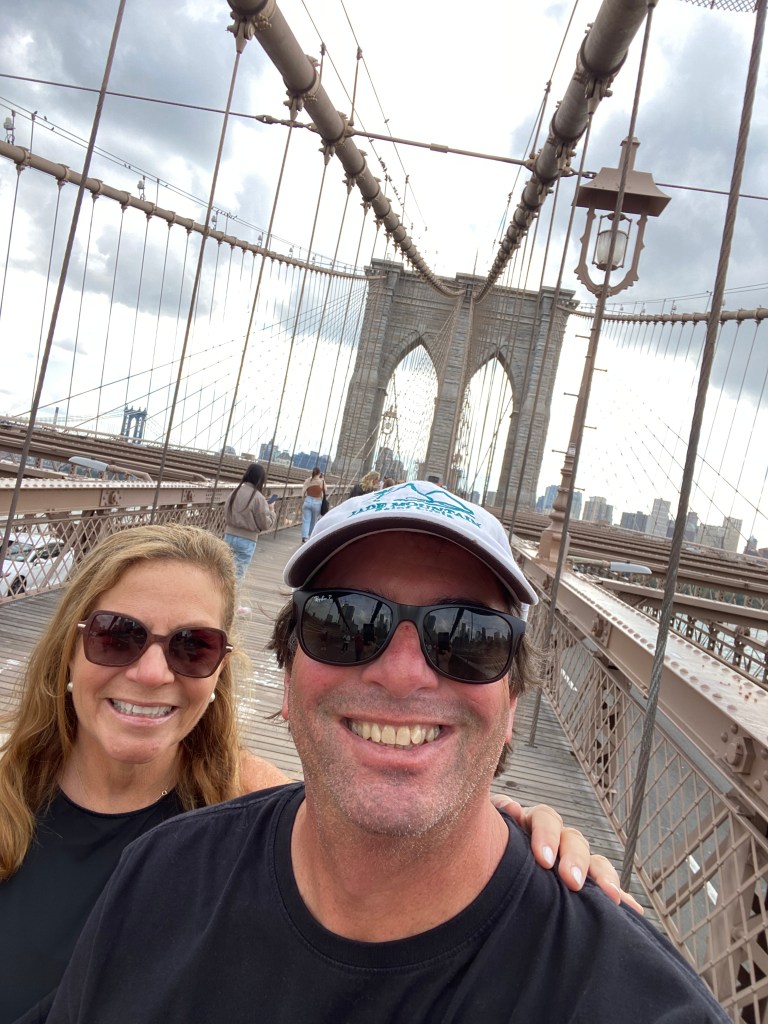
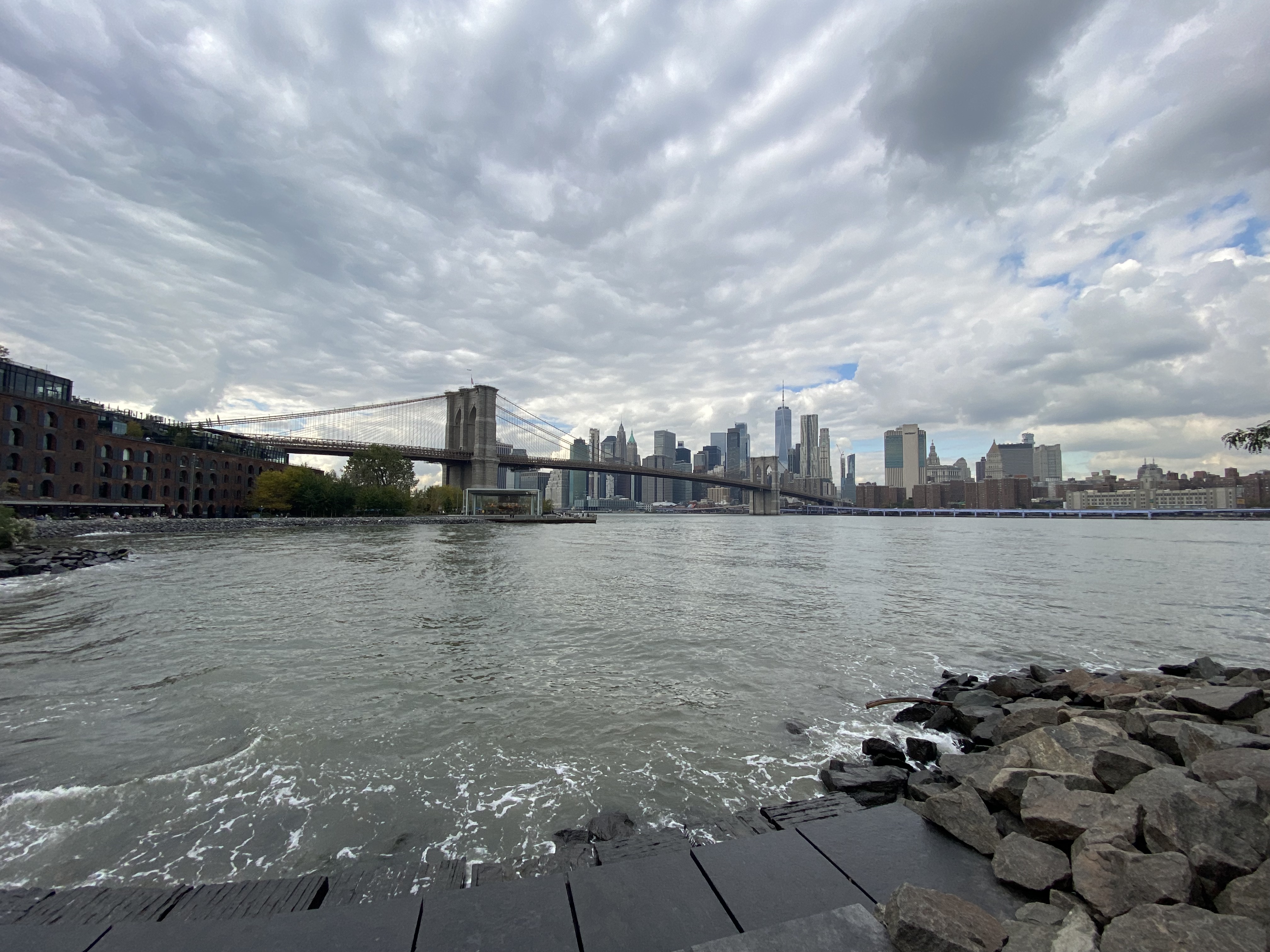
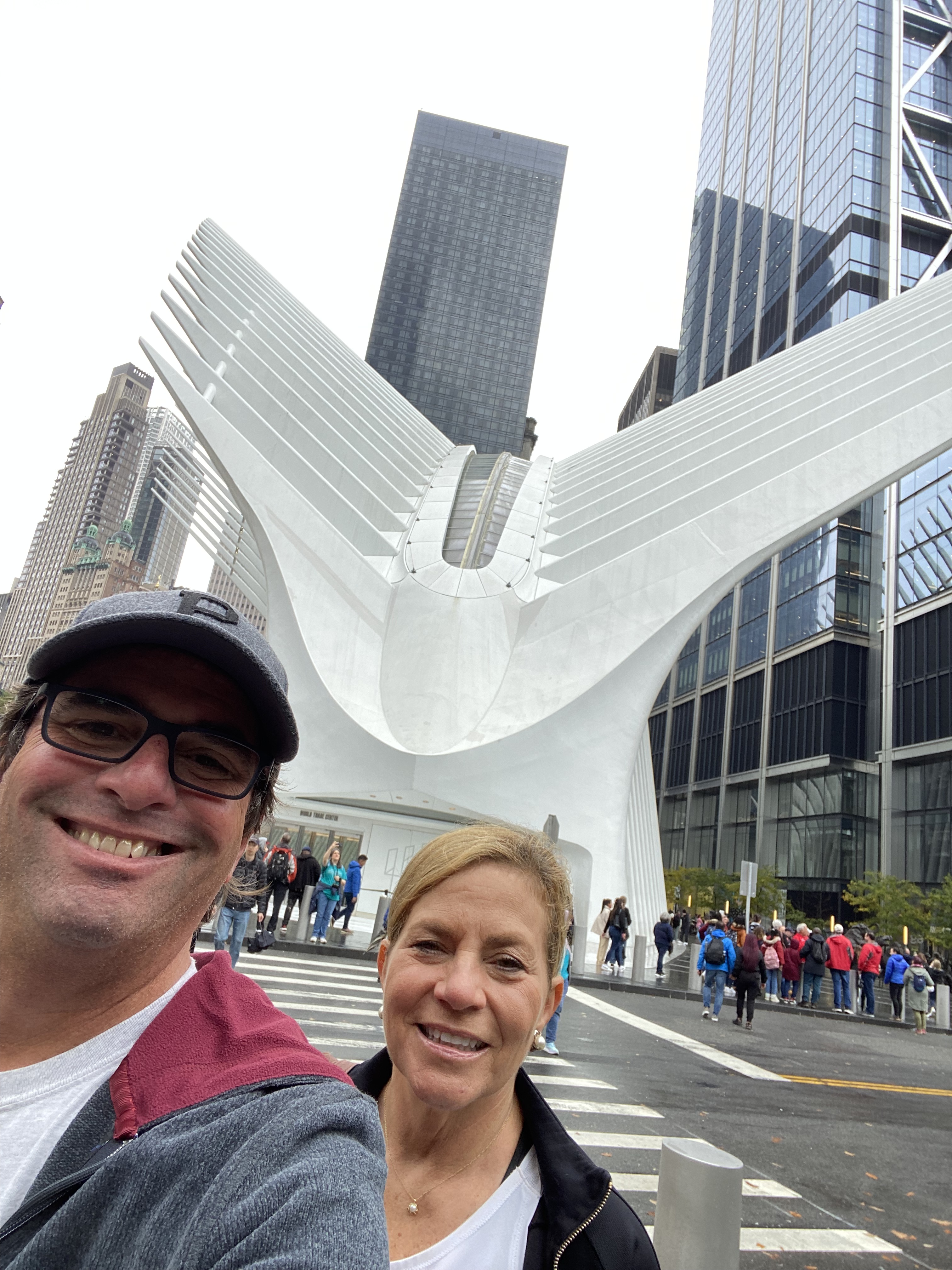
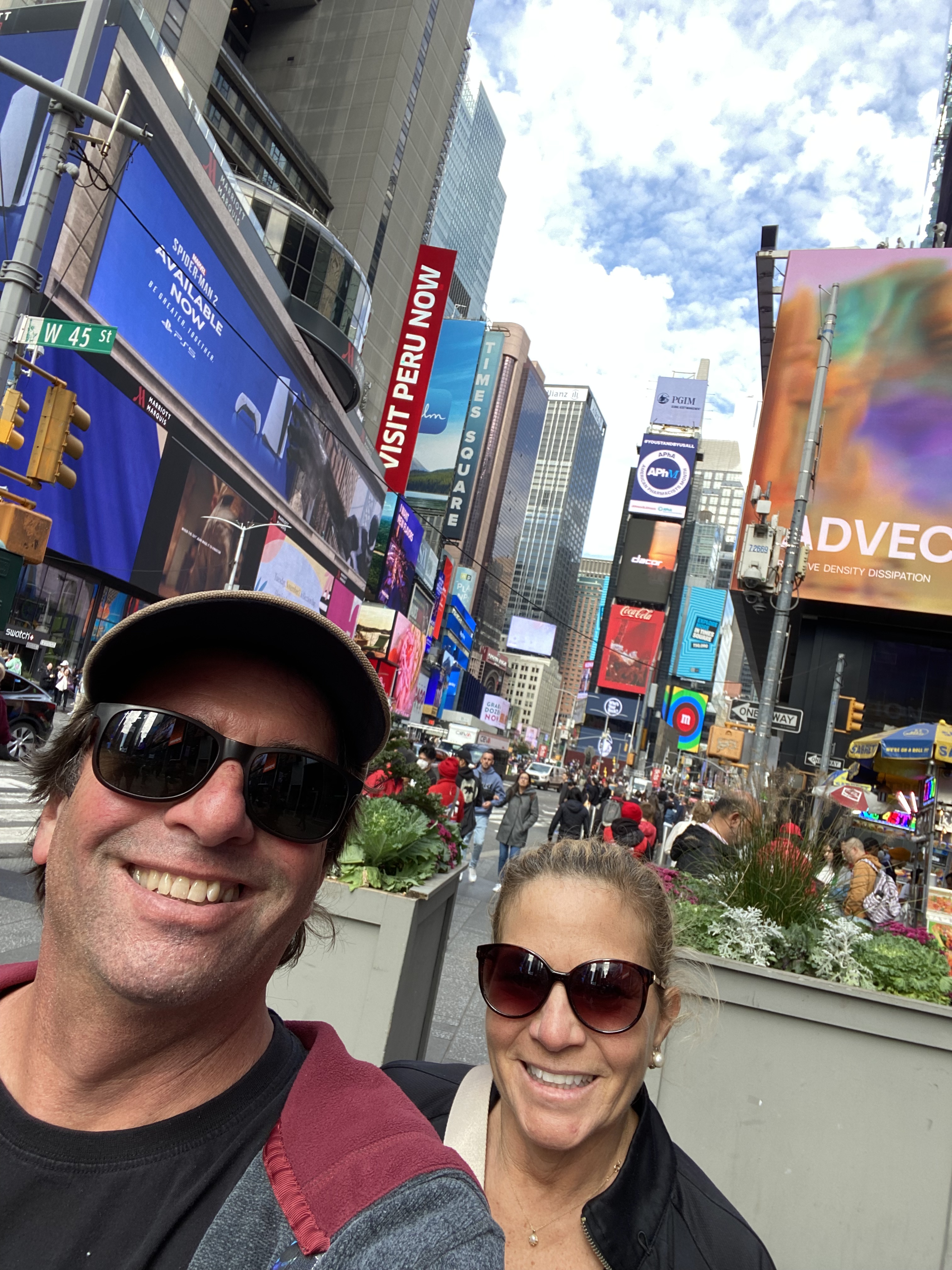
We were not entirely unlike tourists—we walked over the Brooklyn Bridge, went to Central Park, visited the 9/11 memorial and the Oculus, saw a show, and ate pastrami at Katz’s. But we also just did what New Yorkers do: we went to the museums, walked and shopped Soho, went to Hudson Yards (like, what’s the big deal?), walked on the Highline and the Hudson River Park, went to the piers and the Little Island, and browsed the art galleries in Chelsea. On a gorgeous, warm October afternoon we rented bicycles and rode along the Hudson River Park all the way to the Little Red Lighthouse at the George Washington Bridge and back. We walked around Brooklyn and took a ferry boat back to Manhattan, we browsed the weekend farmers market in Union Square as well as the Holiday markets there and in Bryant Park. We walked up Fifth Avenue to Rockefeller Center, then over to Times Square and walked back down Sixth (multiple times), up Madison Avenue from Union Square to Grand Central Station, along Bleeker to Sullivan to Prince. We browsed the Artists and Fleas in Chelsea Market and Eataly Flatiron (wait—is that a New Yorker or a tourist thing to do?).
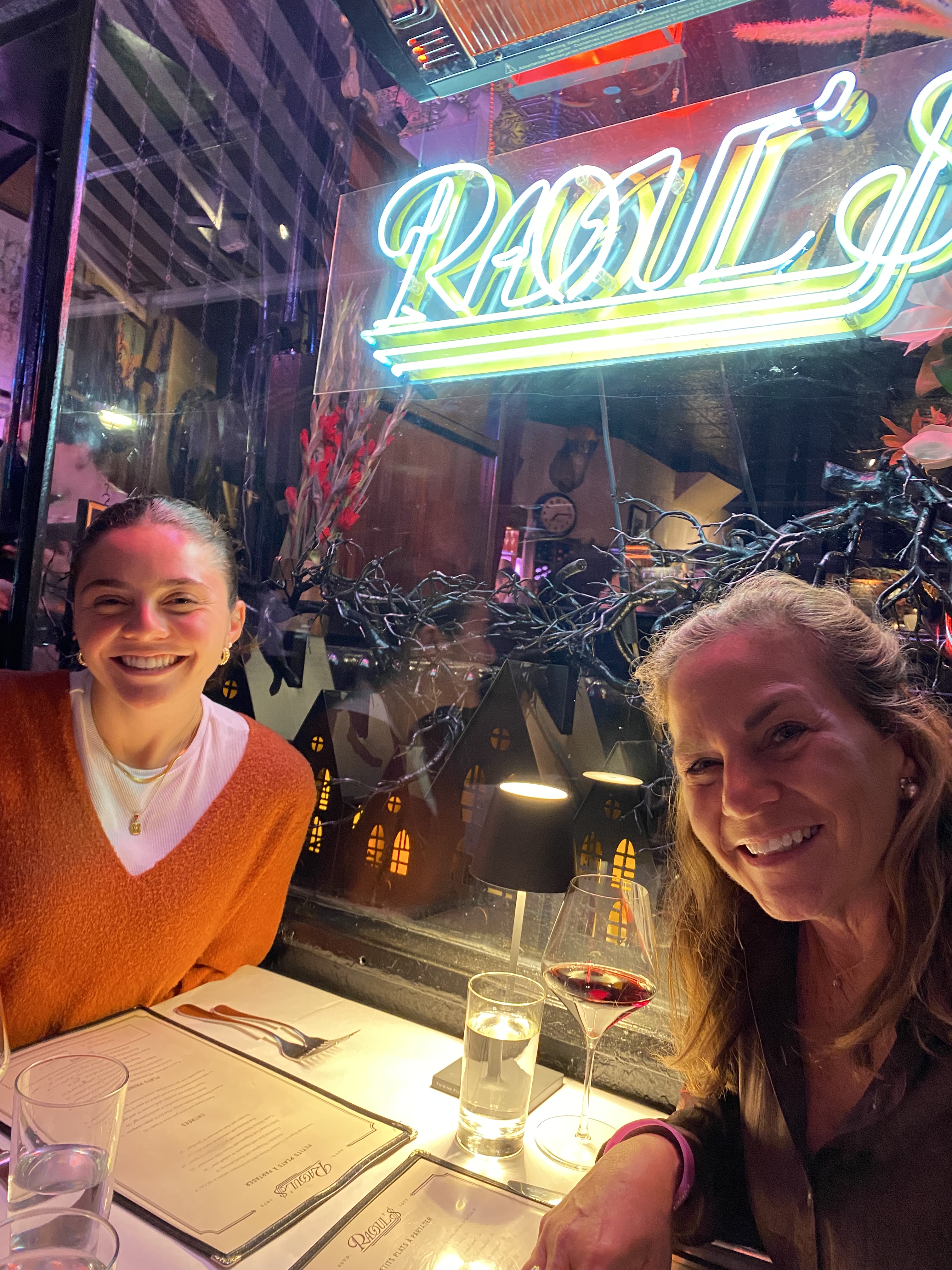
Some observations: The Subway—it is very efficient and easy to use and if you use it with Google Maps you’ll be set; Temperature in October/November—45-65 degrees is relatively the same: cold is cold in the shade and not so cold in the sun. Wear layers and be ready to peel off and re-dress; Romance—any streetcorner is a romantic spot for a kiss, and if you do it, no one will pay the slightest bit of attention to you. Same with arguing; Italian restaurants—it is ridiculous how many there are and how the cuisine has leeched into all restaurants it seems, as every one has some form of cavatelli and Bolognese; Burgers (and fries)—literally (almost) every restaurant has a great burger and great fries. *Note: Mary’s Fish Camp has the best fries as they are thin and almost like potato sticks and they serve them in a huge pile and…yum!; Reservations—to get into the places you can’t get into no matter how early you wake up to be the first to try to snag a Resy or Opentable reservation: 1) Go early and put your name on the list when they open as most have a walk-in seating list (Don Angie); 2) Actually go to the restaurant days in advance and talk to the manager (begging is acceptable); 3) Go early and nab seats at the bar; or 4) suck it up and get in the line at Via Carota at 4:00 and be ready to eat your meal at 5:00 (or 11:00); A “cheap” meal in New York is never really cheap.
After that first few days, the time went by faster and faster, and we could hardly believe when the last week arrived. We went back to some places/sites we wanted to visit one more time, we finally tried the last of the food we had missed, and we started to pack up our belongings. When we walked out of our little New York apartment (and walked/struggled down the four flights with our luggage in tow) we did so with mixed feelings of satisfaction for having checked that item off our list and sadness for what was probably a one-off “semester” in Manhattan. Just when we started to feel a part of it, New York, New York was over and we were heading back home.
We came and we conquered—kind of—leaving in better shape walking-wise, a little (actually, a lot) lighter in the wallet, our appetites and liquor yearnings satiated, having learned a few lessons for future Semesters Abroad along the way: It was a benefit to have our daughters and friends nearby (and to have friends come in for a visit); a comfortable pair of shoes (or two) was a must; never walk and text (beware of those who don’t clean up after their dogs).
Final Grade: I would give this inaugural Semester Abroad: New York City an A+
Best Meal: Don Angie
Best Fun Restaurant Experience: Arthur & Sons
Best Romantic Restaurant: Malaparte
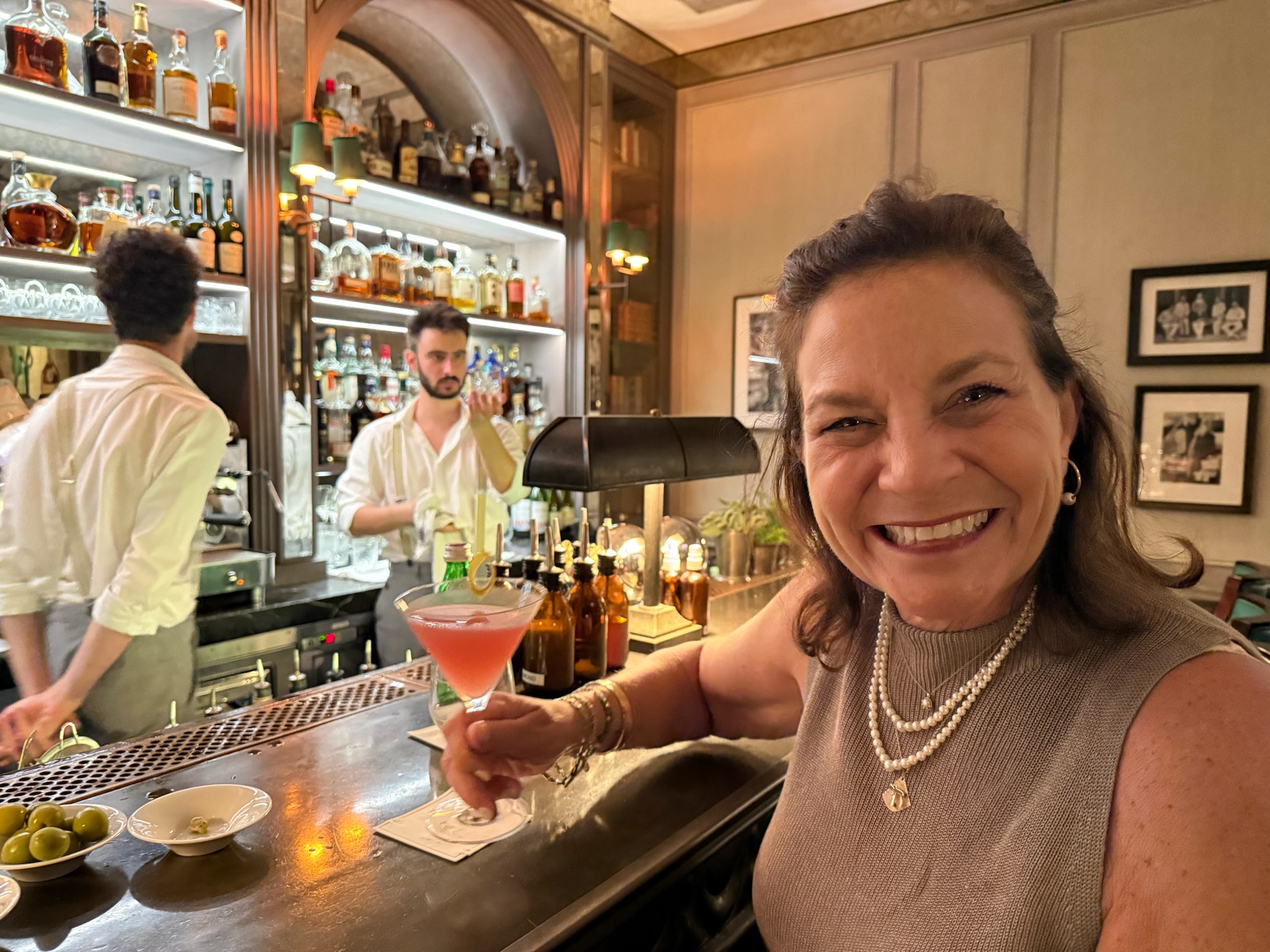
Best Cocktail Bar: The Crosby Bar at the Crosby Street Hotel
Best Sports Bar: Reservoir (Steelers and IU)
Best Bread: Olive and Cheese Breadstick at Breads Company
Best Croissant and Brioche: Aux Merveilleux de Fred
Best Pizza: L’Industrie
Best Coffee: Caffè Arrone
Best Bagel: Thompkins Square Bagels
Best Beer Pub: George Keeley (UWS)
Best Negroni Bar: Danté’s West Village
Best Market: West Side Market
Best Grab a Lobster Roll and Fries Any Day of the Week: Mary’s Fish Camp
Best Being In New York City Experience: Walking over the Brooklyn Bridge
Best Cultural Experience: Manet/Degas Exhibit at the Metropolitan Museum
My latest book, Summer of Hope, Summer of Dreams, was launched yesterday! (see sidebar to the right to purchase–yes, a self-serving plug, there). The book was just put out for public consumption, but it was a long time in the making–made even longer due to some delays beyond my control. The title is a metaphor for the subject matter of the book, and is a play on a Springsteen song title, Land of Hope and Dreams–also in the book.
I grew up in a small steel town in West Virginia and was a rabid Bruce Springsteen fan (still am, of course). A common theme running through almost every one of his songs is that of keeping hope and having faith. Although confronted by what seems like a dead-end–in your hometown, or in your relationships, or in the despair of a post-9/11 America–Springsteen sings about the light at the end of the tunnel. He reasons that in the most trying of times, even though despair threatens to overtake you, keeping your dreams alive, and allowing yourself to hope and have faith that it will be so, will get you through your darkest of days. As it is in Summer of Hope, Summer of Dreams.
Becoming an author is a dream come true for me. Sheer blind faith led me to where I am in my writing today (see the connection?). Summer of Hope, Summer of Dreams is my latest baby, and it was a true labor of love. I hope you will read it. I hope you will enjoy it. And to that end, I hope that when you finish it, you will feel that sense, as I have since my childhood, that we can have faith in our dreams coming true.
“Once upon a time, in a land far, far away …” Can you imagine opening a new book, turning to the first page, and reading those words? Pick up any how-to book (do they still print those?) or go to any online forum, and you—the aspiring new author—are told to never, ever start a book with: “It was a dark and stormy night…” Or anything of that sort. Why not? Because any literary agent or publisher you are trying to woo won’t get past those first few words. Because, according to them, it’s wrong.
Someone needs to explain that to me. Isn’t writing a form of art? Since when was something artistic capable of being “wrong?” Was Monet wrong for breaking from tradition to help create impressionism? Was Picasso wrong for cubism? How about Tolstoy—War and Peace? Orwell? Kerouac? Salinger? Harper Lee? Tom Wolfe?
Art is like fashion: in today, out tomorrow. It is subject to the whims of society as it then exists. Van Gogh was hated in Arles and sold one painting during his life. Can you imagine if he listened to his critics and stopped painting his way? He may not have achieved fame and fortune during his lifetime, but his art is society’s treasure.
Not every budding author is going to find success or fame. In reality, very few will. But the problem in the literary world—the traditional literary world—is that it is all about the money and not enough about the art. Publishers and the literary agents who feed them their material are the traditional gatekeepers of the art. And they’re failing in that role. Who is to say there isn’t a brilliant author who purposely starts a story “once upon a time,” or “on a dark and stormy night,” who then spins a remarkable tale that is remarkable, in part, because the book began that way? Or is written in a unique voice, or with unique, convention-ignoring grammar? Is that wrong? Or is it art?
Losing a parent is not something that one can prepare for, no matter how long and hard the battle is that leads up to death. In my mother’s case, that battle was very long and very hard, the end-result of years and years of smoking, and one fatal decision to ignore a lump. Yet despite the months of deterioration that led up to her death, the end was a shock. People asked me if it was sudden, and I was surprised that I couldn’t find a right answer. Yes, it was sudden, as in the end game lasted only a couple of days. But it was more than the end game. It was a long, slow decline in physical and mental health. My mother, independent, smart, sharp, and loving in her own critical way, began to disappear long before she took her last breath.
I thought that the last dire diagnosis, which was unassailable, had put me in the mindset to prepare for her death. Only two weeks before she died, I told a friend that I was ready—that I knew it was coming and I was calm and at peace. My friend presciently told me that it wasn’t going to be so easy, and that it would be okay if I allowed myself to be emotional over her death. I thought a lot about that comment as I sat by my mother’s side during her last three days, and as her rhythmic breathing began to slow, then slow some more, I felt the fear begin to build in me.
When it finally happened, so surreal but so absolutely real, the tears came, as well as the guttural anguish that I thought I had been immunized from in the lead-up. It wasn’t about allowing myself to be emotional—the grief came in uncontrollable waves. And it still does…
In all honesty, my mother would be appalled that I am writing this. She was adamant that upon her death we were not to eulogize her. “Get on with your lives,” she commanded us, as if we could just move on from her. I can’t. I won’t. I don’t ever want to.
My mother is a candle. It will burn for seven days on my counter. Then it will go out. But it will burn forever in my heart.
So, it’s been a while since I’ve written on this blog. Without getting into the gory details, I was too busy dealing with family illnesses to be able to write. Actually, it wasn’t that I was too busy–it was that I couldn’t. I couldn’t write–an act that to me is a joyful exercise–while I was in the midst of some not-so-joyful stuff.
My wife kept telling me that I should be writing. She said that writers do their best work when under emotional strain. That their writing under such conditions brings out their best, most pure feelings. That some of the most famous novels were written by authors who were suffering.
Well, if that concept applies generally to all writers, I guess I am the exception to the rule. I just couldn’t do it. Not one word, for a long while. Not here, not on my new book project. But, as with all things, time acts as a salve (any fans recall where they read that line before?), and I feel capable of writing again. Thank goodness!
I am busy finishing up the new book, but not quite ready to give any spoilers. Umm, ok, a little spoiler: If you grew up at or around a small steel town in the late 70s, the scenery will be very familiar to you. ‘Nuff said (for now).
The most common question I’ve been asked by my readers is how I come up with ideas for my books. The truth is that every day ideas pop into my head for a new book, and they just come from my observations. What I read, what I watch, what I see. A person walking alongside of a country road — there are a whole slew of potential stories there. A story in the paper or on the web might trigger an idea, or even standing in line at a grocery store. I see something or somebody, and nuances frolic through my mind. The ideas are always there. But, to state the obvious, it’s what you do with the ideas that matter. A quirky thing that I do though, is avoid reading any book that I think might involve the same situation or general story line as one I’m working on, because I don’t want to risk that something I’ve read is going to find its way into my writing. When I was writing Sandy Cove, I was watching television one night and a promotion for Nicholas Sparks’ Nights in Rodanthe came on and I had a mini panic attack. I didn’t even know what that story was about, but I knew that Rodanthe is in the Outer Banks and that Sparks’ books are love stories, which was exactly what I was writing. I did the “lalalalalalala” and put my hands over my ears. Ok, it’s weird, but I wanted to be sure that I didn’t taint my writing with his story line.
Writing is such a personal thing. It’s about what’s going on upstairs, in the author’s head, at any given time. I couldn’t write like Stephen King, because I don’t think like Stephen King (Who does?). I hear it in my head and I write it (okay, that is a little freaky–like Stephen King). And it’s revealing bits of yourself to the world, which is in itself a leap of faith that the world won’t think badly of you. It’s fun and scary and exhilarating to know that people are out there in the world, reading your words. But that means you have to write. Which reminds me–back to work!
I believe I have allowed myself the appropriate cool-down period before writing this post. Over the past two days, at the hands of United Airlines, I have endured two plane cancellations, as well as a total of six and a half hours of delays, including a brutal five hour stretch during which out of utter boredom I explored every store the Pittsburgh Airport has to offer. But I did manage to resist those pinkish-red bucks the Johnston and Murphy clerk tried so hard to sell me.
My ordeal started on Thursday morning, when I had the (dis)pleasure of arriving at my gate to discover that my flight was cancelled. Thanks for the email United–oh wait, you never sent me an email–or any notification–before I parked, went through security and trudged all the way through the airport to the gate. The clerk was nice enough to re-book me on Friday morning, as no flights were available on Thursday. She did this for me without ever laughing at any of my jokes. Am I really not funny at all? Some levity ma’am?
Friday morning, bright and early at 3:45 I again left my house for the airport, parked, went through security and trudged to the gate to see that the flight was not cancelled. But it was delayed by fifty minutes. Why? Because the pilot wasn’t there. The rest of the crew was present. No pilot. And just when I thought that maybe the pilot would show in time for me to make my connection, the rest of the crew stood up and walked away, muttering loud enough that the flight was showing as cancelled on United’s app, even though they hadn’t even been called by whomever at United was responsible for telling them. So what was it United? The pilot was hungover? Indisposed? In another city? Sleeping?
When I went up to the counter, to the same nice lady from the day before, she looked at me with no recollection of me whatsoever (Seinfeld? Four?) and then told me that other people were ahead of me from a line across the room and refused to help me. Off to another gate where a different United clerk, who had no reason to help me, did, and got me on a USAirways flight–the only available flight I could take to get to my destination–albeit with a four hour wait until that flight was set to leave. To add final insult to injury, once I got on that plane, the pilot came on the intercom and told us that we would have to sit for forty minutes before pushing back because of delays in DC due to a storm. Fortunately, he put on the afterburners once we took off and arrived in time for me to make my connection.
So, after my interminable travel day(s), I made it where I needed to go (twelve hours after I left for the airport for the second day), and tonight I get the reward of going to my favorite restaurant in the whole world–The Blue Point in Sandy Cove–I mean, Duck, NC.
As Frank Sinatra sang, “Come fly with me, let’s fly, let’s fly away.” Hate to tell you United, I’m not flying your unfriendly skies ever again.
One of the rituals of authorhood that has taken me by surprise (and feels really weird) is being asked to sign my readers’ books. I never contemplated that anyone would ever want my signature–except on a check. I suppose then that it was appropriate the other day when I walked into my bank, the same one that I have been going to for years, and was asked by two of the tellers to autograph their copies of Sandy Cove, and also to autograph the back of the Kindle upon which another of the tellers had downloaded the ebook.
Friends, co-workers–even relatives–have asked me to autograph their books, and they are serious! Really? I’m the same person today as I was just yesterday, before the tag “author” was attached to my resume. By my estimation, I have signed thousands of documents and letters and miscellaneous things over the years, all the while trying in vain for my signature to look nice and regal instead of the illegible scribble that it is. But this autograph thing is something different, altogether.
Whomever has requested that I autograph my book, they have responded to my look of bewilderment with stone cold seriousness. “Do it, author,” they seem to command, the expectation being that I should know what it is I am supposed to do. My face turns red, my head begins to pound. What should I say? Sound witty! Be sincere. DON’T mis-spell anything. And no scratch-outs!
Writers’ forums offer thread after thread of how-to’s on how to do book signings, what to write, even what kind of pen to use (for me, a Sharpie). Still, every time I am asked to sign, it comes as a complete shock, and I feel totally unprepared–and undeserving. But maybe I can learn something from my readers, and gain some perspective. So, to Donna and Karen and Judy at the bank, and to all of the others who have requested my signature–thank you for giving me the honor of autographing your books/kindles. And thanks again for reading my book.
In the ultimate fall from grace, Lance Armstrong was reduced in stature to the extent of sitting on Oprah Winfrey’s couch this week and confessing to using performance enhancing drugs for virtually his entire career. Shockingly unshocking. Is anyone really surprised that Lance Armstrong doped and doped and doped his way to seven Tour de France titles? How about Barry Bonds hitting 73 home runs? Or Roger Clemens winning seven Cy Young awards? The common thread: they all cheated–themselves and us and their sports.
Statistically speaking, history has a foolproof way of validating the human element in sports. Rules changes aside (lowering the pitching mound, handcuffing football defenses, the three point shot), records spanning seventy-five or a hundred years are remarkably resilient. We know that, all things being equal, a baseball player cannot hit more than 61 home runs in a 162 game season, a pitcher cannot win more than 30 games, a football running back cannot run for much more than 2000 yards in a season, and so on in swimming, track and field, cycling, etc. Athletes today are bigger and stronger and faster than they were even twenty years ago, much less 50, 75 or 100 years ago. And yet, records (other than those set by longevity) tend to stand. Hard to believe, but maybe some of the players of yesteryear (Roger Maris, Babe Ruth, Hank Aaron, Jim Brown and Jesse Owens) were better than anyone else, even compared to today’s athletes.
But at some point the athletes lost their way. Sports moved from being about sport and became about something very different: money. And when sports became about money–mostly for the leagues and networks and advertisers, but also for the athletes, it began to corrupt everyone involved. Of course, ego has a lot to do with it as well, but athletes have always been about ego. When Alex Rodriguez wasn’t satisfied being considered the best player in his sport, he had to have the highest contract as well ($25 million per year), and then he was so egotistical that neither the ridiculous amount of money nor the statistics he was achieving without doping (if there ever were any) weren’t good enough either. So he doped. And he got caught. And then he admitted it, because he was still so egotistical that he felt he had to rehabilitate his reputation. Just like Lance Armstrong.
Some say that Armstrong did so much good, raised so much money for cancer research, that we should give him a break for cheating his way to seven titles. Really? Lance Armstrong purposefully ruined the lives of anyone who he ever imagined posed any threat to exposing him. His ego was so big that he stopped at nothing–lawsuits, threats, financial ruin–to maintain his ruse. And he should be forgiven because he also did good? Well Bernie Madoff gave a lot of money to charity over the years, too.
Did anyone ever have to hear Lance Armstrong admit that he doped to really believe that he doped? Or Barry Bonds? Or Roger Clemens? In my opinion, the enormity of the disparity in these athletes’ accomplishments versus the historical record was a tipoff to some fishy stuff going on. Here’s my question, and I hope I’m wrong, but . . . can you look at any of the off-the-charts athletes these days and not think they must be on something? If they are, and they get caught, at least they know that Oprah has a couch they can visit someday.













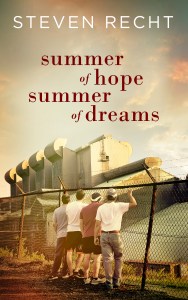 latest book, Summer of Hope, Summer of Dreams, was launched yesterday! (see sidebar to the right to purchase–yes, a self-serving plug, there). The book was just put out for public consumption, but it was a long time in the making–made even longer due to some delays beyond my control. The title is a metaphor for the subject matter of the book, and is a play on a Springsteen song title, Land of Hope and Dreams–also in the book.


