Semester Abroad: New York City

The idea had percolated for years:  what my wife and I wanted to do once the kids were grown and we had the freedom, both time-wise and financially, to go/do/see whatever we wanted, wherever we wanted, for however long we wanted.  In a nutshell, we would pick places to go and stay for an extended period, experiencing them like locals rather than as tourists.  The plan became known jokingly as our “semester abroad,” because why should the college kids get to have all the fun?  

We had just returned from our first such semester abroad, a five week excursion to New York City, when I realized that our little experiment had set a dangerous precedent:  It had been everything we hoped it would be.  This one was going to be hard to beat. 

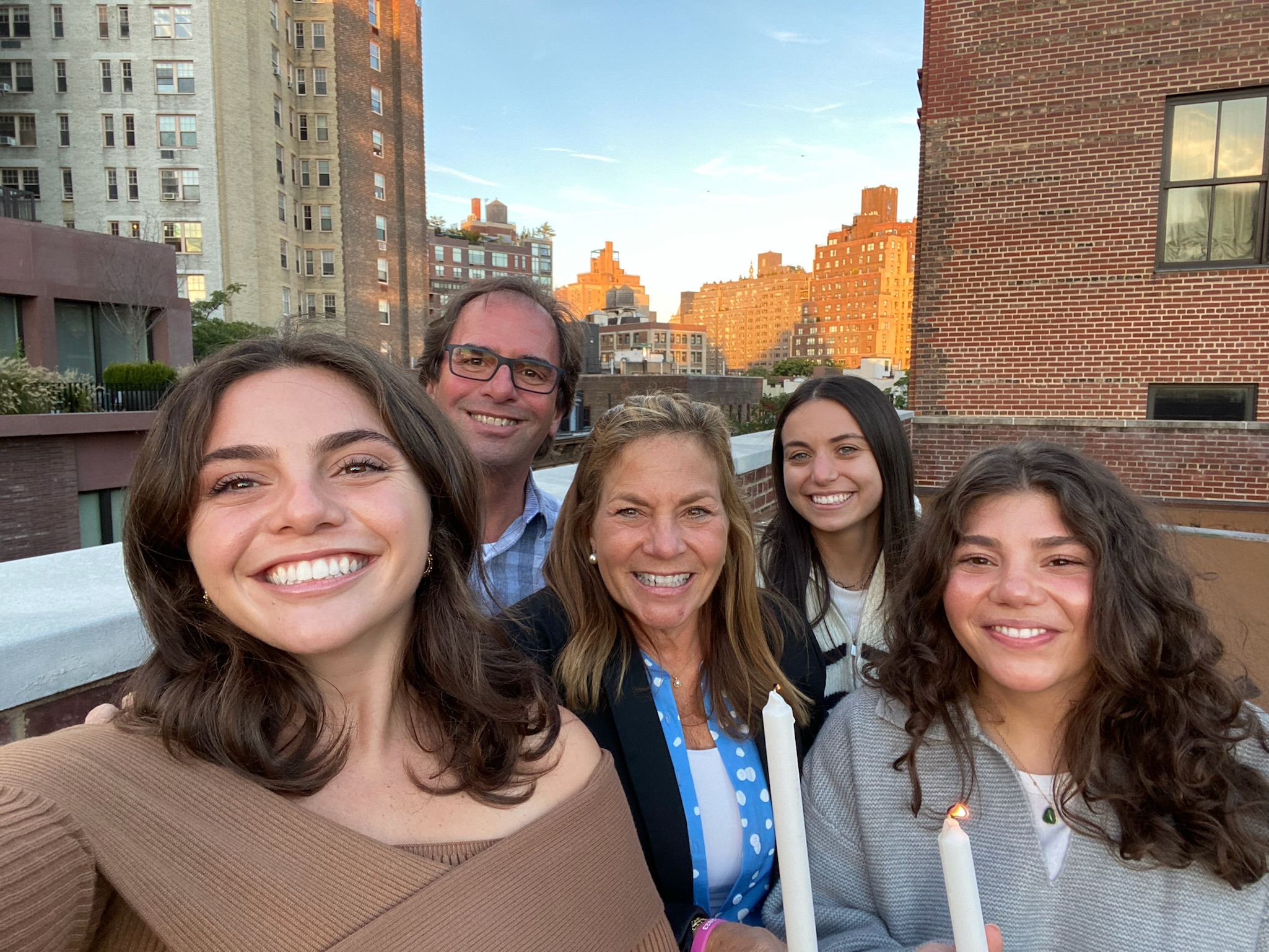
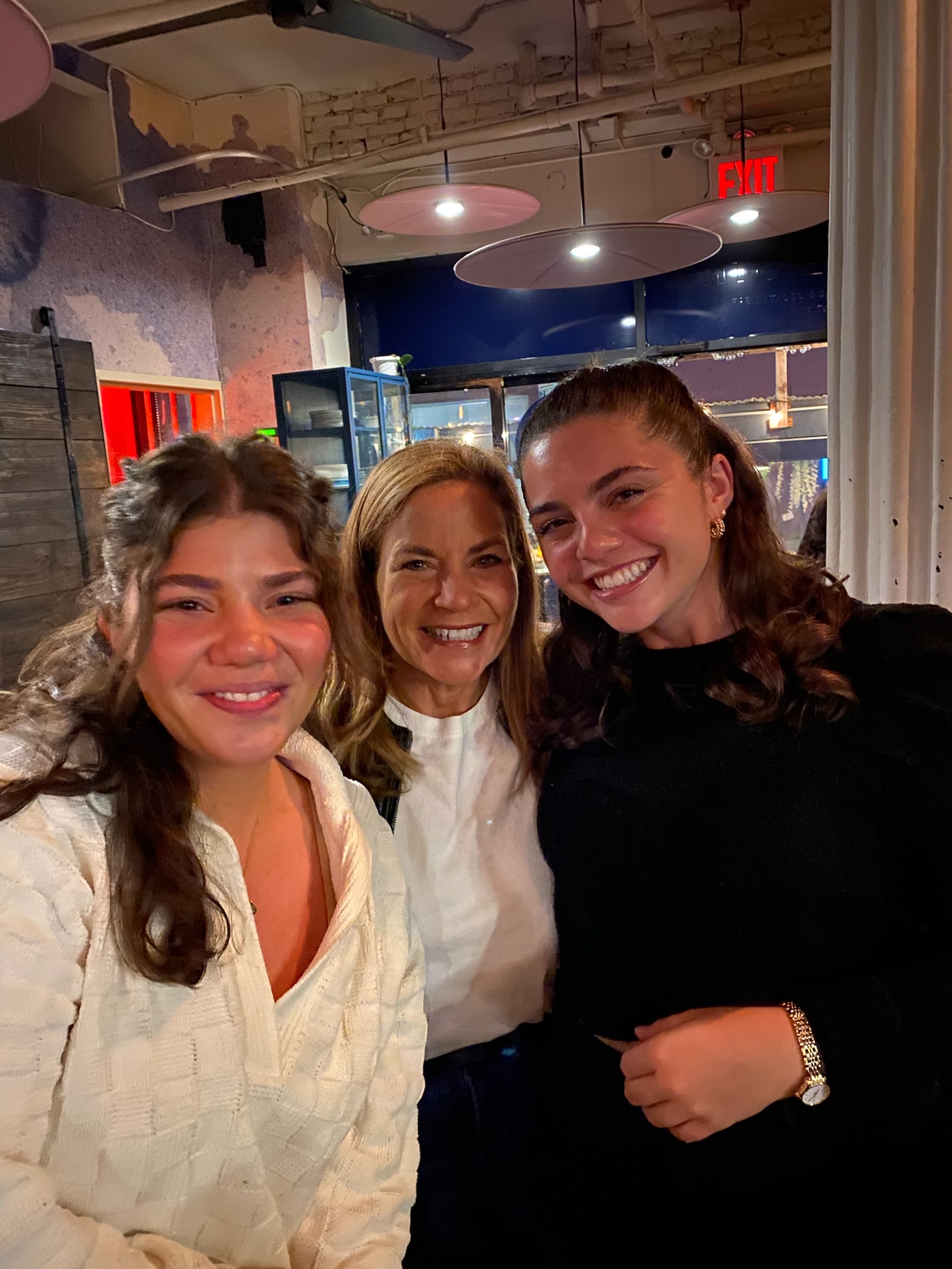
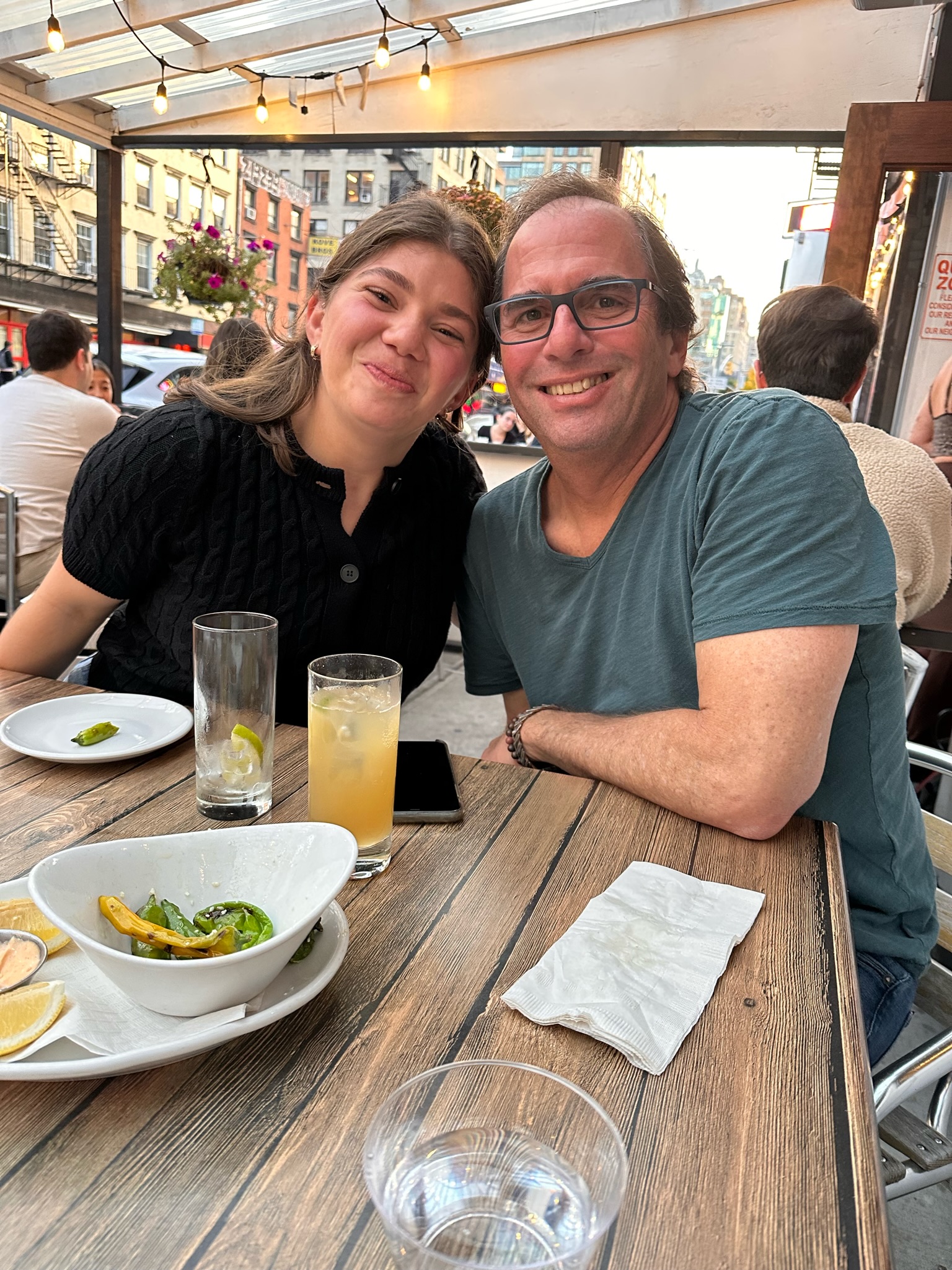
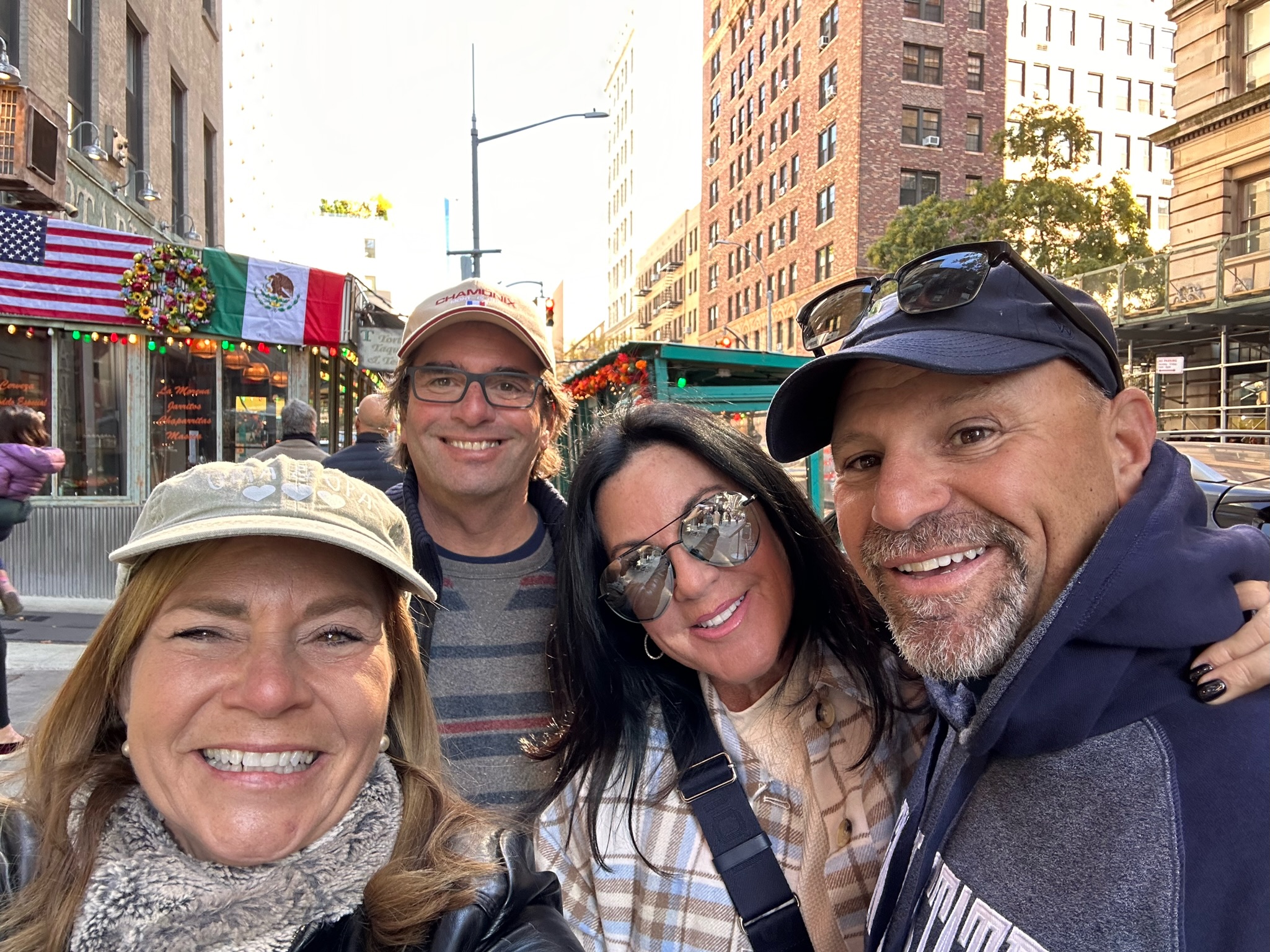
The scene was set after work for me became more flexible and she took an early retirement.  We settled on New York City because our daughters were living there and we both had college friends there.  Safety in numbers.  We were adventurous but a little cautious as neither of us wanted to be looking at the other after a week or two thinking, “I’m stuck with just YOU for the rest of this trip?”

After scouring Airbnb for months looking for just the right place in just the right location, we ended up renting a tidy one bedroom in a fourth floor walkup—the walkup being better for exercise, we reasoned—then complained about every single time we began the climb.  Note to self:  Plan before exiting the apartment—you don’t want to have to scamper back up for a phone or wallet or umbrella.  Second note to self:  Climbing up four flights of stairs while full from dinner, or drunk (or both), or in need of a bathroom is just a mind-over-matter exercise.  As per Nike—you’ve got to Just Do It.  Our calves were stronger by the end, and we came to accept the trek, but it was never quite agreeable just for exercise’s sake.

So, as the saying goes:  location, location, location!  Our apartment was in the West Village, on Jane Street, just down a block from…everything.  A corner bar aptly named the Corner Bistro, a go-to tavern, a greasy spoon, a pastry store, a sandwich shop, great (and greater) Italian, French, and Mediterranean restaurants, etc.  It was all there, just a block away.  And beyond that, more and more and more. It was overwhelming.  How were we going to figure out where to eat first?

And that’s where our plan kicked in.  After four or five days, the world slowed down, we started to get our bearings, and things began to feel…normal.  This wasn’t about having to fit everything in during a short trip.  It was just about living life.

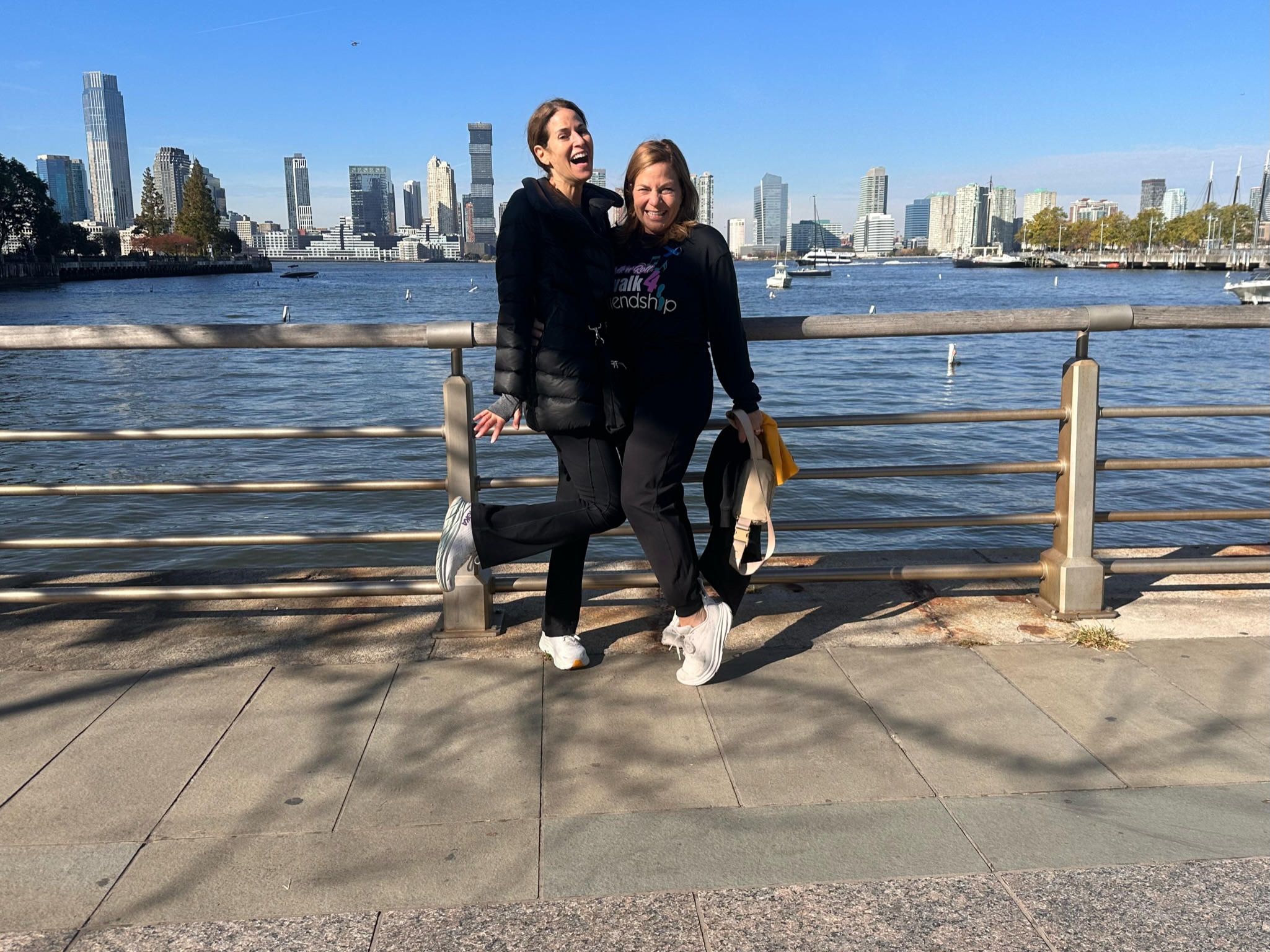
My routine was set each morning by work obligations, making calls and emailing while enjoying our “wonderful” view out of the apartment—looking at the back of the adjoining apartment building.  Her mornings were a bit more fun, seeking out pickleball courts and people to play with, walking with friends on the Hudson River Park, browsing unique off-the-beaten-path shops.   Late morning she’d return to the apartment and I’d finish up work, then we rolled.  Our afternoons were spent together, exploring the city, walking, walking, walking.  The only time we took the subway was to go to the far reaches of Brooklyn or the Upper West Side to visit friends.

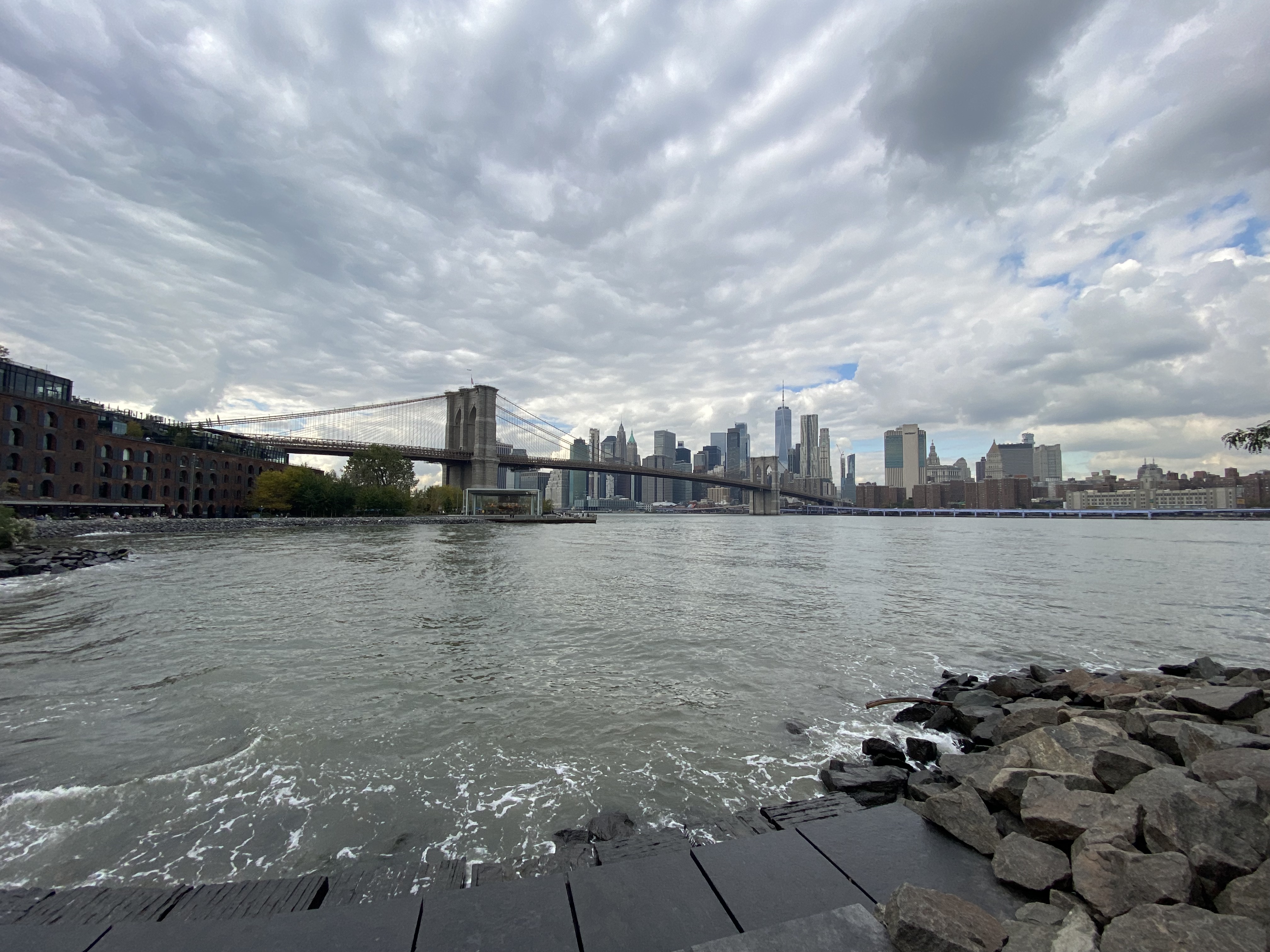
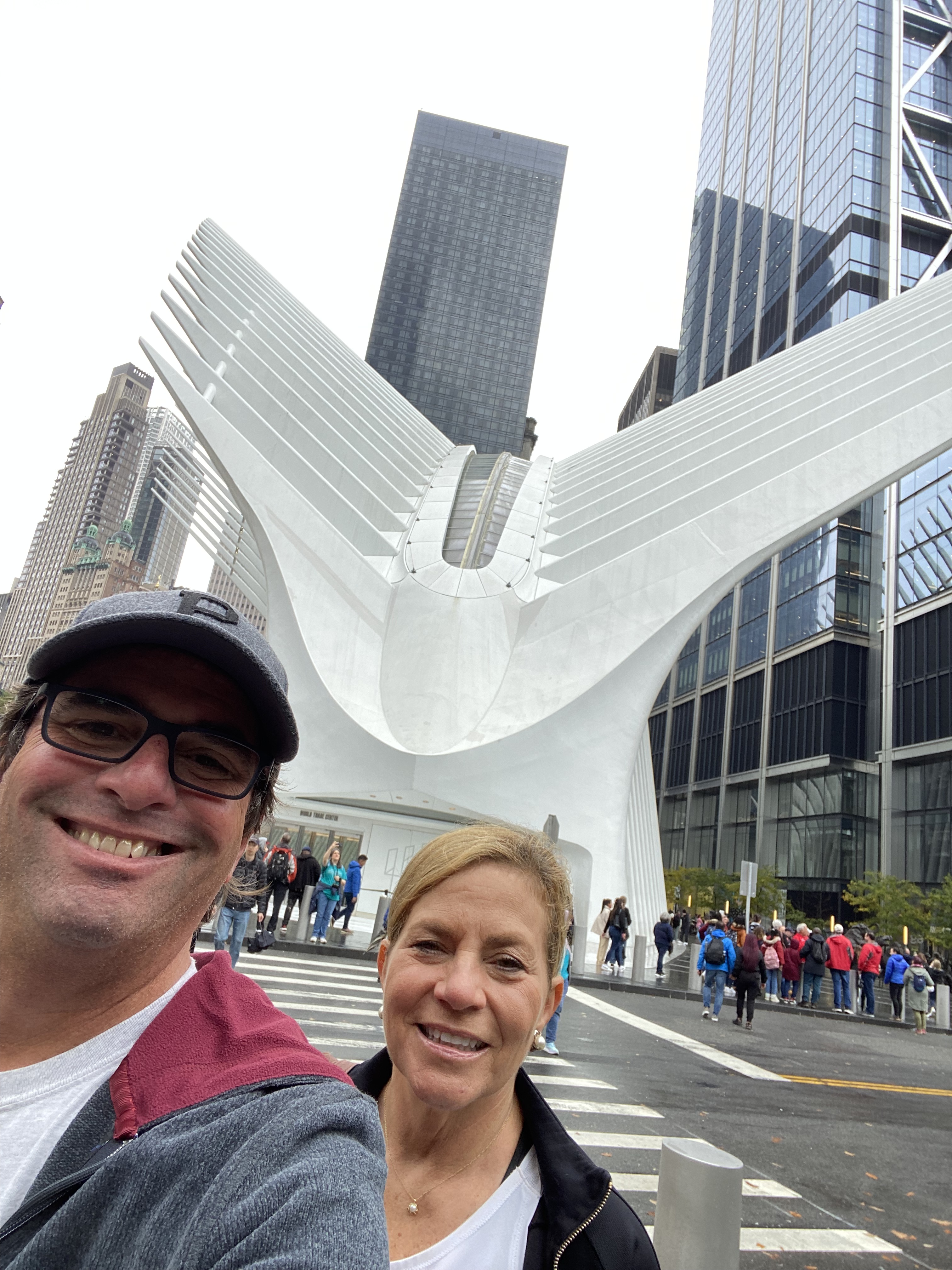
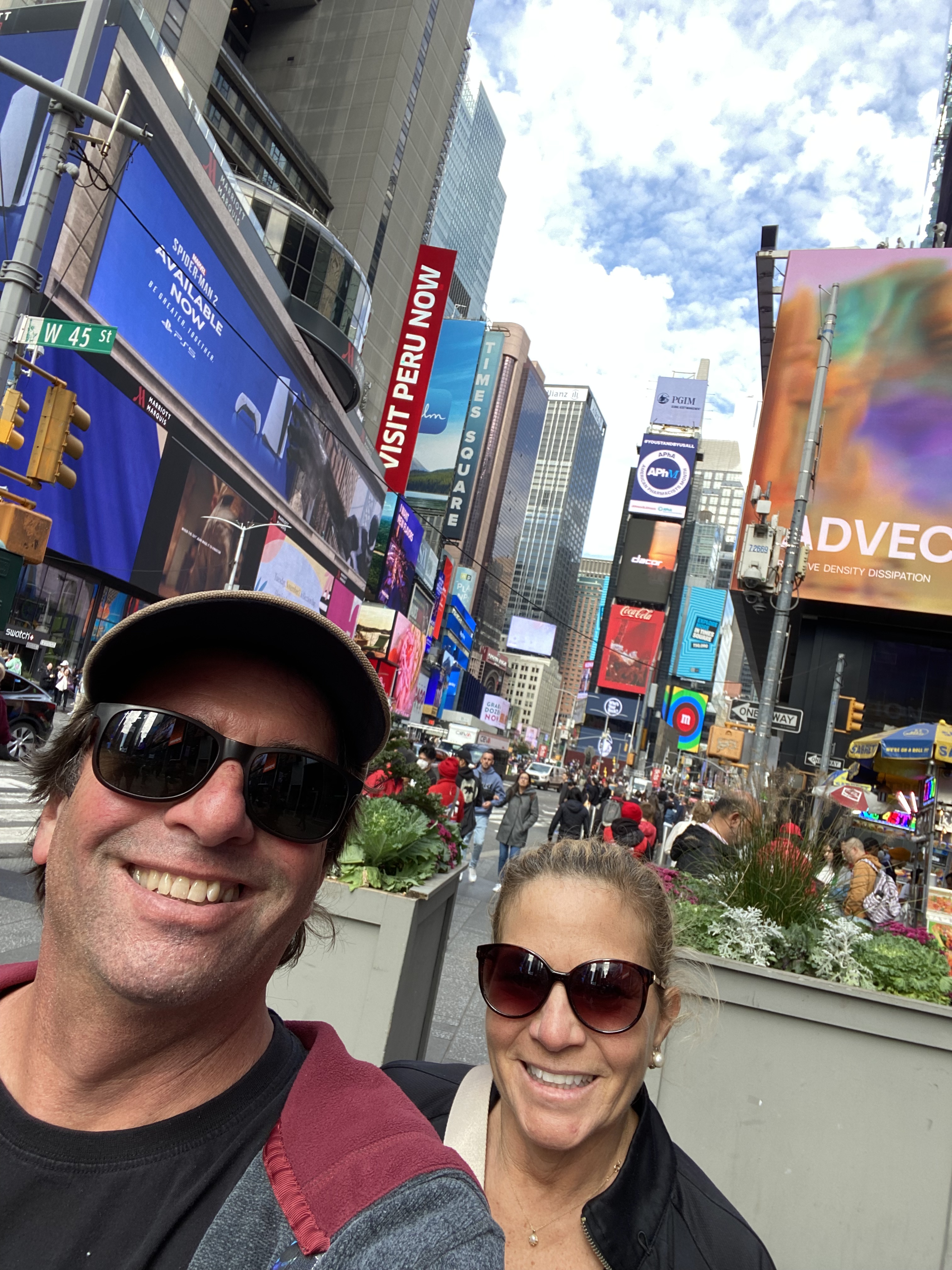
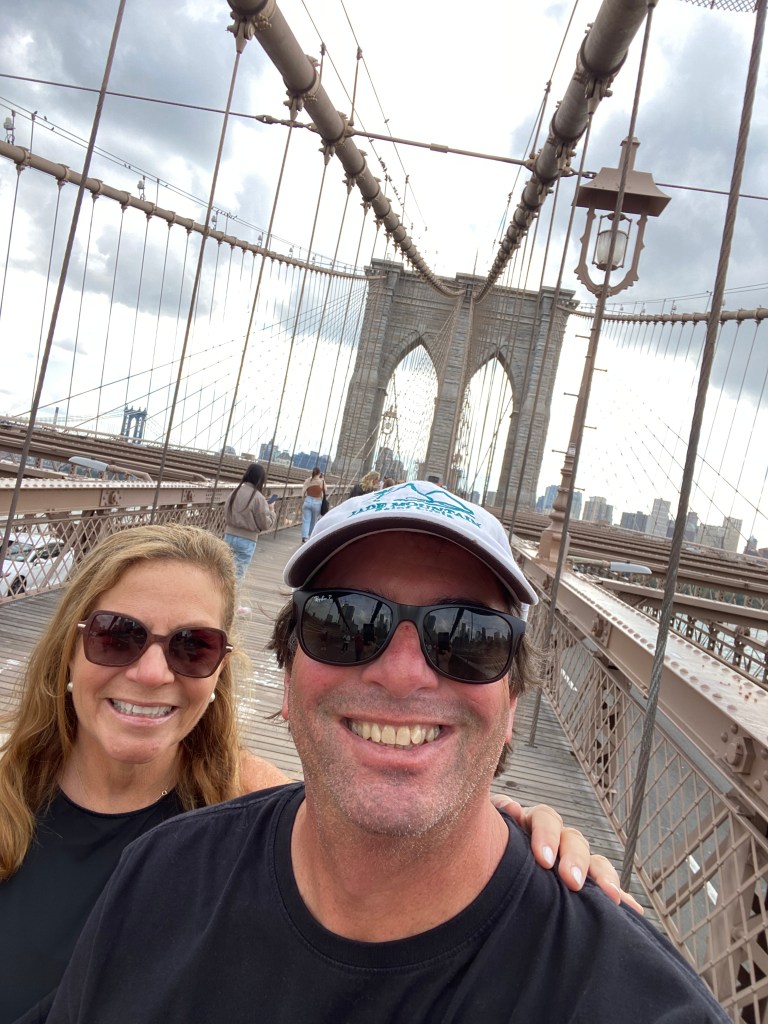
We were not entirely unlike tourists—we walked over the Brooklyn Bridge, went to Central Park, visited the 9/11 memorial and the Oculus, saw a show, and ate pastrami at Katz’s.  But we also just did what New Yorkers do:  we went to the museums, walked and shopped Soho, went to Hudson Yards (like, what’s the big deal?), walked on the Highline and the Hudson River Park,  went to the piers and the Little Island, and browsed the art galleries in Chelsea.  On a gorgeous, warm October afternoon we rented bicycles and rode along the Hudson River Park all the way to the Little Red Lighthouse at the George Washington Bridge and back.  We walked around Brooklyn and took a ferry boat back to Manhattan, we browsed the weekend farmers market in Union Square as well as the Holiday markets there and in Bryant Park.  We walked up Fifth Avenue to Rockefeller Center, then over to Times Square and walked back down Sixth (multiple times), up Madison Avenue from Union Square to Grand Central Station, along Bleeker to Sullivan to Prince.  We browsed the Artists and Fleas in Chelsea Market and Eataly Flatiron (wait—is that a New Yorker or a tourist thing to do?).

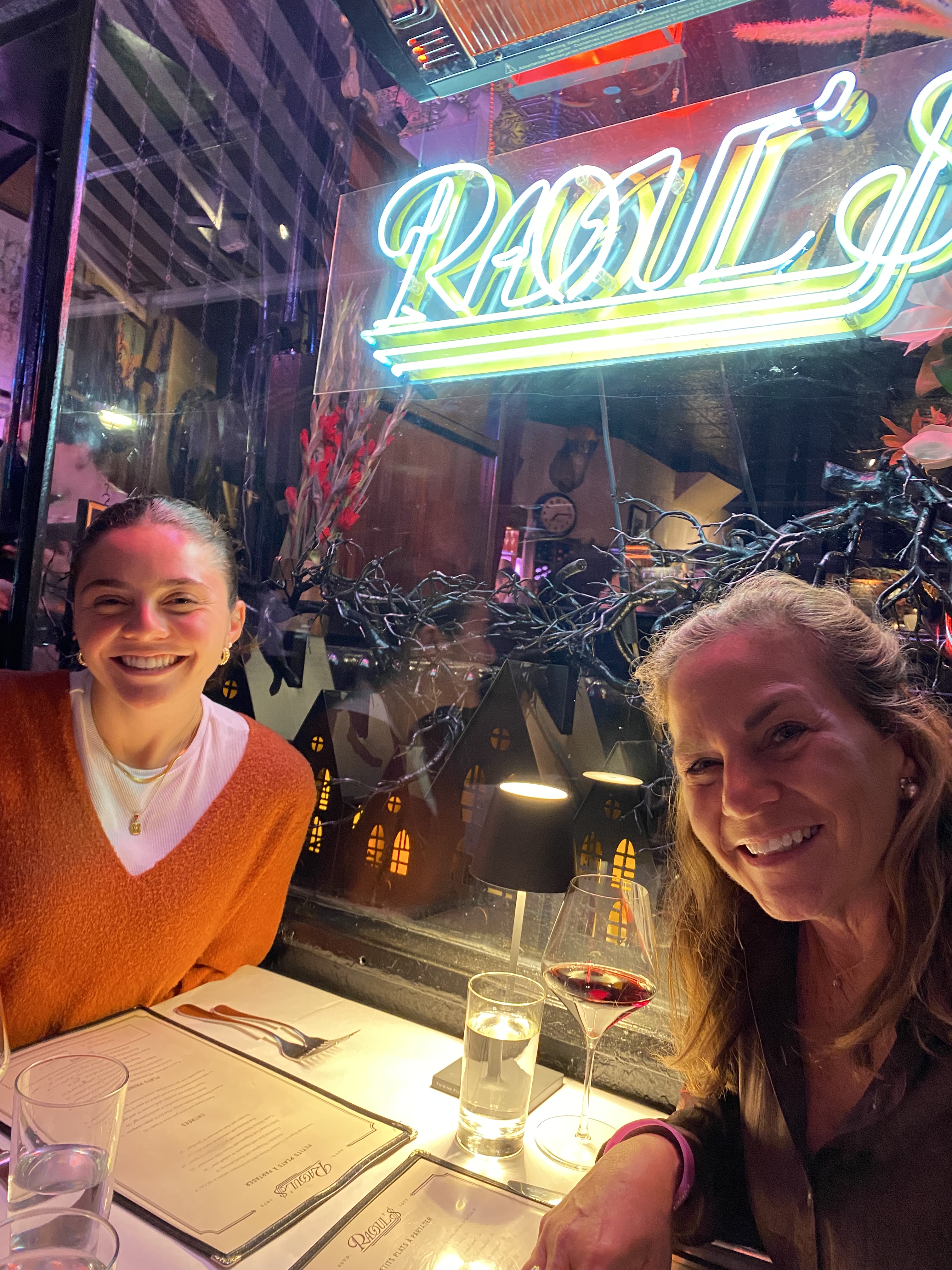
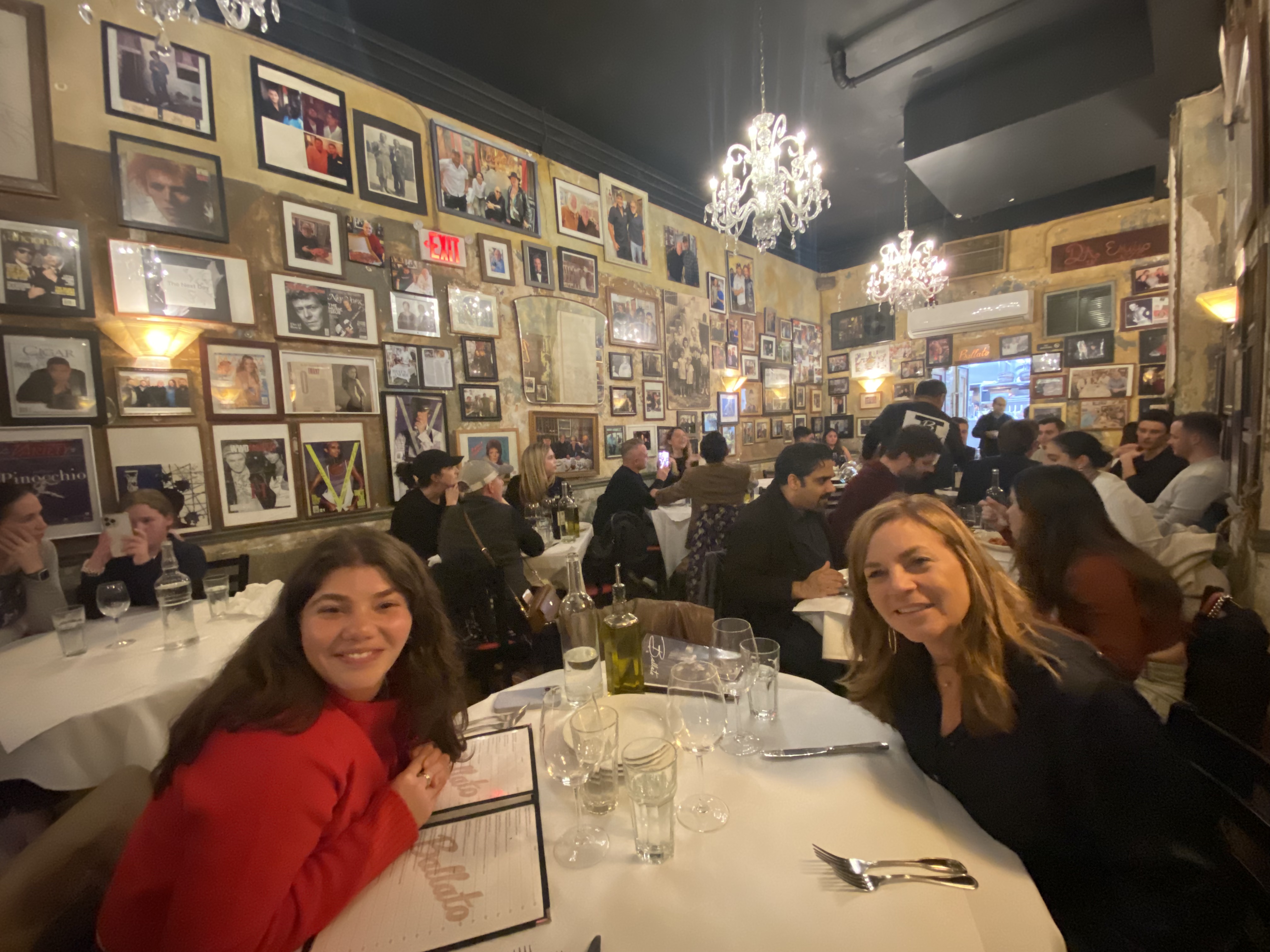
Some observations:  The Subway—it is very efficient and easy to use and if you use it with Google Maps you’ll be set; Temperature in October/November—45-65 degrees is relatively the same:  cold is cold in the shade and not so cold in the sun.  Wear layers and be ready to peel off and re-dress;  Romance—any streetcorner is a romantic spot for a kiss, and if you do it, no one will pay the slightest bit of attention to you. Same with arguing;  Italian restaurants—it is ridiculous how many there are and how the cuisine has leeched into all restaurants it seems, as every one has some form of cavatelli and Bolognese; Burgers (and fries)—literally (almost) every restaurant has a great burger and great fries.  *Note:  Mary’s Fish Camp has the best fries as they are thin and almost like potato sticks and they serve them in a huge pile and…yum!; Reservations—to get into the places you can’t get into no matter how early you wake up to be the first to try to snag a Resy or Opentable reservation:  1)  Go early and put your name on the list when they open as most have a walk-in seating list (Don Angie); 2) Actually go to the restaurant days in advance and talk to the manager (begging is acceptable); 3)  Go early and nab seats at the bar;  or 4)  suck it up and get in the line at Via Carota at 4:00 and be ready to eat your meal at 5:00 (or 11:00);  A “cheap” meal in New York is never really cheap.

After that first few days, the time went by faster and faster, and we could hardly believe when the last week arrived.  We went back to some places/sites we wanted to visit one more time, we finally tried the last of the food we had missed, and we started to pack up our belongings.  When we walked out of our little New York apartment (and walked/struggled down the four flights with our luggage in tow) we did so with mixed feelings of satisfaction for having checked that item off our list and sadness for what was probably a one-off “semester” in Manhattan.  Just when we started to feel a part of it, New York, New York was over and we were heading back home.

We came and we conquered—kind of—leaving in better shape walking-wise, a little (actually, a lot) lighter in the wallet, our appetites and liquor yearnings satiated, having learned a few lessons for future Semesters Abroad along the way:  It was a benefit to have our daughters and friends nearby (and to have friends come in for a visit);  a comfortable pair of shoes (or two) was a must;  never walk and text (beware of those who don’t clean up after their dogs).

Final Grade:  I would give this inaugural Semester Abroad: New York City an A+

Best Meal:  Don Angie

Best Fun Restaurant Experience:  Arthur & Sons

Best Romantic Restaurant:  Malaparte

Best Cocktail Bar:  The Crosby Bar at the Crosby Street Hotel

Best Sports Bar:  Reservoir  (Steelers and IU)

Best Bread:  Olive and Cheese Breadstick at Breads Company

Best Croissant and Brioche:  Aux Merveilleux de Fred

Best Pizza:  L’Industrie

Best Coffee:  Caffè Arrone

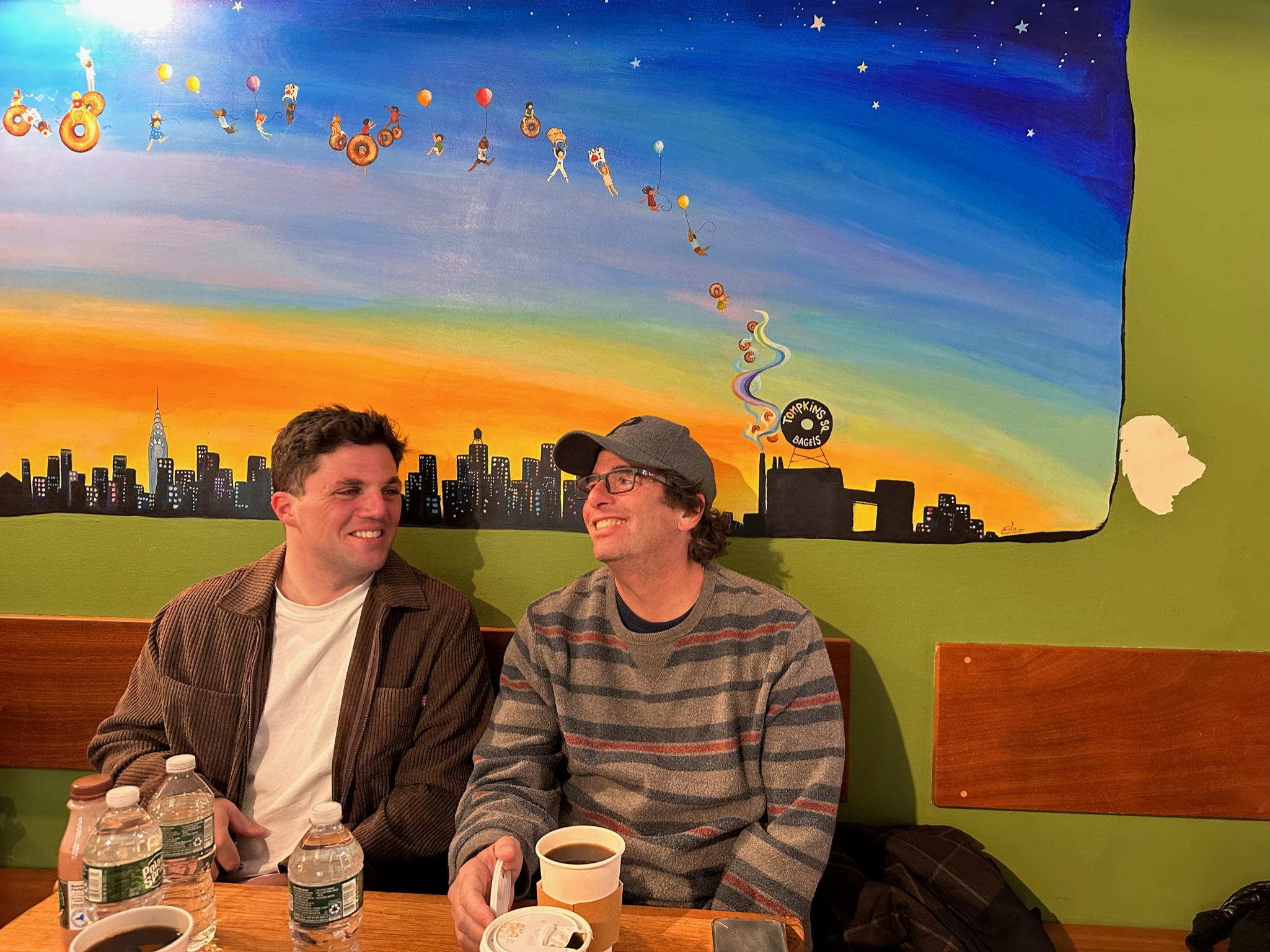
Best Bagel:  Thompkins Square Bagels

Best Beer Pub:  George Keeley (UWS)

Best Negroni Bar:  Danté’s West Village

Best Market:  West Side Market

Best Grab a Lobster Roll and Fries Any Day of the Week:  Mary’s Fish Camp

Best Being In New York City Experience:  Walking over the Brooklyn Bridge

Best Cultural Experience:  Manet/Degas Exhibit at the Metropolitan Museum  

My Mother is a Candle

photo 1

My mother is a candle.

Losing a parent is not something that one can prepare for, no matter how long and hard the battle is that leads up to death. In my mother’s case, that battle was very long and very hard, the end-result of years and years of smoking, and one fatal decision to ignore a lump. Yet despite the months of deterioration that led up to her death, the end was a shock. People asked me if it was sudden, and I was surprised that I couldn’t find a right answer. Yes, it was sudden, as in the end game lasted only a couple of days. But it was more than the end game. It was a long, slow decline in physical and mental health. My mother, independent, smart, sharp, and loving in her own critical way, began to disappear long before she took her last breath.

I thought that the last dire diagnosis, which was unassailable, had put me in the mindset to prepare for her death. Only two weeks before she died, I told a friend that I was ready—that I knew it was coming and I was calm and at peace. My friend presciently told me that it wasn’t going to be so easy, and that it would be okay if I allowed myself to be emotional over her death. I thought a lot about that comment as I sat by my mother’s side during her last three days, and as her rhythmic breathing began to slow, then slow some more, I felt the fear begin to build in me.

When it finally happened, so surreal but so absolutely real, the tears came, as well as the guttural anguish that I thought I had been immunized from in the lead-up. It wasn’t about allowing myself to be emotional—the grief came in uncontrollable waves. And it still does…

In all honesty, my mother would be appalled that I am writing this. She was adamant that upon her death we were not to eulogize her. “Get on with your lives,” she commanded us, as if we could just move on from her. I can’t. I won’t. I don’t ever want to.

My mother is a candle. It will burn for seven days on my counter. Then it will go out. But it will burn forever in my heart.

Hello, I must be . . . Writing

Hello, I must be . . . Writing

So, it’s been a while since I’ve written on this blog.  Without getting into the gory details, I was too busy dealing with family illnesses to be able to write.  Actually, it wasn’t that I was too busy–it was that I couldn’t.  I couldn’t write–an act that to me is a joyful exercise–while I was in the midst of some not-so-joyful stuff.

My wife kept telling me that I should be writing.  She said that writers do their best work when under emotional strain.  That their writing under such conditions brings out their best, most pure feelings.  That some of the most famous novels were written by authors who were suffering.

Well, if that concept applies generally to all writers, I guess I am the exception to the rule.   I just couldn’t do it.  Not one word, for a long while.  Not here, not on my new book project.  But, as with all things, time acts as a salve (any fans recall where they read that line before?), and I feel capable of writing again.  Thank goodness!

I am busy finishing up the new book, but not quite ready to give any spoilers.  Umm, ok, a little spoiler:  If you grew up at or around a small steel town in the late 70s, the scenery will be very familiar to you.  ‘Nuff said (for now).

The most common question I’ve been asked by my readers is how I come up with ideas for my books.   The truth is that every day ideas pop into my head for a new book, and they just come from my observations.  What I read, what I watch, what I see.  A person walking alongside of a country road — there are a whole slew of potential stories there.   A story in the paper or on the web might trigger an idea, or even standing in line at a grocery store.  I see something or somebody, and nuances frolic through my mind.  The ideas are always there.  But, to state the obvious, it’s what you do with the ideas that matter.  A quirky thing that I do though, is avoid reading any book that I think might involve the same situation or general story line as one I’m working on, because I don’t want to risk that something I’ve read is going to find its way into my writing.   When I was writing Sandy Cove, I was watching television one night and a promotion for Nicholas Sparks’ Nights in Rodanthe came on and I had a mini panic attack.  I didn’t even know what that story was about, but I knew that Rodanthe is in the Outer Banks and that Sparks’ books are love stories, which was exactly what I was writing.  I did the “lalalalalalala” and put my hands over my ears.  Ok, it’s weird, but I wanted to be sure that I didn’t taint my writing with his story line.

Writing is such a personal thing.  It’s about what’s going on upstairs, in the author’s head, at any given time.  I couldn’t write like Stephen King, because I don’t think like Stephen King  (Who does?).  I hear it in my head and I write it (okay, that is a little freaky–like Stephen King).  And it’s revealing bits of yourself to the world, which is in itself a leap of faith that the world won’t think badly of you.  It’s fun and scary and exhilarating to know that people are out there in the world, reading your words.   But that means you have to write.   Which reminds me–back to work!


Surprise!

The other night I attended a surprise party.  My friend had been making plans for months to surprise his wife for her milestone birthday, texting and emailing the details to their friends, and ultimately, the party went off without a hitch.  This was the second surprise party I attended in the last few months, and both were successful in their purpose:  Each time the unknowing recipient was completely in the dark until the ruse was revealed (and was also obviously taken aback and somewhat unnerved).

Every time I attend a surprise party I think of Gomer Pyle saying, “Surprise! Surprise! Surprise!” in his exaggerated Southern drawl.  He got it right:  once is not enough, three times is about right.   Adding the surprise to a birthday party gives it a little zest.  A party is just a party, but make it into a surprise party, and you’ve topped it off with an exclamation point.  And you’ve created a memory.

As we get older the years begin to slip by and birthdays begin to melt together.  They may mean less to us, but  sometimes we need to add that exclamation point to remind us that all of them are important.  They still mean something.

The other night, hours after we shouted “Surprise!” and after the husband read his wife a poem he had written, after the food and the drink and dessert , the party came to a close.  We started to say goodbye to our friends, and as we hugged each other, I saw the birthday girl wipe away a tear.  Exclamation point.

Birds of a Different Feather

Earlier this week I watched and listened in awe as New Jersey governor Chris Christie accompanied our President to view the destruction left behind by Hurricane Sandy, and then repeatedly praised the President in front of the assembled media.  Mr. Christie, who had spent a good part of this election cycle as the standard bearer for Mitt Romney, didn’t have to do what he did, and he certainly didn’t have to do it over and over again.  In public.  In front of the cameras.  So, why did he?

Over the years our society has shown an amazing cohesiveness when confronted with unthinkable adversity.  9/11.  Katrina. Joplin. And now, Sandy, to name just a few examples.  We circle the wagons and come together to provide support and aid to those around us who are suffering.  When our neighbor hurts, we hurt, and we want to help.   It is a humanistic response to a primal instinct.

When disaster strikes on the level of Seaside Park or Long Beach Island, one struggles to comprehend the utter destruction that our eyes take in.  In image after image, video after video, Governor Christie, at one destroyed community after another, looked shell-shocked, and broken.  His state — his home — was devastated.  And he clearly appreciated having the President there to lend him support–someone for him to lean on.

I remember reading once that comedian and political commentator  Al Franken, prior to becoming Senator Franken, attended a dinner function in Washington, DC, and when President George W. Bush entered the room, everyone rose and applauded, including Franken.  The man standing next to him, knowing of Franken’s outspoken criticism of President Bush, scoffed at Franken, to which Franken replied something along the lines of, “He is my President, and I will stand in salute of him when he enters the room.”

In this year of the corporate “personhood” of unrelenting, vile political advertisements, Chris Christie showed his humanity and his dignity in a time of crisis.  He put aside politics and stood by his President’s side as he struggled to keep his composure.  And then, when he stepped up to the microphone and spoke, he said what was in his heart.

Recht Law Offices

A contact page for Recht Law Offices, providing address, phone, and a way to reach us.

And Another Thing . . .

Steven Recht's thoughts and musings about . . . well . . . everything

A Newbie's Guide to Publishing

Steven Recht's thoughts and musings about . . . well . . . everything

Reed Next's Next Read

Steven Recht's thoughts and musings about . . . well . . . everything